

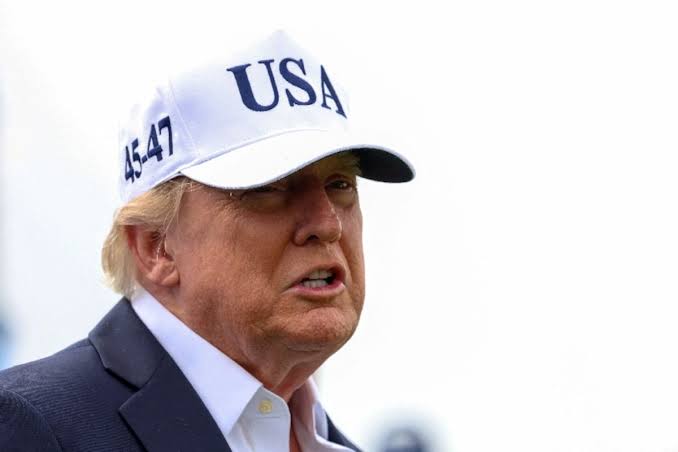
U.S. President Donald Trump has announced plans to establish an “AI Force” and appoint a new AI Czar, signalling a fresh push to strengthen the country’s leadership in artificial intelligence amid intensifying global competition.
Trump unveiled the proposal on September 19, describing the AI Force as an initiative intended to support the development of artificial intelligence in the United States. He compared the concept to the U.S. Space Force, created during his first term in office, and said the new effort would help ensure America remains at the forefront of AI innovation.
The president said the initiative would focus on advancing the country’s artificial intelligence capabilities while avoiding what he characterised as unnecessary barriers to innovation. He argued that AI represents a significant economic opportunity and emphasised the need for the United States to maintain a competitive edge in emerging technologies.
Alongside the proposed AI Force, Trump said he would appoint an AI Czar to oversee federal efforts related to artificial intelligence. However, details on the position’s structure, authority, and responsibilities have not yet been released.
The announcement comes as governments worldwide race to develop policies and strategies for artificial intelligence. The technology has become a major area of competition among leading economies, with countries investing heavily in research, infrastructure and talent development.
Artificial intelligence is increasingly being deployed across industries, including healthcare, finance, manufacturing, education and cybersecurity. At the same time, policymakers and technology experts continue to debate regulation, safety, data governance, and the societal impact of advanced AI systems.
Trump’s proposal reflects a broader effort to position the United States as a global leader in developing and deploying artificial intelligence. Supporters of a pro-growth approach argue that reducing regulatory barriers could accelerate innovation and attract investment, while others have called for stronger safeguards to address risks associated with powerful AI technologies.
The announcement also comes amid ongoing international competition in artificial intelligence, particularly between the United States and China. Both countries have identified AI as a strategic technology with implications for economic growth, national security and technological leadership.
As of now, the administration has not released specific details regarding funding, implementation timelines or the legal framework that would govern the proposed AI Force. Further information is expected as the initiative moves through the policy development process.
The proposal marks the latest indication that artificial intelligence will remain a central focus of U.S. technology policy as governments seek to balance innovation, competitiveness and oversight in one of the world’s fastest-growing industries.

Senior AI Writer
Bio: Okikiola is a writer and AI enthusiast with a background in Office Technology and Management from the Federal Polytechnic Offa. She went further to study an MSc in International Business at De Montfort University (DMU). With extensive work experience across administrative and business roles, she now focuses on exploring how artificial intelligence can transform work, innovation, and everyday life.