

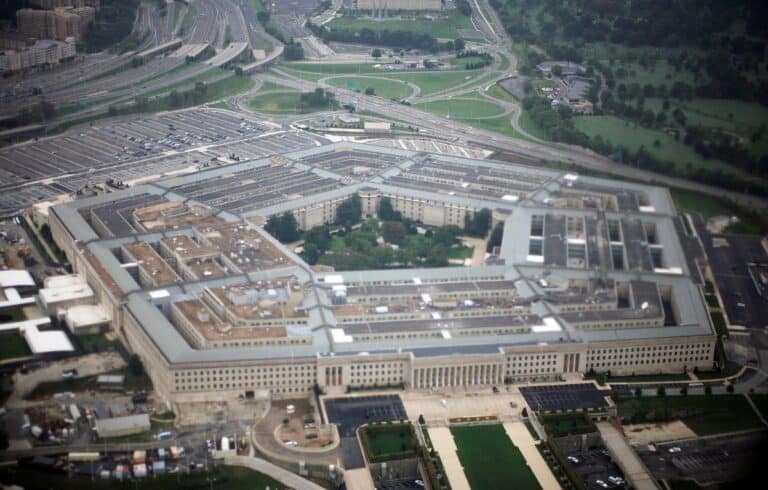
The United States Department of Defence has entered into a series of agreements with leading technology companies as part of a broader effort to transform its armed forces into what officials describe as an “AI-first” military.
According to reports from outlets including the BBC News and LBC, the Pentagon is seeking to accelerate the integration of artificial intelligence across its operations, ranging from battlefield decision-making to logistics and intelligence analysis.
The initiative reflects a growing emphasis within the US defence establishment on maintaining a technological edge, particularly as geopolitical rivals invest heavily in advanced computing and autonomous systems. By partnering with major technology firms, the Pentagon aims to harness cutting-edge developments in machine learning and data processing at scale.
Officials have indicated that the agreements will support the deployment of AI tools within secure and classified environments, enabling faster analysis of vast amounts of data and improving real-time operational awareness. The move is also expected to streamline military planning and enhance the effectiveness of both combat and support functions.
While the Department of Defence has long collaborated with private industry, the latest push signals a more integrated approach, embedding commercial innovation more deeply into military infrastructure. The effort is part of a wider modernisation strategy that places artificial intelligence at the centre of future warfare capabilities.
However, the expansion of AI in military contexts continues to raise ethical and strategic questions. Critics have warned about the risks of increased automation in decision-making, particularly in scenarios involving the use of force. Concerns have also been raised about accountability, oversight, and the potential for unintended escalation.
Despite these challenges, US defence officials argue that adopting advanced AI technologies is essential to national security. They contend that failing to do so could leave the country at a disadvantage in an increasingly competitive global landscape.
The Pentagon has not presented the initiative as a single programme but rather as a series of coordinated efforts to embed artificial intelligence across multiple branches of the armed forces. Further details on the scope and implementation timeline of the agreements are expected to emerge as the partnerships develop.
The move underscores a broader shift in modern warfare, where technological superiority, particularly in artificial intelligence, is becoming as critical as traditional military strength.

Bio: An (HND, BA, MBA, MSc) is a tech-savvy digital marketing professional, writing on artificial intelligence, digital tools, and emerging technologies. He holds an HND in Marketing, is a Chartered Marketer, earned an MBA in Marketing Management from LAUTECH, a BA in Marketing Management and Web Technologies from York St John University, and an MSc in Social Business and Marketing Management from the University of Salford, Manchester.
He has professional experience across sales, hospitality, healthcare, digital marketing, and business development, and has worked with Sheraton Hotels, A24 Group, and Kendal Nutricare. A skilled editor and web designer, He focuses on simplifying complex technologies and highlighting AI-driven opportunities for businesses and professionals.
LinkedIn