

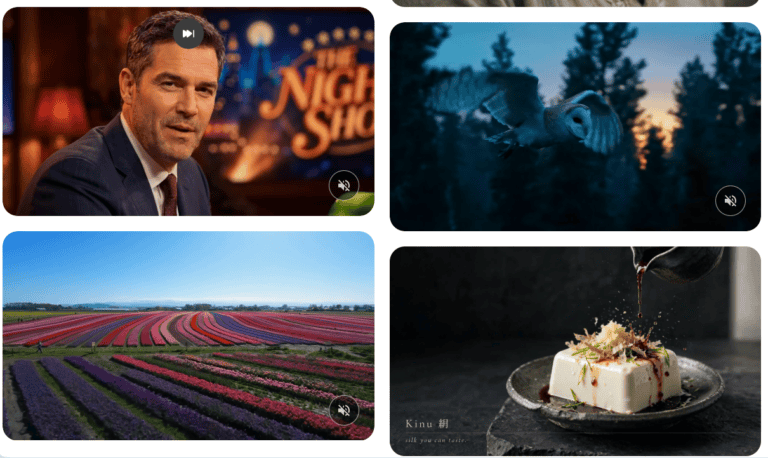
Meta has unveiled Muse Image, its latest artificial intelligence image generation model, while also introducing Muse Video, a new AI-powered video generation system currently available in preview.
The launch marks one of the company’s biggest advances in generative AI as it seeks to compete more aggressively with rivals including OpenAI, Google and Adobe.
The announcement expands Meta’s growing portfolio of AI tools designed to help creators, businesses and developers generate high-quality visual content from simple text prompts.
By combining advanced image and video generation capabilities, Meta aims to make AI-powered creativity more accessible across its products and services.
According to Meta, Muse Image has been built to produce highly detailed and photorealistic images while offering users greater control over style, composition and editing.
The model is capable of generating a wide range of visual content, from realistic photography and digital artwork to illustrations, product mock-ups and marketing assets.
Unlike earlier generations of AI image models, Muse Image has been designed with stronger instruction-following capabilities, allowing users to create images that more closely match complex prompts.
It also supports image editing features that enable creators to modify existing images using natural language instructions rather than traditional editing software.
Alongside the image model, Meta has also revealed Muse Video, a next-generation AI video generation model that can create high-quality video clips from text prompts or existing images.
While the technology is still being rolled out in preview, the company says it represents an important step towards making professional-quality video production faster and more accessible.
Muse Video is capable of generating realistic motion, maintaining visual consistency across frames and interpreting detailed creative instructions.
Meta believes these improvements will enable content creators to produce promotional videos, social media content, educational materials and creative storytelling with significantly less time and technical expertise.
The new models build on years of research carried out by Meta’s AI teams and reflect the company’s broader strategy of embedding generative AI across its ecosystem.
The technology is expected to support creators using Meta platforms while also offering developers access through APIs and enterprise tools in the future.
- Read also: Meta AI for Creators
Meta says safety remains a central focus during development. The company has incorporated safeguards intended to reduce harmful outputs, improve transparency and help identify AI-generated content.
It is also continuing research into watermarking and provenance technologies to make synthetic media easier to recognise.
The launch comes as competition in the generative AI market continues to intensify. Technology companies are racing to release increasingly capable multimodal AI systems that can generate text, images, audio and video from natural language prompts.
OpenAI, Google, Adobe, Midjourney and several emerging AI firms have all introduced significant improvements to their creative AI offerings over the past year.
Industry analysts believe Meta’s latest announcement demonstrates that the company intends to become a major player in AI-powered content creation rather than limiting its ambitions to social media and virtual reality.
By investing heavily in advanced foundation models, Meta hopes to attract creators, businesses and developers seeking powerful yet accessible AI tools.
For marketers and businesses, Muse Image and Muse Video could reduce production costs by accelerating the creation of advertising campaigns, product visuals and promotional videos.
Designers may also benefit from faster concept generation and iterative editing, while educators and content creators could use the models to develop engaging multimedia resources.
Although Muse Video is currently available in preview, Meta says it will continue refining the technology before a broader release. Future updates are expected to improve video length, motion quality, editing capabilities and creative controls.
The introduction of Muse AI Image Generator and Muse Video signals Meta’s ambition to compete at the forefront of generative AI. As demand for AI-generated visual content continues to grow, the company’s latest models could play a significant role in shaping how individuals and organisations create digital media in the years ahead.

Senior AI Writer
Bio: Okikiola is a writer and AI enthusiast with a background in Office Technology and Management from the Federal Polytechnic Offa. She went further to study an MSc in International Business at De Montfort University (DMU). With extensive work experience across administrative and business roles, she now focuses on exploring how artificial intelligence can transform work, innovation, and everyday life.