

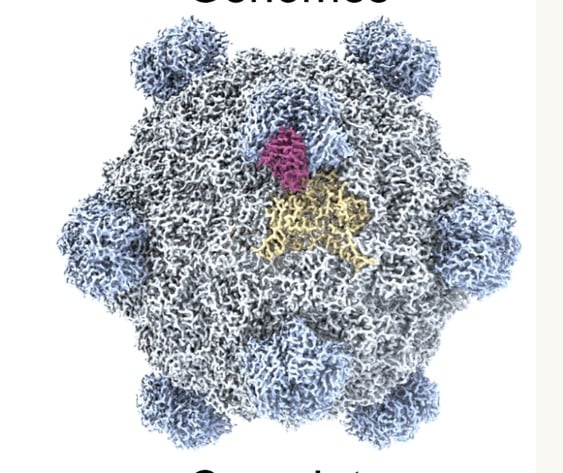
Scientists in the United States have used artificial intelligence to create entirely new viruses that do not exist in nature, marking a major milestone in biotechnology and raising fresh questions about how powerful AI systems should be governed.
The breakthrough was achieved by a research team led by Stanford University and the Arc Institute, which used advanced AI models to design novel bacteriophages — viruses that infect and kill bacteria.
The findings were published in the journal Science and represent one of the most significant examples yet of artificial intelligence being used to engineer living biological systems.
Researchers said the AI systems were trained on millions of known bacteriophage genomes before being tasked with generating entirely new viral designs.
The team produced hundreds of candidate genomes, of which 16 were successfully synthesised and shown to infect Escherichia coli (E. coli) bacteria in laboratory experiments.
Importantly, the viruses created during the study are not capable of infecting humans, animals or plants. They are bacteriophages, a type of virus that specifically targets bacteria and has long been studied as a potential treatment for antibiotic-resistant infections.
Scientists involved in the project said the technology could help accelerate the development of new therapies at a time when antimicrobial resistance is becoming a growing global health threat.
By designing customised bacteriophages, researchers may one day be able to target dangerous bacterial infections that no longer respond to conventional antibiotics.
However, the achievement has also triggered concerns among biosecurity experts, who warn that the same technology could eventually be adapted for more dangerous purposes if adequate safeguards are not put in place.
In commentary accompanying the research, experts from the Johns Hopkins Centre for Health Security said the ability to generate viral genomes using AI now exists, but governance frameworks capable of managing the associated risks have yet to catch up.
They argued that advances in AI-enabled biology require stronger oversight, improved screening of synthetic DNA orders and more robust biosafety measures.
The debate reflects broader concerns about so-called “dual-use” technologies scientific tools that can be used for both beneficial and harmful purposes.
Related
- UCT scientists unveil a multilingual AI model for South African use
- Nigeria’s First Chip Design Training Programme Launched To Boost AI and Tech Skills
- AI-Powered Robot Defeats Elite Table Tennis Players In Breakthrough Match
- TikTok AI Video Guide: How Nigerian Creators Can Avoid Content Removal and Grow Faster
Supporters argue that AI could transform medicine by accelerating the discovery of new treatments, vaccines and biological therapies.
Critics, however, warn that increasingly capable AI systems could lower barriers to designing harmful pathogens or other biological agents in the future.
While experts stress that the newly created viruses pose no threat to people, the research highlights how quickly AI capabilities are expanding beyond text, images and software into the realm of biological engineering.
The development is likely to intensify calls for international cooperation on AI governance as governments, scientists and regulators seek to balance innovation with safety.
For now, researchers say the focus remains on harnessing AI to solve pressing medical challenges.
Yet the emergence of AI-designed viruses has already become a landmark moment in the debate over how society should manage powerful technologies that could shape the future of health, science and global security.

Senior AI Writer
Bio: Okikiola is a writer and AI enthusiast with a background in Office Technology and Management from the Federal Polytechnic Offa. She went further to study an MSc in International Business at De Montfort University (DMU). With extensive work experience across administrative and business roles, she now focuses on exploring how artificial intelligence can transform work, innovation, and everyday life.