

Artificial intelligence has become one of the most influential technologies of the modern age. From chatbots and image generators to voice assistants, recommendation systems and autonomous machines, AI is changing how people live, work, communicate and solve problems.
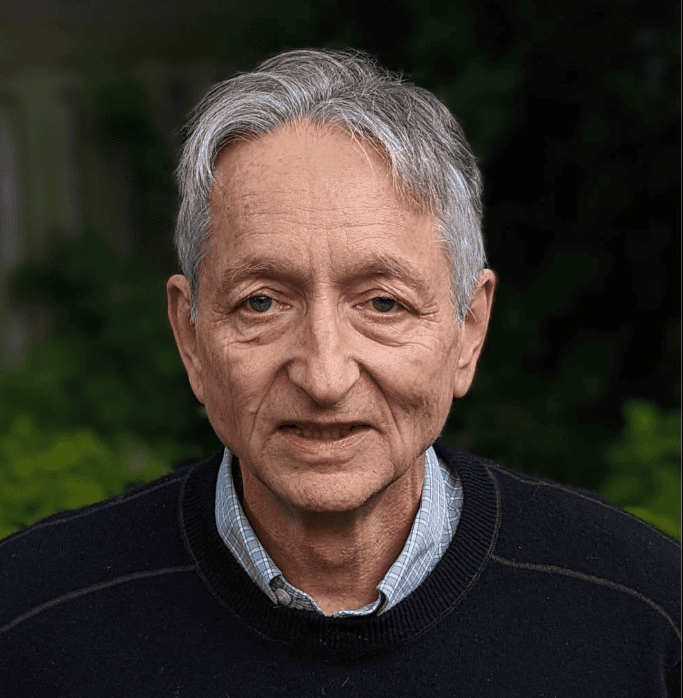
Behind much of this transformation is the work of a group of computer scientists who spent decades exploring how machines could learn and process information. One of the most influential among them is Geoffrey Hinton, a British-born computer scientist widely known as the Godfather of Artificial Intelligence.
Hinton helped develop the mathematical and computational techniques that made modern machine learning and deep learning possible. His pioneering research on artificial neural networks laid important foundations for technologies now used in generative AI systems, including large language models and advanced image recognition tools.
In 2024, his contributions received one of the world’s highest scientific honours when he was awarded the Nobel Prize in Physics alongside American scientist John Hopfield.
However, Hinton’s influence extends beyond his research achievements. After spending much of his career helping advance artificial intelligence, he has become one of the technology’s most prominent critics, warning about the potential consequences of developing increasingly powerful AI systems.
But who exactly is Geoffrey Hinton? Why is he called the Godfather of AI? What did he contribute to modern artificial intelligence, and why has he become concerned about the technology he helped create?
Here is everything you need to know about his life, career, discoveries and influence on the future of artificial intelligence.
Who Is Geoffrey Hinton?
Geoffrey Everest Hinton is a British-born computer scientist and researcher best known for his pioneering contributions to artificial neural networks, machine learning and deep learning.
He was born on 6 December 1947 in Wimbledon, London, United Kingdom. He later built much of his academic career in Canada, particularly at the University of Toronto, where he became one of the world’s most influential researchers in artificial intelligence.
Hinton is widely regarded as one of the founding figures of modern AI because his research helped establish the techniques that allow computers to learn patterns from large amounts of data.
Unlike traditional computer programmes that rely heavily on instructions written by humans, machine learning systems can identify patterns, improve their performance through experience and make predictions based on information they have processed.
Hinton’s work helped make this approach significantly more powerful.
His research contributed to the development of artificial neural networks, computational systems inspired by the way biological neurons communicate in the human brain.
These networks became central to deep learning, a branch of machine learning that powers many of today’s most advanced AI applications.
Hinton is also a recipient of the 2024 Nobel Prize in Physics, which he shared with John Hopfield for foundational discoveries and inventions that enable machine learning with artificial neural networks.
Why Is Geoffrey Hinton Called the Godfather of AI?
Geoffrey Hinton is called the Godfather of AI because of his pioneering research into artificial neural networks and the learning techniques that helped make modern artificial intelligence possible.
The nickname reflects his longstanding influence on the development of machine learning, particularly deep learning.
During the early decades of artificial intelligence research, many scientists explored different ways to make computers perform tasks associated with human intelligence. However, neural networks faced significant technical challenges and were not always widely accepted as a promising direction.
Hinton continued researching the technology, helping demonstrate how artificial neural networks could learn complex patterns from data.
His work, alongside contributions from other researchers, helped establish neural networks as one of the most important approaches in modern AI.
Today, neural networks are used in technologies such as:
- Chatbots and conversational AI.
- Speech recognition and voice assistants.
- Facial and image recognition.
- Language translation.
- Medical image analysis.
- Autonomous systems.
- Recommendation algorithms.
- Generative AI tools.
The nickname does not mean Hinton invented artificial intelligence single-handedly. AI has a long history involving contributions from researchers across mathematics, computer science, neuroscience and engineering.
Rather, it recognises his exceptional influence on the development of the neural network technologies that underpin much of modern AI.
Early Life and Education
Geoffrey Hinton was born in London in 1947 into a family with a strong intellectual background.
He developed an interest in understanding how the human mind works, which later influenced his decision to explore the relationship between psychology, neuroscience and computing.
Hinton studied experimental psychology at the University of Cambridge, graduating in 1970.
His interest in how the brain processes information eventually led him towards artificial intelligence. He became particularly interested in whether computers could learn in ways that resembled biological learning.
He later pursued postgraduate research at the University of Edinburgh, where he completed a PhD in artificial intelligence in 1978.
This academic background helped shape his distinctive approach to AI research. Rather than viewing intelligence purely as a collection of instructions, Hinton explored how systems could learn through networks of interconnected processing units.
His interest in the brain and its learning mechanisms would become a defining feature of his scientific career.
Geoffrey Hinton’s Contributions to Artificial Intelligence
Hinton’s importance to AI comes from several decades of research into how artificial neural networks can learn, represent information and recognise patterns.
Some of his most significant contributions include backpropagation, Boltzmann machines, distributed representations and deep learning.
1. Artificial Neural Networks
Artificial neural networks are computational systems loosely inspired by the structure of the human brain.
The human brain contains billions of neurons that communicate through connections. Artificial neural networks use interconnected computational units, often called artificial neurons, to process information.
These units receive inputs, perform calculations and pass information to other units.
By adjusting the strengths of their connections during training, neural networks can learn to recognise patterns and make predictions.
Hinton became one of the most influential researchers in this area.
His work helped demonstrate how neural networks could be trained to perform increasingly complex tasks, including recognising images, processing speech and understanding patterns in data.
Artificial neural networks are now a fundamental component of modern machine learning.
2. Backpropagation
One of Hinton’s most important contributions was helping establish and popularise the use of backpropagation in neural network training.
Backpropagation is an algorithmic method that allows a neural network to adjust its internal parameters when it makes a mistake.
For example, imagine an AI system trained to recognise cats in photographs. If it incorrectly identifies a dog as a cat, the training process can calculate how the network’s prediction differed from the correct answer.
Backpropagation uses this error information to calculate how the network’s internal connections should be adjusted.
Through repeated training, the system can improve its predictions.
Hinton was among the researchers who helped introduce and advance this approach, working alongside other scientists who contributed to its development.
Backpropagation became one of the key techniques behind the success of modern deep learning.
3. Boltzmann Machines
Hinton also made important contributions to the development of Boltzmann machines, a type of artificial neural network.
Developed through research with collaborators, including David Ackley and Terrence Sejnowski, Boltzmann machines use principles from statistical physics to learn patterns and relationships within data.
They are particularly important in the history of machine learning because they demonstrated how neural networks could learn useful representations of information.
The work also contributed to later developments in deep learning, including restricted Boltzmann machines.
These discoveries formed part of the scientific foundation recognised by the 2024 Nobel Prize in Physics.
4. Deep Learning
Deep learning is a branch of machine learning that uses neural networks containing multiple layers of computational units.
The additional layers allow these systems to learn increasingly complex representations of information.
For example, when analysing an image, an AI system may learn to recognise basic visual features such as edges and shapes before identifying more complex objects such as faces, vehicles or animals.
Hinton played a major role in advancing deep learning research.
His work helped demonstrate that deeper neural networks could learn useful patterns from data, contributing to a revival of interest in neural network approaches during the 2000s.
This research helped pave the way for major advances in computer vision, speech recognition, natural language processing and generative AI.
5. Distributed Representations
Another important area of Hinton’s research involves distributed representations.
In simple terms, distributed representations allow information to be represented through patterns of activity across multiple artificial neurons rather than relying on one individual unit to store an entire concept.
This approach allows machine learning systems to capture relationships and similarities between different pieces of information.
It has influenced the development of modern systems that process language, recognise objects and identify complex patterns.
Related
- AI vs. Hackers: OpenAI Helps Uncover Critical Security Flaws
- Who Is the Father of AI? Lessons for Nigeria’s Next Generation of Tech Innovators
- Inside MBZUAI: TheWorld’s First Dedicated AI University
How Did Geoffrey Hinton Help Create Modern AI?
To understand Hinton’s influence, it is important to distinguish between artificial intelligence, machine learning and deep learning.
Artificial intelligence is the broader field of creating computer systems capable of performing tasks associated with human intelligence.
Machine learning is a branch of AI in which computers learn patterns from data rather than relying entirely on manually written instructions.
Deep learning is a specialised form of machine learning that uses neural networks with multiple layers.
Hinton’s research helped advance the neural network approach that made deep learning particularly successful.
This connection can be understood through the following structure:
- Artificial intelligence is the broader technology field.
- Machine learning is one of the main approaches used to develop AI systems.
- Deep learning is a type of machine learning based on multi-layer neural networks.
- Neural networks are computational models inspired by biological brain structures.
Many modern AI systems rely on these techniques.
For example, large language models use neural network architectures, particularly transformer-based models, to process and generate human language.
Hinton did not invent ChatGPT or the transformer architecture. However, his earlier research helped establish important foundations for the wider deep learning revolution that made modern generative AI possible.
His influence can therefore be seen in the scientific developments that preceded today’s AI applications.
Geoffrey Hinton and the 2024 Nobel Prize in Physics
One of the most significant moments in Hinton’s career came on 8 October 2024, when the Royal Swedish Academy of Sciences announced that he and John J. Hopfield would receive the Nobel Prize in Physics.
The two scientists were recognised for their foundational discoveries and inventions that enable machine learning with artificial neural networks.
The award acknowledged how their research connected ideas from physics with the development of computational systems capable of learning.
Hopfield was recognised for creating an associative memory network, while Hinton was recognised for his work developing methods that allow artificial neural networks to identify and learn patterns in data.
The Nobel Prize highlighted the importance of neural networks in the development of modern machine learning.
It also represented a major moment in the history of artificial intelligence, recognising that techniques once considered highly specialised academic research had become central to technologies used across the world.
Hinton shared the prize money equally with Hopfield.
His Nobel Prize in Physics is particularly notable because it recognises scientific contributions to the foundations of AI rather than the creation of a commercial product or chatbot.
Other Major Awards and Achievements
Beyond the Nobel Prize, Geoffrey Hinton has received several prestigious awards and recognitions for his contributions to computer science and artificial intelligence.
Some of his most notable achievements include:
- 2024 Nobel Prize in Physics: Shared with John Hopfield for foundational discoveries and inventions that enable machine learning with artificial neural networks.
- 2018 ACM A.M. Turing Award: Shared with Yoshua Bengio and Yann LeCun for conceptual and engineering breakthroughs that made deep neural networks a critical component of computing.
- Royal Society Fellowship: Elected as a Fellow of the Royal Society in recognition of his scientific contributions.
- Royal Medal: Recognised for pioneering work on algorithms that learn distributed representations in artificial neural networks and their applications to speech and vision.
- Queen Elizabeth Prize for Engineering: Recognised among the contributors to the development of modern machine learning.
These awards demonstrate the breadth of Hinton’s influence across artificial intelligence, computer science and engineering.
Geoffrey Hinton’s Career at Google
In 2013, Google acquired DNNresearch, a company established by Hinton and two of his graduate students, Alex Krizhevsky and Ilya Sutskever.
The company emerged from research at the University of Toronto and attracted significant attention because of its work on deep learning.
Hinton subsequently joined Google, where he worked as a Vice President and Engineering Fellow.
His work at Google involved advancing machine learning technologies and helping bring neural network research into practical applications.
He remained associated with the company until 2023.
That year, Hinton left Google, explaining that his departure would allow him to speak more openly about the potential risks of artificial intelligence without the constraints associated with working for a major technology company.
His decision attracted international attention and marked a significant change in his public role.
He increasingly became known not only as an AI pioneer but also as an influential voice in discussions about AI safety and the future of humanity.
Why Did Geoffrey Hinton Leave Google?
Geoffrey Hinton left Google in 2023 to speak more freely about the potential dangers of artificial intelligence.
He had become increasingly concerned about the speed of AI development and the possibility that increasingly capable systems could create serious problems for society.
His concerns included the possibility of AI systems becoming more intelligent than humans in certain areas, the misuse of AI by malicious actors and the economic consequences of automation.
Hinton also expressed concerns about the ability of advanced AI systems to generate convincing misinformation and potentially operate in ways that humans may struggle to understand or control.
Although he continued to recognise the enormous benefits of AI, he believed that researchers, technology companies and governments needed to take its risks more seriously.
His departure from Google gave him greater freedom to discuss these concerns publicly.
Why Is the Godfather of AI Worried About Artificial Intelligence?
Geoffrey Hinton’s warnings about AI have become a major part of his public identity.
Unlike some critics who focus mainly on present-day problems, Hinton has also expressed concern about the longer-term consequences of developing systems that could eventually exceed human intelligence.
His concerns cover several areas.
1. Artificial General Intelligence
Artificial general intelligence, commonly known as AGI, refers to a hypothetical form of AI capable of performing a broad range of intellectual tasks at a level comparable to or beyond human abilities.
Today’s AI systems can perform many impressive tasks, but they still have important limitations. They can make mistakes, produce false information and struggle with tasks requiring reliable real-world understanding.
Hinton is concerned about what could happen if future systems become substantially more capable.
He has warned that humanity may not fully understand how to control or manage highly intelligent machines if they develop capabilities beyond our own.
2. AI and Job Losses
Hinton has also warned that AI could significantly change the global labour market.
Many jobs involve tasks that can potentially be automated, including data processing, customer support, administrative work, translation and certain forms of professional analysis.
As AI systems become more capable, some businesses may reduce their dependence on human workers.
This could create significant economic challenges, particularly if technological benefits are concentrated among a small number of companies and wealthy individuals.
However, AI can also create new occupations, increase productivity and support economic development.
The overall effect will depend on how quickly industries adapt, how workers are supported and how the benefits of AI are distributed.
3. Misinformation and Deepfakes
Another concern involves the ability of AI systems to generate convincing but false information.
Generative AI can produce realistic images, videos, voices and written content.
Although these capabilities have legitimate applications, they can also be misused to create deepfakes, impersonate public figures, manipulate audiences and spread misinformation.
This presents challenges for journalism, elections, public trust and online security.
Hinton has warned that increasingly sophisticated AI systems could make it harder for people to distinguish genuine information from fabricated content.
4. Autonomous AI Systems
Hinton has also expressed concern about the possibility of increasingly autonomous AI systems.
An autonomous system can perform tasks with limited human intervention.
As AI becomes more capable, researchers are exploring systems that can plan, use digital tools and complete sequences of tasks independently.
Hinton believes that the development of highly capable autonomous systems requires serious attention to safety and human oversight.
The challenge is to ensure that advanced AI systems remain aligned with human intentions and do not cause harm through unexpected behaviour.
5. The Concentration of Wealth and Power
AI could generate enormous economic value, but Hinton has warned that its benefits may not be distributed equally.
Large technology companies and organisations with access to advanced computing resources could gain significant advantages.
If automation reduces demand for certain types of labour while increasing corporate profits, income inequality could become more severe.
For Hinton, the challenge is not simply developing more intelligent machines. It is also ensuring that the economic and social benefits of AI are shared more widely.
Geoffrey Hinton’s Influence on ChatGPT and Generative AI
One question frequently asked about Hinton is whether he created ChatGPT.
The answer is no.
ChatGPT was developed by OpenAI, and its underlying technology is based on large language models using the transformer architecture.
However, Hinton’s research helped establish important foundations for the modern deep learning techniques that make these systems possible.
His work on neural networks, backpropagation and learning representations contributed to the broader development of machine learning.
Modern generative AI systems rely on neural networks trained on large datasets to recognise patterns and generate new content.
This includes:
- Text generation and conversational AI.
- Image generation.
- Speech synthesis.
- Automatic translation.
- Code generation.
- Document summarisation.
- AI-powered search and information retrieval.
Hinton did not develop these products individually. Instead, his scientific contributions helped advance the field from which many of today’s AI technologies emerged.
It is therefore more accurate to describe him as one of the foundational pioneers of modern AI rather than the inventor of ChatGPT.
Geoffrey Hinton, Yann LeCun and Yoshua Bengio: What Is the Difference?
Geoffrey Hinton is often discussed alongside Yann LeCun and Yoshua Bengio.
The three researchers are widely recognised for their contributions to deep learning and are sometimes collectively referred to as the Godfathers of Deep Learning.
Although their research interests overlap, each has made distinct contributions to the development of artificial intelligence.
Geoffrey Hinton is known for his foundational work on artificial neural networks, backpropagation, Boltzmann machines and deep learning.
Yann LeCun is particularly recognised for developing convolutional neural network techniques that became important in computer vision, image recognition and other applications.
Yoshua Bengio is known for his influential research on neural networks, representation learning and deep learning, including important contributions to natural language processing.
The three researchers shared the 2018 ACM A.M. Turing Award in recognition of their contributions to deep learning.
Their work helped transform neural networks from a specialised research topic into one of the central technologies behind modern AI.
An interesting difference is that Hinton has become particularly prominent for his warnings about advanced AI risks, while the three researchers have expressed different views on the pace, benefits and governance of AI development.
What Can Africa and Nigeria Learn from Geoffrey Hinton’s Work?
Geoffrey Hinton’s story is relevant beyond the major technology centres of North America, Europe and Asia.
His career demonstrates the importance of long-term scientific research, investment in education and the development of local expertise in emerging technologies.
For Africa, and particularly Nigeria, the development of artificial intelligence presents significant opportunities.
AI could support important sectors such as agriculture, healthcare, education, finance, transport and public administration.
For example, machine learning systems can help farmers analyse weather patterns, identify crop diseases and improve agricultural planning.
In healthcare, AI-assisted tools can support medical image analysis, help organise patient information and improve certain diagnostic workflows when appropriately validated and supervised.
In education, AI-powered platforms can provide personalised learning support, assist teachers and improve access to educational resources.
Nigeria also has an opportunity to develop its own AI talent, research institutions, technology businesses and locally relevant AI applications.
However, achieving these benefits requires more than simply adopting foreign AI products.
African countries need to invest in digital infrastructure, reliable electricity, research, computing resources, technical education and policies that encourage responsible innovation.
There is also a need for AI systems that understand local languages, cultural contexts and the practical challenges facing African communities.
Hinton’s career offers an important lesson: major technological breakthroughs often emerge from years of scientific research before they become commercially successful.
Nigeria’s long-term AI ambitions should therefore include investment in fundamental research, not just the adoption of existing technologies.
Is Geoffrey Hinton Still Working in Artificial Intelligence?
Yes. Geoffrey Hinton remains an influential figure in artificial intelligence research and public discussions about the future of the technology.
He is a University Professor Emeritus in the Department of Computer Science at the University of Toronto.
Although he left Google in 2023, he continues to contribute to discussions about AI development, safety and its potential impact on society.
His influence is now as much about helping the public and policymakers understand the implications of advanced AI as it is about his earlier scientific discoveries.
He remains one of the most recognised voices in debates about how humanity should approach increasingly powerful artificial intelligence.
The Legacy of Geoffrey Hinton: A Pioneer Who Helped Shape the Future of AI
Geoffrey Hinton’s story is one of scientific persistence, groundbreaking discoveries and a changing relationship with technology.
For decades, he worked to demonstrate that artificial neural networks could provide a powerful way for machines to learn from data. His research helped transform deep learning from a relatively specialised area of computer science into one of the foundations of modern artificial intelligence.
The results can now be seen in technologies used by billions of people, from speech recognition and image analysis to conversational AI and generative systems.
His 2024 Nobel Prize in Physics recognised the scientific importance of this work and its influence on modern machine learning.
Yet Hinton’s legacy is not limited to the technologies he helped make possible.
His warnings about artificial intelligence have also raised important questions about the responsibilities of researchers, technology companies and governments.
As AI systems become more capable, the challenge will be to ensure that their development benefits humanity while reducing the risks they may introduce.
For Hinton, the future of artificial intelligence is not simply a question of how intelligent machines can become. It is also a question of whether humanity can develop and manage them responsibly.
That is why Geoffrey Hinton remains one of the most important figures in the history and future of artificial intelligence.
Frequently Asked Questions About Geoffrey Hinton
Who is Geoffrey Hinton?
Geoffrey Hinton is a British-born computer scientist known for his pioneering research on artificial neural networks, machine learning and deep learning. He is widely known as the Godfather of AI and received the 2024 Nobel Prize in Physics.
Why is Geoffrey Hinton called the Godfather of AI?
He is called the Godfather of AI because his research helped establish important foundations for modern artificial intelligence, particularly artificial neural networks and deep learning.
When was Geoffrey Hinton born?
Geoffrey Hinton was born on 6 December 1947 in Wimbledon, London, United Kingdom.
Where is Geoffrey Hinton from?
Geoffrey Hinton was born in the United Kingdom and later built much of his academic career in Canada. He is closely associated with the University of Toronto.
What did Geoffrey Hinton invent?
Hinton contributed to several important developments in AI, including backpropagation, Boltzmann machines, distributed representations and deep learning. These contributions were developed through research involving other scientists.
Did Geoffrey Hinton invent ChatGPT?
No. ChatGPT was developed by OpenAI. However, Hinton’s research on neural networks and deep learning helped establish important foundations for the technology behind modern generative AI.
Did Geoffrey Hinton win the Nobel Prize?
Yes. Geoffrey Hinton received the 2024 Nobel Prize in Physics, which he shared with John Hopfield for foundational discoveries and inventions that enable machine learning with artificial neural networks.
Why did Geoffrey Hinton leave Google?
Hinton left Google in 2023 so he could speak more freely about the potential dangers of artificial intelligence. He had become increasingly concerned about the risks associated with increasingly powerful AI systems.
What is Geoffrey Hinton worried about?
His concerns include the potential loss of human control over highly advanced AI systems, job displacement, misinformation, malicious uses of AI and the possibility of increasingly intelligent machines becoming difficult to manage.
Is Geoffrey Hinton still alive?
Yes. Geoffrey Hinton is alive and continues to be an influential figure in discussions about artificial intelligence, its development and its potential risks.
Who are the other Godfathers of Deep Learning?
Yann LeCun and Yoshua Bengio are often mentioned alongside Geoffrey Hinton as the Godfathers of Deep Learning. The three shared the 2018 ACM A.M. Turing Award for their contributions to deep learning.
What is Geoffrey Hinton’s most important contribution to AI?
One of his most important contributions is his pioneering research on artificial neural networks and the methods used to train them. His work helped establish the foundations of deep learning, which powers many modern AI applications.
What is Geoffrey Hinton’s connection to the University of Toronto?
Hinton joined the University of Toronto in 1987 and became a leading figure in its computer science department. His research group made important contributions to deep learning. He is now a University Professor Emeritus.

Senior AI Writer
Bio: Okikiola is a writer and AI enthusiast with a background in Office Technology and Management. She later pursued an MSc in International Business at De Montfort University (DMU). With extensive experience in administrative and business roles, she now explores how artificial intelligence can transform work, innovation, and everyday life.