

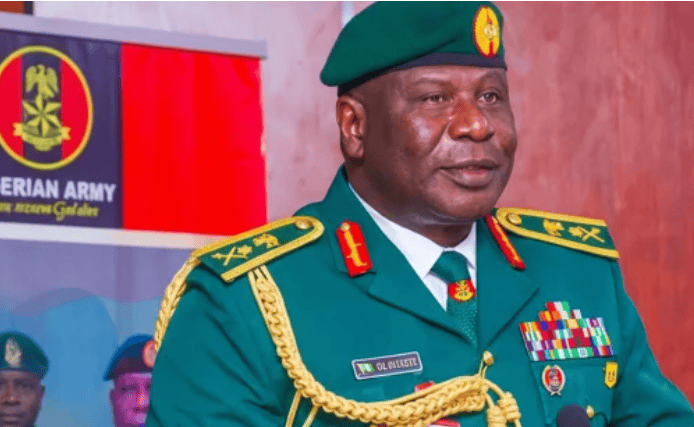
Nigeria’s Chief of Defence Staff, General Olufemi Oluyede, has warned that artificial intelligence-generated videos, manipulated images and cloned voices could threaten military operations, mislead the public and trigger panic in communities.
Oluyede issued the warning at the 2026 conference of the Defence Correspondents Association of Nigeria (DECAN) in Abuja on Monday, urging journalists to strengthen their verification procedures and work with the military to counter false information.
Represented by the Director of Defence Information, Major-General Samaila Uba, the defence chief said the misuse of AI was creating new challenges for national security by enabling the spread of fabricated content about military activities.
He warned that deepfakes could undermine public confidence in the Armed Forces, endanger troops and damage the progress made during security operations.
Oluyede described the material as a potential instrument of psychological warfare, warning that a single fabricated video could undermine operational gains and cause fear among civilians.
He urged defence correspondents to verify sensitive operational information with Defence Headquarters before publication, stressing that the pressure to report news quickly should not come at the expense of accuracy.
The chief also called on journalists to educate the public about synthetic media and promptly debunk fake videos falsely attributed to the Armed Forces of Nigeria.
The conference, themed “Beyond Kinetic Warfare: Harnessing Technology and Intelligence-Led Operations for Nigeria’s National Security”, examined the growing role of technology and intelligence in addressing the country’s security challenges.
Related
- Defence Chief Prioritises AI and Cybersecurity in Reform Agenda
- What are AI Deepfakes? Tips to Help You Spot One – Images or Videos
Oluyede said modern military operations increasingly depended on real-time intelligence, technological capabilities and cyber resilience, rather than firepower alone.
He added that the Armed Forces was investing in space-based surveillance, geospatial intelligence, AI-enabled decision support and advanced surveillance systems to improve its ability to detect threats and protect national interests.
The Minister of Defence, retired General Christopher Musa, also stressed the need for security agencies to adapt to increasingly complex threats involving technology, information and criminal networks.
Meanwhile, former Senate President Ahmed Lawan called for more predictable funding for the Armed Forces, arguing that timely budget releases and investment in military equipment would strengthen operational effectiveness.
Oluyede reaffirmed the Defence Headquarters’ commitment to working with the media, emphasising that accurate reporting and public cooperation were important to national security.
His warning highlights concerns about the potential misuse of AI-generated content in security reporting and the need for journalists and the public to verify information before sharing it.
Bio: An (HND, BA, MBA, MSc) is a tech-savvy digital marketing professional, writing on artificial intelligence, digital tools, and emerging technologies. He holds an HND in Marketing, is a Chartered Marketer, earned an MBA in Marketing Management from LAUTECH, a BA in Marketing Management and Web Technologies from York St John University, and an MSc in Social Business and Marketing Management from the University of Salford, Manchester.
He has professional experience across sales, hospitality, healthcare, digital marketing, and business development, and has worked with Sheraton Hotels, A24 Group, and Kendal Nutricare. A skilled editor and web designer, He focuses on simplifying complex technologies and highlighting AI-driven opportunities for businesses and professionals.
LinkedIn