

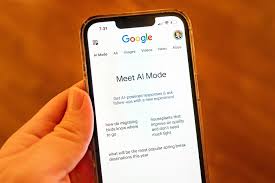
Google said its AI Mode in Search has surpassed 1 billion monthly users, marking a significant milestone in the company’s ongoing transition toward artificial intelligence–driven and agentic search experiences.
The company disclosed the figure in a product update, noting that adoption has accelerated rapidly as users increasingly engage with conversational, AI-generated responses integrated directly into Search.
AI Mode is powered by Google’s Gemini family of models and is designed to synthesise information from multiple sources into direct answers, reducing reliance on traditional lists of web links.
Sundar Pichai, business executive and Chief Executive Officer of Google and its parent company, said the development reflects a fundamental shift in the role of search technology in users’ daily lives. “We are moving from information retrieval to task completion, where AI doesn’t just help you find answers, it helps you get things done,” Sundar said.
Google said AI Mode is increasingly being used for more complex queries, including travel planning, product comparisons, educational explanations, and productivity-related tasks.
The company added that the feature is now integrated across its broader connectivity, including Search, Android, YouTube, Maps, and Workspace applications, enabling more seamless cross-platform assistance.
Related:
- AI Demand Drives Google to 1GW Milestone
- Businesses Scramble To Get Noticed In The Age of AI Search
- Google is bringing an AI-powered search experience to YouTube
The company also said AI Mode has expanded to more than 180 countries and territories and now supports multiple languages following successive stages of global rollout. Google noted that improvements in model efficiency and latency have contributed to higher user engagement and repeat usage, particularly on mobile devices.
Industry analysts say the milestone highlights a broader transformation in the technology sector, as major companies compete to redefine search through generative AI systems. Rather than simply indexing and retrieving information, these systems increasingly aim to interpret intent and deliver contextual, conversational answers in real time.
Analysts also note that the shift could have wider implications for the digital framework, particularly for publishers and websites that traditionally rely on search traffic. As AI-generated summaries become more common, fewer users may need to click through to external pages to find information.
Google said it plans to continue expanding AI Mode with more advanced agent-like capabilities, including deeper personalisation and the ability to perform multi-step tasks on behalf of users.
The company described this direction as part of its broader vision of making Search more helpful, proactive, and integrated into everyday digital activities across diverse sectors of the global economy.

Senior AI Writer
Bio: Okikiola is a writer and AI enthusiast with a background in Office Technology and Management from the Federal Polytechnic Offa. She went further to study an MSc in International Business at De Montfort University (DMU). With extensive work experience across administrative and business roles, she now focuses on exploring how artificial intelligence can transform work, innovation, and everyday life.