

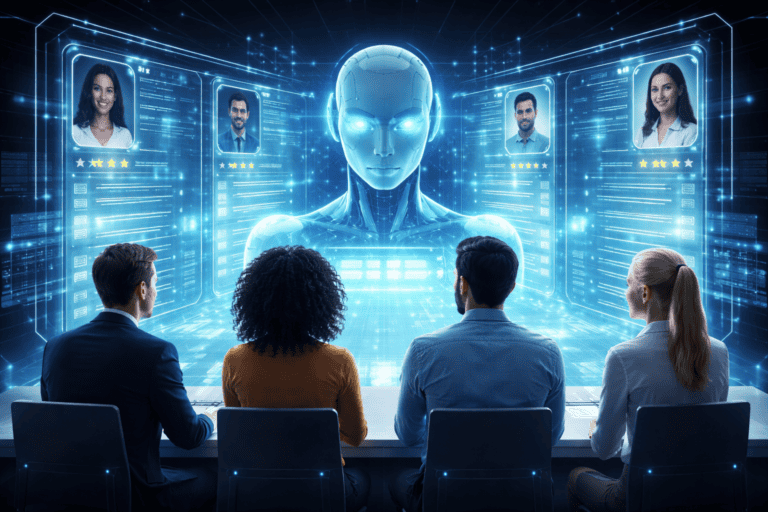
With high level of applicants applying for jobs these days, Artificial intelligence (AI) is increasingly being used in recruitment to screen resumes, rank candidates, and even conduct preliminary interviews. While these systems promise efficiency and objectivity, research shows that they can replicate and amplify existing biases in hiring, potentially disadvantaging underrepresented candidates.
How Bias Enters AI Hiring Systems
- Historical Data Bias:
AI trained on past hiring patterns can inherit existing inequalities, favouring groups historically overrepresented in certain roles. - Proxy Variables:
Even without explicit demographic data, factors such as ZIP codes, schools, or job titles can indirectly signal race, gender, or socioeconomic status, leading to biased outcomes. - Algorithm Design Choices:
Decisions on which features or keywords to prioritise can unintentionally favour certain candidates over others, reinforcing inequality. - Opaque Models:
Black-box AI systems lack transparency, making it difficult to detect bias or explain decisions to candidates and regulators. - Reinforcement and Feedback Loops:
AI can amplify bias over time: favouring certain candidates feeds back into the system, further skewing future recommendations. - Cultural and Linguistic Biases:
AI may misinterpret accents, dialects, or non-standard phrasing, disadvantaging candidates from diverse linguistic or cultural backgrounds.
Evidence of Impact
Studies and industry reports reveal significant effects of biased AI systems:
- Resumes with names associated with the majority groups are more likely to be prioritised.
- AI recommendations influence human hiring decisions, sometimes amplifying bias even when humans are aware of it.
- Attributes like age, disability, or language accent can also negatively affect candidate evaluation.
These outcomes not only affect candidates but also expose companies to reputational and legal risks under anti-discrimination laws.
- Reflect Also:: Is The World Ready for an automated AI Science Lab?
Expert Perspectives
Dr. Ada Nwosu:
AI can amplify bias if not designed intentionally; automation is not inherently unbiased.
Nkechi Obi:
Regular audits, explainable AI, and human oversight are essential to ensure fairness in recruitment.
Prof. Emeka Okafor:
Even seemingly neutral AI systems can disadvantage candidates from non-traditional or diverse backgrounds.
Strategies for Mitigating Bias
- Audit and Monitor Continuously:
Regular bias audits, ideally by independent reviewers, can identify unfair patterns and track changes over time. - Improve Training Data:
Historical data should be balanced to reflect diverse experiences, and sampling methods should mitigate underrepresentation. - Use Explainable AI:
Models should provide transparent reasoning behind candidate scores to effectively detect and correct bias. - Combine AI with Human Judgment:
Hybrid approaches, where humans review edge cases or final shortlists, help preserve contextual decision-making. - Structured Hiring Processes:
Standardised interview questions and scoring reduce subjective influence. - Transparent Candidate Communication:
Informing candidates about AI usage builds trust and allows challenges to unfair decisions. - Governance and Ethics Oversight:
Internal review boards with diverse representation ensure that AI tools are evaluated from multiple perspectives before deployment.
Conclusion
AI-powered hiring has the potential to increase efficiency and expand talent pools. However, without deliberate bias mitigation, it risks reinforcing inequality and limiting opportunities for qualified candidates. Organisations that implement structured oversight, transparent practices, and diverse training data can achieve both efficiency and fairness in AI-assisted recruitment.

Senior AI Writer
Bio: Okikiola is a writer and AI enthusiast with a background in Office Technology and Management from the Federal Polytechnic Offa. She went further to study an MSc in International Business at De Montfort University (DMU). With extensive work experience across administrative and business roles, she now focuses on exploring how artificial intelligence can transform work, innovation, and everyday life.