

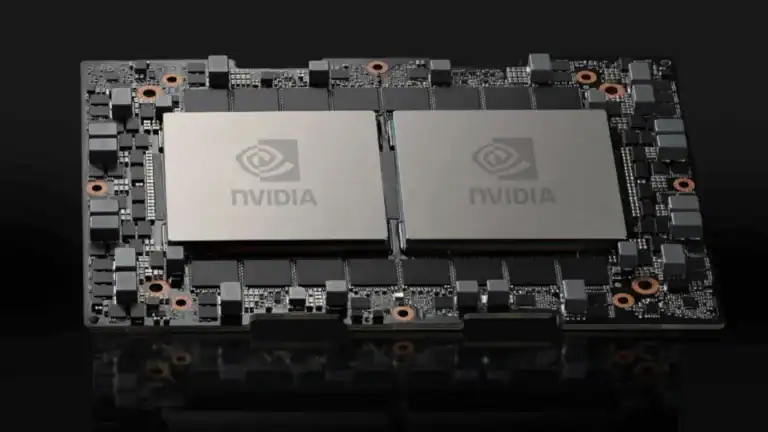
For years, NVIDIA has been synonymous with GPUs and artificial intelligence. From training large language models to powering data centres, GPUs have formed the backbone of modern AI computing. But as AI systems scale in size and complexity, performance limits are no longer defined only by compute power-they are increasingly defined by system inefficiencies.
This leads to a central question: How do we remove the bottlenecks that prevent GPUs from reaching their full potential?
The answer is the NVIDIA Grace CPU, designed to work alongside GPUs and redefine how AI systems are built.
The Problem in Modern AI Computing
Modern AI systems face constraints that go beyond raw computation.
CPU-GPU communication introduces delays because data must constantly be transferred between the two components. Memory bandwidth becomes a limiting factor when handling massive datasets. Energy consumption increases due to inefficient data transfer, and scaling becomes difficult as models grow larger and more complex.
At the core of these challenges is a fundamental issue: in AI systems, data movement is often more expensive than computation itself.
What is the NVIDIA Grace CPU?
The NVIDIA Grace CPU is NVIDIA’s first purpose-built processor designed specifically for AI and high-performance computing workloads. It is built on ARM architecture and optimised for data centre environments.
Unlike traditional CPUs, Grace is not designed to function as an isolated computing unit. Instead, it is engineered for tight integration with NVIDIA GPUs, forming a unified AI computing architecture.
Key Features of Grace CPU
The architecture of the Grace CPU is defined by five core capabilities arranged in alphabetical order:
(a) High memory bandwidth design: Grace is engineered to provide extremely high memory bandwidth, enabling fast access to large datasets required for AI training and inference.
(b) nvlink-c2c integration: It uses NVLink-C2C, a high-speed CPU-to-GPU interconnect that significantly reduces latency and improves data transfer efficiency.
(c) AI-optimised workload handling: Grace is specifically designed for AI tasks such as data preprocessing, model training, support operations, and inference pipeline execution.
(d) energy-efficient architecture: It is optimised for performance per watt, reducing energy consumption in large-scale data centre environments.
(e) system-level integration design: Grace is not a standalone processor but rather part of a unified computing system in which the CPU and GPU operate as a single, coordinated architecture.
Grace + GPU: The Unified Architecture
The real innovation of Grace lies in how it integrates with NVIDIA GPUs.
In this architecture, the Grace CPU manages data orchestration, memory control, preprocessing, and efficient data delivery to the GPU. The GPU then focuses entirely on compute-heavy tasks such as deep learning training, inference, and large-scale matrix operations.
This division of responsibilities creates a tightly coupled system where data flows more efficiently, reducing GPU idle time and improving overall performance.
Why NVIDIA Built Grace CPU
NVIDIA did not enter the CPU space to compete with traditional CPU vendors. Instead, Grace was developed to solve specific AI infrastructure challenges.
Its purpose is to eliminate CPU-related bottlenecks, improve energy efficiency in data centres, enable scaling of extremely large AI models, and reduce dependence on external CPU architectures.
Ultimately, Grace is not about CPU competition; it is about system-level optimisation for AI.
Impact on the AI Ecosystem
The introduction of Grace is reshaping the structure of AI infrastructure.
Data centres are transitioning toward integrated CPU-GPU systems rather than separated architectures. Traditional CPU manufacturers face increased competition in AI-specific workloads. NVIDIA strengthens its position as a full-stack AI infrastructure provider, while cloud platforms must redesign their systems to support tighter hardware integration.
Strategic Importance for NVIDIA
Grace represents a major shift in NVIDIA’s role in the technology ecosystem.
The company is no longer only a GPU manufacturer. With Grace, NVIDIA now designs complete AI systems, controls both the compute and data-flow layers, and delivers end-to-end AI infrastructure solutions.
This transition positions NVIDIA as a full AI computing platform company rather than a hardware supplier.
Carved Summary
The NVIDIA Grace CPU is not a traditional processor designed for general-purpose computing. It is a system-level innovation focused on removing inefficiencies in AI workloads.
Grace does not replace GPUs-it enhances them. It does not compete with CPUs-it redefines their role in AI systems. More importantly, it signals a shift from isolated hardware performance improvements to fully integrated AI computing architectures.
In essence, NVIDIA Grace is not just a CPU; it is a blueprint for the future of AI infrastructure.
Read:
- What Makes NVIDIA The Backbone of Modern AI
- Kenya Emerges as East Africa’s Hub for NVIDIA‑Powered AI Cloud

Senior Reporter/Editor
Bio: Ugochukwu is a freelance journalist and Editor at AIbase.ng, with a strong professional focus on investigative reporting. He holds a degree in Mass Communication and brings extensive experience in news gathering, reporting, and editorial writing. With over a decade of active engagement across diverse news outlets, he contributes in-depth analytical, practical, and expository articles exploring artificial intelligence and its real-world impact. His seasoned newsroom experience and well-established information networks provide AIbase.ng with credible, timely, and high-quality coverage of emerging AI developments.