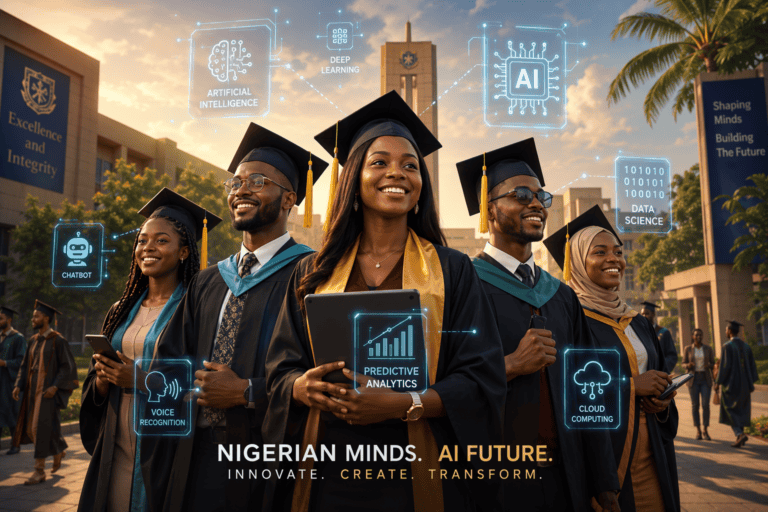
Nigeria is leading the Global South in searches for AI learning tools, and that says a lot about where work is heading. Still, knowing how to chat with one app is no longer enough.
Today’s job market rewards graduates who can turn AI into real output, better decisions, and faster work. If you want to stand out, AI literacy and practical digital skills matter as much as your degree.
That shift is opening doors for people ready to learn with purpose.
Key Highlights
- AI literacy now matters in Nigeria’s job market because employers want proof of useful digital skills.
- Strong AI skills include prompt engineering, data analysis, verification, automation, and responsible use.
- Fintech startups, digital marketing, customer service, and operations teams value these skills most.
- A common myth is that knowing ChatGPT alone makes you job-ready. It does not.
- Free AI training options, including local pathways, can help you build practical experience fast.
- Graduates who use AI well gain a strong advantage in hiring and remote work.
Understanding AI Literacy for Nigerian Graduates
AI is becoming part of how businesses in Nigeria work, hire, and compete. From fintech startups to media and logistics, AI adoption is changing daily tasks and creating demand for graduates who can use new technologies well.
That is why AI literacy is different from basic digital literacy. It means more than opening AI tools. It closes a growing skills gap by helping you question results, solve business problems, and fit the job market Nigeria is moving toward.
What AI Literacy Means in the Nigerian Context
Put simply, AI literacy means understanding the basics of AI and using that knowledge in a smart way. For Nigerian students, it includes writing clear prompts, checking outputs, knowing what AI can and cannot do, and applying results to school, work, or business tasks.
In the local setting, this also connects to the digital economy. AI is showing up in banking, media, public services, agriculture, and customer service. So digital literacy alone is no longer enough. You need to know how AI adoption affects workflows, hiring, and communication.
There is also a social side to it. Data costs are real, so weak prompts can waste time and bundles. Deepfake scams are also becoming a problem in Nigeria today. That means AI literacy includes caution, verification, and responsible use, not just speed.
Why AI Literacy Is Crucial for Today’s Job Market
Here is the reality: employers are hiring less for certificates alone and more for what you can actually do. In today’s job market, AI skills help you complete tasks faster, support business decisions, and handle tools that many companies now expect graduates to understand.
Before graduation, focus on relevant skills such as:
- Prompt writing that gets accurate results with less time online
- Data verification and critical thinking before using AI outputs
- Workflow automation for repetitive tasks in office roles
These digital skills support workforce development by making you useful from day one. A graduate who can research, analyse, automate, and communicate clearly has an edge. That advantage shows up in internships, entry-level roles, freelance work, and even remote work beyond Nigeria.
The Evolving Role of AI in Nigeria’s Workforce
AI systems are changing how work gets done across Nigeria. Businesses now use them to handle data analysis, speed up reporting, support customer interactions, and reduce manual effort in daily operations.
At the same time, this shift raises concerns about job displacement in roles that rely on repetitive tasks. Yet it also creates room for workforce development. People who understand AI, automation, and human judgment are becoming more employable because companies need support in using these tools effectively.
How AI Is Transforming Traditional Careers
Many jobs once depended fully on traditional methods. People typed reports by hand, sorted records manually, answered every customer message one by one, and spent hours preparing routine updates. With ai adoption, those specific tasks can now be completed faster and with fewer steps.
This does not mean every role disappears. It means the work inside the role changes. A marketer now uses AI for content ideas and scheduling. An operations assistant may automate invoices or reporting. A support agent may use AI to draft replies before sending the final response.
That is where the best graduates stand out. They do not only use tools for convenience. They combine prompt engineering, verification, communication, and workflow thinking. Those are the AI skills that reduce the risk of job displacement and help you adapt as careers keep changing.
Industries in Nigeria Where AI Skills Are Most Valued
Some sectors in Nigeria are moving faster than others. Job seekers with AI literacy are especially valuable where speed, accuracy, and customer experience affect revenue. That includes fintech startups, media, logistics, and digitally active business teams.
| Industry | Typical AI roles or tasks |
|---|---|
| Fintech startups | Data analysis, customer support automation, reporting, sales insights |
| Media and digital marketing | Content creation, SEO support, social media planning, campaign ideas |
| Logistics and operations | Workflow tracking, automated updates, dashboard reporting |
| Customer service teams | Chat support drafts, response management, FAQ assistance |
Why do these industries care so much? They handle large volumes of information, repeated interactions, and fast business decisions. AI helps them save time and improve output. For new graduates, that means practical AI use is becoming a direct path into visible, in-demand work.
Core AI Literacy Skills Every Graduate Should Master
The most important AI skills go beyond typing questions into a chatbot. Employers want graduates who can use AI to do useful work, not just to get quick answers. That includes prompt engineering, data analysis, verification, automation, and responsible use.
These skills are relevant because they directly connect to employability. They help you support teams, improve output, and move into new job roles shaped by AI. In the next sections, you will see how each skill works and why data literacy now matters across many careers.
Prompt Engineering and Effective AI Communication
Prompt engineering is the skill of giving AI clear instructions so it can return useful results. It is not magic. It is structured communication. When you speak well to AI systems, you waste less time, reduce bad answers, and get more value from AI tools.
For a Nigerian graduate, this matters in customer service, content creation, research, and office support. Better prompts mean better drafts, cleaner summaries, sharper reports, and fewer retries. That saves internet data and helps you work with more confidence.
To improve prompt engineering:
- State the task clearly and include the goal
- Add context, such as audience, format, or tone
- Ask for step-by-step output when accuracy matters
- Revise weak prompts instead of accepting poor answers
Data Verification and Critical Evaluation of AI Outputs
AI can sound confident even when it is wrong. That is why data verification is one of the most valuable parts of AI literacy. Employers notice when a candidate can use AI and still apply critical thinking before acting on the result.
In real work, bad outputs can affect reports, customer communication, and business decisions. A graduate who checks facts, reviews numbers, and spots weak logic is more useful than someone who copies and pastes polished errors. That is where digital literacy becomes practical.
Build this habit by:
- Comparing AI responses with trusted source material or existing records
- Checking figures, names, and summaries before sharing them
- Asking whether the output fits the local context and the actual task
Workflow Automation Using Low-Code Tools
Workflow automation means setting up systems that handle repetitive tasks with little manual effort. You do not always need advanced coding for this. Low-code tools such as Zapier, Make, Airtable, and Notion AI can connect tasks and reduce routine work.
For Nigerian professionals and fresh graduates, this can be very practical. You can automate email follow-ups, social media scheduling, customer onboarding steps, invoice tracking, or simple reporting. Instead of doing the same action many times, you build a flow once and let it run.
That productivity boost is valuable to employers. It shows problem-solving, not just tool usage. If you can help a team save time, reduce errors, and keep work moving, your digital skills become visible in a way that certificates alone rarely achieve.
AI Ethics, Privacy, and Responsible Use
Every graduate using AI needs to understand AI ethics. Just because a tool can produce text, images, or summaries does not mean every use is acceptable. Responsible use includes avoiding plagiarism, being honest about assistance, and knowing when human judgment must come first.
Data privacy is just as important. You should not upload private company records, personal customer details, or sensitive data entry files into public tools without approval. In workplaces, trust matters. One careless action can pose a risk to the business and your reputation.
This also affects social media and public information. Nigeria has seen growing concern about deepfakes and misleading content. So ethical AI use means checking what you share, respecting consent, and understanding that speed should never replace accuracy or responsibility.
Common Misconceptions About AI Literacy Among Nigerian Students
Many Nigerian students still misunderstand what AI literacy actually involves. Some think it is only for programmers. Others believe opening one chatbot already gives them advanced AI skills.
These myths matter because they can delay real learning. In the current job market, employers want practical digital literacy, not surface-level familiarity. If you misunderstand the basics, you may miss chances to build the skills that actually improve your value after graduation.
Myths About AI Replacing Jobs
One common fear is that AI will remove all jobs at once. That idea is too simple. AI adoption is changing work, but the compiled data show a more balanced picture: repetitive tasks are being reduced, while new jobs and responsibilities are emerging.
Think about data processing, reporting, support, and content tasks. AI can speed them up, but businesses still need people who can guide tools, evaluate output, and connect results to real goals. That is why the job market is not only shrinking in some areas. It is also shifting.
For Nigerian graduates, the better question is not “Will AI replace me?” It is “Can I work well with AI?” People who learn prompt writing, verification, automation, and ethical use are far more likely to stay relevant as roles evolve.
Misunderstandings Around AI Skill Requirements
Another myth is that you must become a senior engineer before AI can help your career. That is not true. While programming languages like Python can be useful, many entry points into AI skills are open to non-technical graduates too.
A strong starting point for skill development includes:
- Prompt engineering and effective communication with AI
- Data verification, research habits, and critical thinking
- Automation basics using low-code tools for office work
So yes, coding can strengthen an AI career, but it is not the only path. Businesses also need people who can apply AI to marketing, operations, support, and reporting. The key is to build useful digital skills step by step and connect them to real work problems.
Beginner’s Guide: How to Build AI Literacy as a Nigerian Graduate
Getting started with AI literacy does not need to be complicated. You do not have to master everything at once. A better approach is to follow a simple path: learn the basics, choose a focus area, practice on real tasks, and show your results.
This is where AI training becomes useful. Whether your interest is automation, content, operations, or data science, you can shape a career path by building digital skills in small, consistent steps. The next sections break that process into actions you can actually follow.
Related
- Exploring AI Job Salaries in Nigeria: Trends and Insights
- Beginner’s Guide to AI Data Annotation Jobs in Nigeria
What You Need to Get Started: Devices, Internet, and Resources
You do not need a perfect setup to begin. A working phone or laptop, stable internet, and time to practice can be enough as a starting point. The goal is not to have the best devices. It is about beginning to build digital skills with what you already have.
Because internet access can be expensive, use your time online intentionally. Practice with popular tools only when you have a clear task. That helps you reduce waste and gain practical experience faster.
Start with these basics:
- A smartphone or laptop that can run web apps reliably
- Internet access planned around focused learning sessions
- Free tools for writing, automation, and simple analysis practice
Step 1: Identify Free and Local AI Learning Platforms
A smart first move is to choose learning platforms that are accessible. Structured AI training helps you avoid random learning and gives your skill development a clearer direction. That matters when you are trying to build AI literacy for the current market.
Nigeria also has local support pathways. The outline highlights the 3MTT and NITDA programs as useful options for graduates seeking public-facing upskilling pathways. These can be a practical entry point, especially for people interested in affordable access and wider STEM education support.
You can begin with:
- 3MTT and NITDA programs for local learning opportunities
- Free AI programs through Coursera, Google, and DataCamp
- Short foundational courses that explain AI use in simple terms
Step 2: Practice with Real-World AI Tools and Scenarios
Watching tutorials is not enough. To move beyond surface use, you need practical experience with AI tools in situations that resemble actual work. That is how job seekers turn learning into proof.
Try using AI systems for everyday tasks linked to real roles. Draft customer responses. Summarise a report. Create content ideas. Analyse spreadsheet trends. Build a simple workflow. These small exercises teach more than passive study because they show you how AI fits real needs.
Useful practice ideas include:
- Use AI to improve a spreadsheet or produce simple data analysis
- Create social media content plans or customer service reply drafts
- Test a no-code workflow for email updates, reporting, or onboarding
Step 3: Join AI Communities and Collaborative Projects
Learning alone can slow you down. Communities help you stay consistent, ask better questions, and see how other people are applying AI to real problems. They also expose you to the language, habits, and expectations of the wider AI space.
Collaborative projects are especially useful because they mirror workplace reality. You learn how to communicate, share tasks, and improve output with others. That matters for remote work and for any role that touches cross-functional teams or clients.
You can grow through:
- Joining AI communities focused on Nigerian learners and builders
- Participating in collaborative projects, hackathons, or internships
- Following data scientists and global tech firms to track trends and examples
Step 4: Showcase Your Skills to Potential Employers
Once you start learning, make your progress visible. Employers often test for relevant skills by asking what you have built, improved, or solved. If you only say you are interested in AI, that is weak. If you can show your work, your AI career story becomes more convincing.
A simple portfolio can include short case studies, screenshots, before-and-after workflows, content samples, or process notes. The point is to show how you used AI to support work, not just how often you opened a tool.
Good portfolio items include:
- A prompt library and examples of improved outputs
- A small automation project that saves time on repeated tasks
- Social media posts or LinkedIn updates showing your learning and business decisions
Conclusion
In conclusion, developing AI literacy is no longer a luxury; it’s a necessity for Nigerian graduates entering the job market.
Understanding how to effectively utilise AI tools can set you apart from the competition and enhance your employability.
By mastering core skills such as prompt engineering, data verification, and workflow automation, you can navigate the evolving landscape of work with confidence. It’s essential to stay informed and actively engage with available resources and communities.
Frequently Asked Questions
How do Nigerian employers assess AI literacy during recruitment?
Many employers look for proof, not claims. They assess AI skills through task-based interviews, portfolio samples, and questions about practical experience. In today’s job market, showing relevant skills such as prompt writing, verification, or automation can strengthen your AI career far more than saying you use AI often.
What are some free AI literacy programs available in Nigeria?
Useful options include local pathways such as the 3MTT and NITDA programs, as well as free AI programs from Coursera, Google, and DataCamp. These support AI training, skill development, and growth in digital skills. They are a practical starting point for graduates who want to understand AI adoption without high costs.
Which digital skills complement AI literacy for graduates?
The best supporting digital skills include data analysis, research, communication, workflow design, and basic spreadsheet use. Data science and programming languages can also help, but they are not the only path. Strong soft skills, especially critical thinking and communication, make AI use far more effective at work.
Can AI literacy help me secure remote jobs outside Nigeria?
Yes. AI literacy can improve your chances because remote work often rewards speed, clarity, and tool fluency. If you can show AI skills through real projects, you become more attractive to global tech firms and distributed teams. That can expand your career prospects well beyond the local market.

AI Writer
Bio: Joseph Michael is an MBA graduate in Marketing from Ladoke Akintola University of Technology and a passionate tech enthusiast. As a professional writer and author at AIbase.ng, he simplifies complex AI concepts, explores digital innovation, and creates practical guides for Nigerian learners and businesses. With a background in marketing and brand communication, Joseph brings clarity, insight, and real-world relevance to every article he writes.