

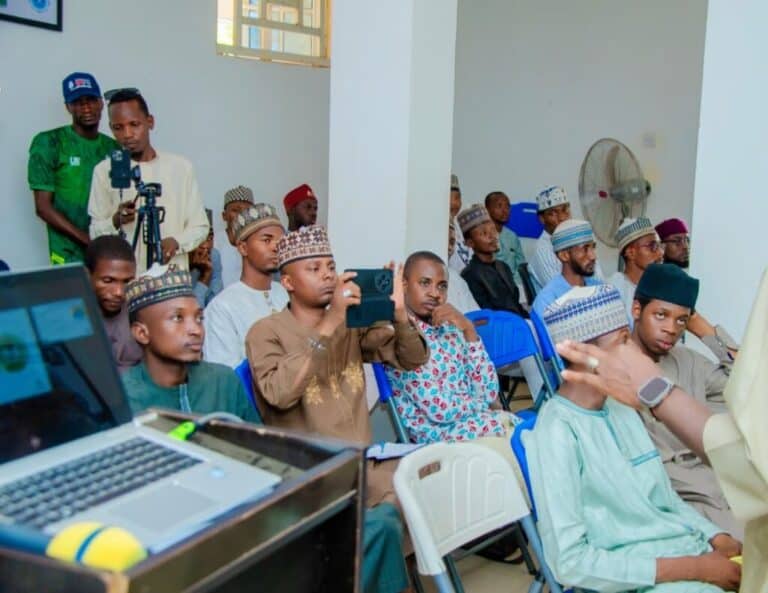
The Sokoto State Government, through its Ministry of Innovation and Digital Economy (MIDE), in partnership with Iconic Open University, has deepened its digital transformation drive with the rollout of Masterclass 2.0, a capacity-building programme focused on artificial intelligence (AI) in public service and the transition from paper-based administration to paperless governance.
The initiative, themed “AI in Public Service – Nigeria’s Transition from Paper to Paperless Governance,” is designed to equip civil servants and public sector workers with practical skills to integrate AI tools into administrative processes, improve efficiency, and strengthen transparency in governance.
Officials said the programme aligns with Governor Ahmad Aliyu Sokoto’s broader agenda to modernise public institutions, enhance productivity, and expand digital literacy across the civil service and youth population.
Speaking on governance communication and institutional efficiency, the Commissioner for Information and Orientation, Alhaji Sambo Bello Danchadi, said effective communication remains central to good governance in a digital age.
“In today’s world, governance is no longer about what is done behind closed doors, but how well those actions are communicated. Effective communication is a key driver of good governance,” he said.
The Senior Special Assistant to the Governor on Online Media, Malam Sani Umar, emphasised the importance of citizen engagement in modern governance systems, noting that digital platforms have reshaped public communication.
“The public space today is driven by conversations, not monologues. This training will help our officers engage citizens transparently and effectively,” he said.
From a broader policy standpoint, officials referenced national innovation priorities that highlight artificial intelligence as a key driver of economic and institutional transformation. According to a framework statement from the Federal Ministry of Innovation, Science, and Technology:
Related Articles:
- Enugu Government Trains Top Civil Servants in AI
- AI Overhaul Of Nigeria’s Civil Service Aims To Improve Efficiency
- FG Launches AI-Driven Civil Service Reform for Digital Transformation
- UNESCO Launches AI Training for 20,000 African Civil Servants and Judicial Professionals
“AI is no longer a concept of the future; it is here, reshaping industries and unlocking new economic opportunities. By equipping Nigerians with these skills, we are laying the foundation for a stronger, more competitive nation.”
In Sokoto, the Acting Director General of the ICT Directorate, Murtala Yusuf, reaffirmed the state’s commitment to inclusive digital development, stressing that technology adoption must cut across all levels of government and society.
He said ongoing reforms are aimed at ensuring that both public servants and young people acquire the digital competencies required for modern governance and economic participation.
The Masterclass 2.0 programme focuses on equipping participants with skills in AI-driven administrative systems, workflow automation, digital records management, and data-based decision-making processes. Organisers said these interventions are critical to reducing bureaucracy, eliminating inefficiencies, and strengthening accountability in public service delivery.
Experts involved in the training highlighted emerging shifts in governance practice, including the replacement of manual workflows with real-time digital systems and the adoption of citizen-centred service delivery models powered by data and artificial intelligence.
They noted that paperless governance would significantly improve operational speed, reduce administrative delays, and enhance transparency across ministries, departments, and agencies.
Organisers expressed optimism that the initiative would accelerate Sokoto State’s transition into a fully digital public service framework while contributing to Nigeria’s broader national digital economy objectives.
The training is expected to continue in successive cohorts, with expanded modules covering advanced AI applications, cybersecurity in governance, and digital policy implementation across public institutions.

Senior Reporter/Editor
Bio: Ugochukwu is a freelance journalist and Editor at AIbase.ng, with a strong professional focus on investigative reporting. He holds a degree in Mass Communication and brings extensive experience in news gathering, reporting, and editorial writing. With over a decade of active engagement across diverse news outlets, he contributes in-depth analytical, practical, and expository articles exploring artificial intelligence and its real-world impact. His seasoned newsroom experience and well-established information networks provide AIbase.ng with credible, timely, and high-quality coverage of emerging AI developments.