


What this scam is
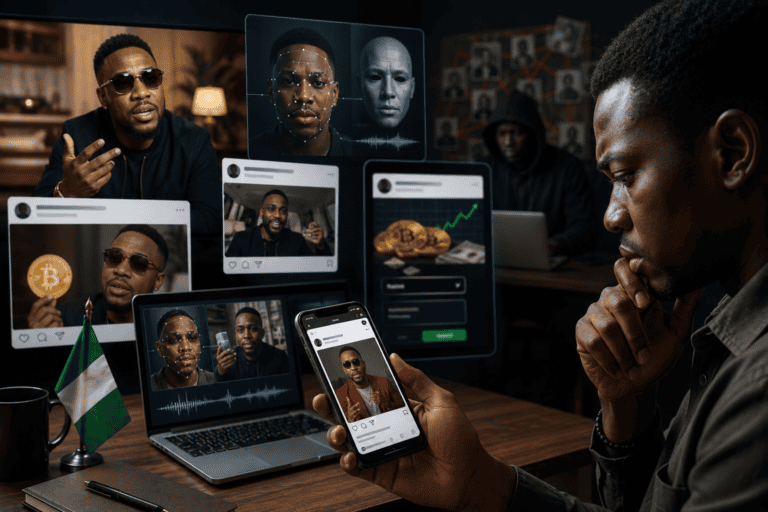
AI-generated celebrity endorsement scams use deepfake videos, cloned audio, or AI-manipulated images of well-known public figures to promote fraudulent investments. Scammers target popular Nigerian entertainers, tech founders, business tycoons, or political figures to make a cryptocurrency scheme, fake giveaway, or sketchy health product look completely real. The celebrity has absolutely no knowledge of the promotion because their face and voice were stolen using generative AI tools.
This advanced technique lends false authority and massive social proof to fraud that would otherwise look completely fake. A random social media account promising to double your money carries very little weight, but that same promise seemingly made by a top Nigerian billionaire or a beloved Afrobeats star immediately builds trust. These fakes show up as paid advertisements on your social media feeds, posts from accounts with fake verification badges, or links embedded in articles designed to look like legitimate Nigerian news sites.
How it works
-
Scammers collect publicly available videos, interview archives, and voice clips of popular Nigerian public figures from YouTube and social media feeds.
-
They feed this media into AI software to clone the celebrity’s voice and generate realistic video footage where the person appears to pitch a specific investment opportunity.
-
The fake video explicitly directs viewers to download an app, click a link, or send money to a specific wallet address to claim a limited cash bonus.
-
Fraudsters pay social media networks to run these highly targeted video clips as sponsored ads directly on the timelines of people interested in crypto, business, or lifestyle content.
-
When a viewer clicks the sponsored ad, they are taken to a cloned website that heavily features the celebrity’s stolen branding along with fake customer testimonials.
-
The fraudulent landing page asks the victim to pay an upfront processing fee, make a deposit, or send cryptocurrency with the promise of getting double the amount back.
-
Once the victim makes the bank transfer or sends the cryptocurrency, the money goes straight to the scammer’s anonymous account, and the victim is blocked completely.
Why this scam works
Endorsements from highly successful and respected figures are incredibly powerful tools because people naturally transfer their admiration for a star onto the product being sold. Scammers weaponise this emotional connection by hijacking the reputation a Nigerian icon has built over a lifetime and redirecting it toward a financial trap.
Modern deepfake technology has completely removed the old technical barriers, meaning fraudsters no longer need to find voice actors or lookalike impersonators to fool the public. Generative AI creates incredibly realistic lip movements and flawless voice inflexions that are very difficult to spot during a casual scroll through social media. The combination of a familiar, trusted face with an artificial sense of urgency forces victims to make fast, emotional decisions before they think to verify the claims independently.
A typical pattern
A sponsored video ad pops up on a Nigerian youth’s Instagram or Facebook feed showing a well-known Lagos tech founder speaking directly to the camera. The founder explains that they have discovered a secret AI trading platform that is helping regular Nigerians make millions of Naira every single day. The audio sounds perfectly authentic, and the lips move naturally in sync with the words.
When the viewer clicks the link, they are taken to a professional webpage that looks like an interview on a major national news channel. The page instructs them to pay a starting commitment fee of ₦50,000 via a bank transfer or crypto wallet to unlock their automated trading dashboard. After paying, the victim is put in touch with a fake account manager on WhatsApp who demands more cash for fictitious regulatory taxes. The real tech founder has absolutely no idea their identity is being used to rob people online.
Common red flags
-
A top Nigerian celebrity or billionaire is suddenly promoting a fast wealth scheme, automated trading tool, or massive money giveaway in a social media ad.
-
The exciting announcement only appears as a sponsored ad on social media but is completely missing from the celebrity’s official, verified personal accounts.
-
The video exhibits slight lip-sync delays, strange eye-blinking patterns, or blurry distortions around the edges of the speaker’s face.
-
The public figure’s voice sounds robotic, lacks natural breathing patterns, or has an unusual accent that does not match how they normally talk.
-
The caption creates aggressive panic by claiming there are only a few slots left or that the opportunity expires in a couple of hours.
-
The investment website or digital wealth app is not listed anywhere on the official register of the Securities and Exchange Commission (SEC) of Nigeria.
-
A promo page tells you that you must first send a specific amount of cryptocurrency or cash to verify your wallet before they can double it.
-
The website layout heavily copies popular Nigerian news brands but uses a strange web link that looks completely different from the real news channel’s URL.
-
All the comments underneath the social media post are highly repetitive praises from account profiles that look completely artificial or newly created.
Sanitised example messages
“I want to lift 5,000 Nigerians out of poverty this month through this automated AI trading system – click below to activate your daily ₦100,000 payouts now!”
“BREAKING: A top Nigerian billionaire reveals the secret crypto loophole banks want to ban – only 200 slots remain for active investors today.”
“To celebrate my birthday, my team will send double the amount of any cryptocurrency sent to this official foundation wallet over the next two hours.”
“Watch this exclusive interview where Nigeria’s biggest music star explains how an initial ₦30,000 investment completely changed their family’s financial future.”
Common variations
-
Crypto doubling promotions where a deepfake video of a well-known billionaire claims they will match any digital coin deposit you send to a specific address.
-
Fake news articles featuring a cloned video interview of a politician explaining how a hidden wealth platform can bypass regular economic hardships.
-
Static, AI-manipulated banners showing a trusted celebrity holding a fake product to deceive buyers into paying for fraudulent healthcare supplements.
-
Cloned audio clips played during popular online podcasts or audio streams that sound exactly like a trusted industry expert giving exclusive investment tips.
-
Fake verified profiles on social media networks that share short, manipulated reels of actors giving away free cash bonuses to their fans.
-
Live-streamed deepfakes where an automated, looping video of an influencer appears to be hosting a live, real-time interactive cash giveaway.
How to verify before you act
-
Open your web browser and go directly to the official, verified social media handles of the celebrity to see if they ever posted about the opportunity.
-
Real endorsement contracts are major industry news, so search the celebrity’s name along with the product name on Google to see if credible Nigerian newspapers have reported on it.
-
Examine the video footage very carefully by pausing it to check if the mouth movements match the syllables or if the facial lighting shifts unnaturally.
-
Listen closely for flat tones, robotic pauses, or sudden jumps in audio quality that signify a voice-cloning tool was used to manufacture the message.
-
Run the name of any financial company through the official portals of Nigerian capital market regulators to make sure they are legally licensed to handle your money.
Payment methods used
-
Crypto
-
Card
-
Bank transfer
Who is usually targeted
-
Social media users
-
Fans of public figures
-
Investors
What to do immediately
-
Close the webpage immediately and do not enter your banking details, phone number, or BVN into any forms on the site.
-
Open your main social media app to locate the original ad and use the built-in reporting button to flag it as a scam or deepfake.
-
Call your bank’s official customer care channel immediately to freeze your accounts if you already shared your debit card pin or banking password.
-
Take clear screenshots of the fake video ad, the web links, and any bank account names provided by the scammers before they pull the page down.
-
Inform your close friends and family members across WhatsApp groups so they do not fall for the same video ad on their personal timelines.
How to prevent it
-
Train yourself to assume that any investment offer or cash giveaway pushed by a celebrity via a sponsored ad is a deepfake until proven otherwise.
-
Keep in mind that no legitimate business, charity, or wealthy individual will ever require you to send them money first just to receive a prize.
-
Avoid clicking on sensationalist media links on Facebook or X that claim a famous person has leaked a secret money-making strategy.
-
Discuss the reality of AI voice-cloning and deepfake technology with your parents, older relatives, and younger siblings who might not know how easy it is to fake a video.
-
Set up strong multi-factor authentication across all your mobile banking and digital wallet apps to keep your funds secure from unauthorised access.
Evidence to preserve
-
Screenshots or clear screen recordings of the deepfake video ad showing the profile name of the account that posted it.
-
The complete web address of the fraudulent page you landed on after clicking the sponsored social media post.
-
Copy of the exact text descriptions, WhatsApp contact phone numbers, or email addresses provided by the scammers during the interaction.
-
Official digital transaction receipts showing the bank account number, bank name, or crypto wallet address where any funds were transferred.
Where to report it
- The Advertising Regulatory Council of Nigeria (ARCON): advertcouncil.gov.ng/_contact_us
-
Nigeria Police Force National Cybercrime Centre (NPF-NCCC): You can report artificial intelligence identity theft, digital fraud networks, and deepfake scams securely via the official NPF-NCCC e-Reporting Portal.
-
Economic and Financial Crimes Commission (EFCC): Report fraudulent online investment operations, fake crypto platforms, and financial impersonation to the EFCC Reporting Desk.
-
Federal Competition and Consumer Protection Commission (FCCPC): File an official consumer complaint against fake business advertisements and deceptive web platforms through the FCCPC Complaints Portal.
-
Your Bank’s Fraud Department: Use the official emergency telephone number printed clearly on the back of your ATM card or located inside your secure mobile banking app to report unauthorised transfers.
Warning: After falling victim to an online scam, you will often be targeted a second time by recovery scammers. These are individuals who message you privately on Telegram, WhatsApp, or social media comments claiming they are ethical hackers or legal experts who can retrieve your lost cash or crypto for an upfront fee. Real Nigerian law enforcement agencies and regulatory bodies do not hire private agents to solicit processing fees from victims over chat apps.
Frequently asked questions
How can I spot a deepfake endorsement?
Look closely at the speaker’s face for unnatural blinking, blurry lines around the mouth, or instances where the voice tone sounds flat and robotic while the lips move out of sync with the words.
Could a real celebrity actually endorse an investment this way?
No legitimate celebrity or business mogul will ever launch an investment tool exclusively through a random, third-party sponsored ad without mentioning it anywhere on their main verified social media profiles.
Is the ‘send crypto to double it’ giveaway ever real?
No, this is a classic advance-fee fraud layout. No genuine business or celebrity foundation will ever ask you to send your own digital currency to an anonymous wallet address just to get a larger amount back.
Why do platforms allow these ads?
Social media platforms use automated ad-approval systems that struggle to catch high-quality AI alterations, allowing scammers to buy ad space before human moderation teams can discover and remove the policy violations.
Can I get my money back if I deposited based on a deepfake ad?
If you did a standard bank transfer to a Nigerian account, contact your financial institution immediately to initiate a recall, though recovery is very difficult if the fraudsters have already withdrawn the cash. Cryptocurrency payments sent to external wallets cannot be reversed.
Does the celebrity have any recourse against these fakes?
Public figures frequently issue public disclaimers warning fans about fake profiles, and their legal teams work directly with tech platforms and cybercrime units to take down the deepfake videos and suspend the fraudulent accounts.
How do I report a deepfake ad I saw on social media?
Tap the three small dots in the top corner of the sponsored post, select the report option, and classify the content under fraud, scam, or misleading impersonation so the platform can review and delete it.

1 Comment
Thanks guys for this wonderful info.