

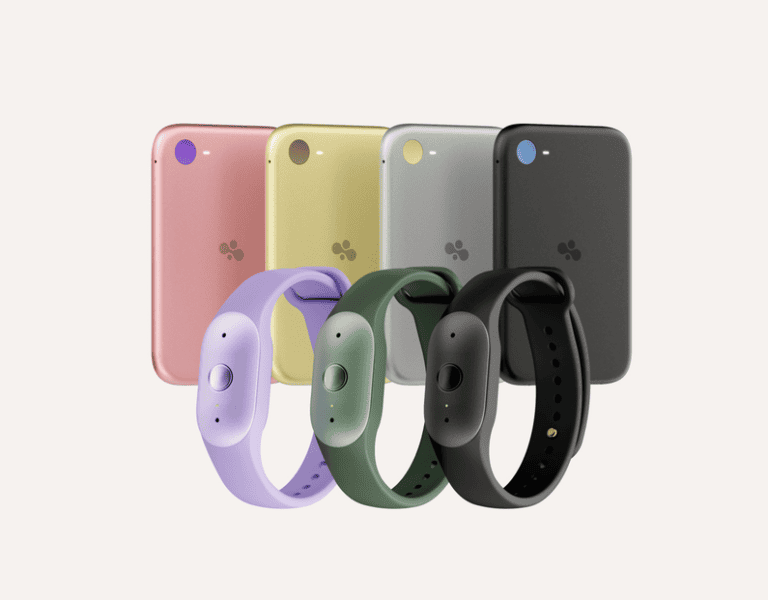
Amazon has unveiled two new personal AI devices, Bee Frontier and Bee Eclipse, as the tech giant expands its push into AI-powered consumer hardware.
Announced on Thursday, 15 October, the devices are designed to help users remember important details from everyday conversations, generate summaries and turn discussions into actionable tasks.
The launch marks a new stage for Bee, the AI wearable company Amazon acquired in 2025, as the retailer seeks to integrate personal AI more closely into users’ daily lives.
Bee Frontier is a wearable device you can wear on your wrist or clip to clothing, while Bee Eclipse is a compact, credit-card-sized attachment that magnetically connects to the back of a smartphone.
Amazon says both devices can capture conversations when activated and use AI to generate summaries, reminders, to-do lists and insights. The aim is to help users track commitments, meeting discussions, and everyday plans without taking notes manually.
Bee Frontier is available now for $74.99, while Bee Eclipse is expected to launch soon, starting at $99.99.
The Bee Frontier features an ultra-soft silicone wristband, dual microphones with noise-filtering technology and an IP67 water-resistance rating. It offers up to seven days of battery life and charges through USB-C. The device is available in Onyx, Lavender and Sage.
Bee Eclipse, meanwhile, is designed for users who prefer a phone-based accessory rather than a wearable. According to Amazon, it offers more than 21 days of battery life on a single charge and will be available in Silver, Midnight, Honey and Blush.
Read: Eclipse Launches $1.3B Fund to Power the Physical AI Revolution
Beyond recording and summarising conversations, the devices can connect with productivity tools, including Gmail, Google Calendar and Microsoft Outlook. These integrations can help users identify follow-up tasks, draft emails and create calendar invitations based on information discussed during meetings or calls.
Amazon is also introducing integrations with Alexa+ and Amazon.com. Users who connect Bee to Alexa+ can request summaries and reminders through compatible devices, while the Amazon.com integration can provide personalised shopping suggestions based on items mentioned in conversations.
These additional capabilities are tied to Bee Pro, a subscription service priced at $11.99 per month. The basic service includes conversation summaries, recaps and 14 days of memory, while new customers receive a 30-day free trial of Bee Pro.
Privacy will likely be a key consideration as AI devices become more involved in everyday conversations. Amazon says Bee processes audio in real time and deletes it afterwards, rather than storing raw recordings. The company also says users control when recording begins and ends with a physical button, and an indicator light shows when the devices are active.
For Bee Eclipse, Amazon says users must obtain permission from call participants whenever recording begins. Transcripts are encrypted, and users can delete their transcripts and summaries at any time.
However, the devices’ ability to process conversations raises broader questions about consent, data protection and the use of personal information in AI-powered services. Their reception may depend not only on their usefulness but also on how effectively these privacy safeguards work in practice.
Read also: 5 Ways AI is Actually Changing Daily Life in Nigeria
The launch comes as technology companies increasingly compete to develop AI hardware that extends beyond smartphones and computers. Rather than relying solely on users to ask questions or enter information, personal AI devices are designed to capture context and provide assistance throughout the day.
For Amazon, Bee Frontier and Bee Eclipse aim to make AI a more continuous part of everyday routines, from remembering appointments and managing work commitments to organising personal plans and shopping lists.
Whether consumers will embrace devices that process their conversations remains to be seen. Their success will depend on delivering practical benefits while maintaining user trust, particularly as AI becomes more closely integrated into personal and professional life.

Senior AI Writer
Bio: Okikiola is a writer and AI enthusiast with a background in Office Technology and Management from the Federal Polytechnic Offa. She went further to study an MSc in International Business at De Montfort University (DMU). With extensive work experience across administrative and business roles, she now focuses on exploring how artificial intelligence can transform work, innovation, and everyday life.