

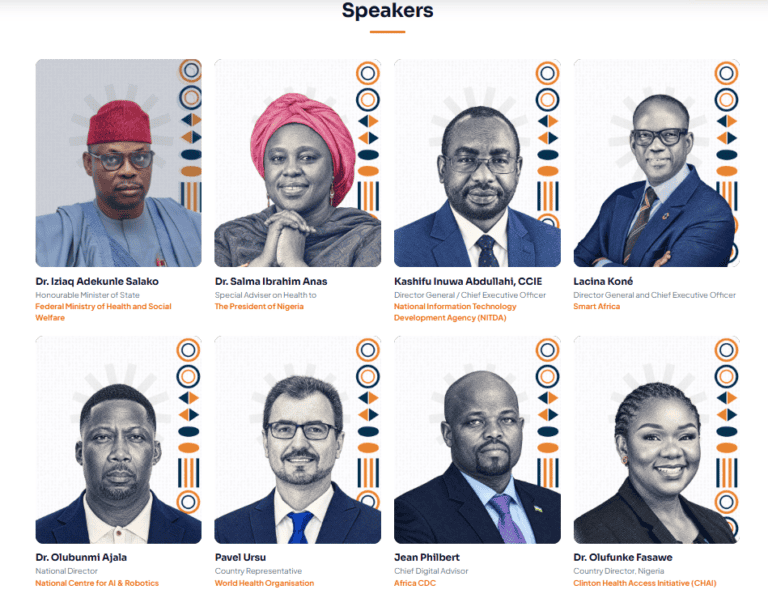
The federal capital is set to host a major gathering of international health leaders, technological innovators, and policymakers next week to address the rapid rise of automated medical tools across the continent.
The Artificial Intelligence (AI) in Health Summit 2026 will take place from 19 to 20 October 2026 at the TY Danjuma Foundation Building in the Central Business District of Abuja. Convened by the Africa Hub for Innovation and Development (AHFID), the two-day event aims to outline an immediate regulatory roadmap for clinical technologies as evidence mounts of widespread, unregulated use of artificial intelligence by domestic medical professionals.
Operating under the theme, “Catalysing Country AI-in-Health Framework for Transformative Healthcare Systems,” the summit marks a decisive shift towards country-led governance rather than importing foreign digital models. Speaking at a media briefing in Abuja ahead of the event,
AHFID Founder Dr Kunle Kakanfo disclosed that local clinicians are already turning to commercial AI software to manage patient care, noting that whether people want to believe it or not, doctors are actively using ChatGPT.
He cited a recent study indicating that over 70 per cent of local doctors use conversational AI to support their clinical consultations, highlighting the urgent need to train algorithms on local datasets and protect patient privacy.
A primary focus of the upcoming sessions will be the application of machine learning to mitigate Africa’s chronic healthcare workforce shortages.
Delegates are scheduled to review practical deployment strategies for targeted clinical automation, including computer vision platforms to accelerate chest X-ray analysis for tuberculosis screening, predictive algorithmic models for cervical cancer detection, and automated surveillance systems to track epidemiological patterns.
Organisers have consistently stressed that these technologies are designed strictly to augment human clinicians rather than replace them, maintaining that final clinical decisions must remain under human oversight.
Read: FG and Tech Experts Train Over 200 Women in AI in Abuja
As algorithmic tools expand further into public clinics, establishing institutional safeguards remains a prominent hurdle for the organizers. Dr Abiola Oshunniyi, a global development and digital transformation adviser who is set to moderate the pre-summit panels, emphasized that technological enthusiasm must not outpace safety.
Dr Oshunniyi noted that the ultimate success of health technology rests entirely on community trust and verifying that emerging tools solve immediate, real-world ailments.
The findings and declarations generated during the two-day convention are expected to form the basis of a unified national policy document, positioning Nigeria at the forefront of medical AI regulation within the West African sub-region. AHFID
AI Writer
Bio: Joseph Michael is an MBA graduate in Marketing from Ladoke Akintola University of Technology and a passionate tech enthusiast. As a professional writer and author at AIbase.ng, he simplifies complex AI concepts, explores digital innovation, and creates practical guides for Nigerian learners and businesses. With a background in marketing and brand communication, Joseph brings clarity, insight, and real-world relevance to every article he writes.