

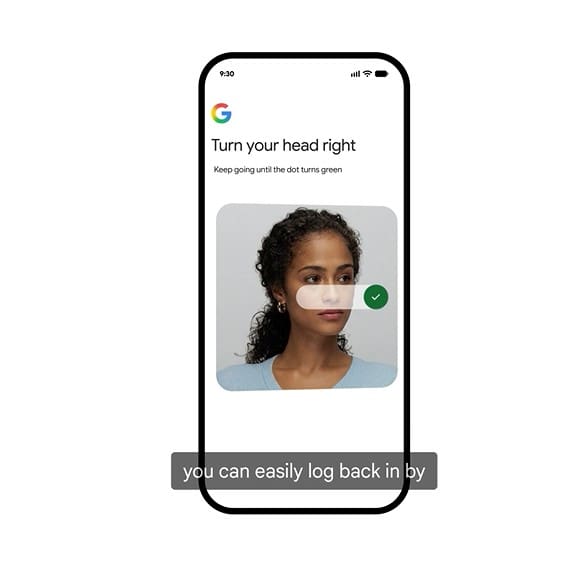
Google has introduced a new account recovery feature that allows eligible users to regain access to their Google Accounts using a selfie video, adding another layer to the company’s growing portfolio of identity verification and account security tools.
Announced on July 23, the new Selfie Video for Sign-in feature is designed as a backup recovery method for users who become locked out of their accounts because they have forgotten their password or no longer have access to their trusted device.
The feature is available only to eligible personal Google Accounts and is rolling out gradually. It is not currently supported for Google Workspace accounts, child accounts, or accounts enrolled in Google’s Advanced Protection Program.
To enable the feature, users record a short selfie video while following on-screen instructions that guide them through a series of head movements, allowing Google to capture multiple facial angles.
If the user later needs to recover access to their account, they record another selfie video. Google compares the new recording with the previously enrolled video to verify the person’s identity before granting access.
According to Google, the feature is intended to complement, not replace, existing account recovery options such as passkeys, recovery phone numbers, recovery contacts, trusted devices, and two-factor authentication.
Is Artificial Intelligence Involved? Yes. Although Google does not market the feature primarily as an AI product, artificial intelligence plays a significant role in how the verification process works.
Google says the system uses advanced security technologies to compare the newly recorded selfie video against the stored reference video while checking that the recording is being captured live. The company also says it performs multiple security checks designed to detect impersonation attempts, including AI-generated deepfakes.
These capabilities rely on AI-powered facial recognition, liveness detection, and anti-spoofing technologies that help distinguish a real person from manipulated images or synthetic videos.
Regarding privacy and user control, the feature involves biometric data; Google says privacy protections are built into the process.
The company states that selfie videos are encrypted, stored with the user’s consent, and can be deleted at any time through the user’s Google Account settings.
Related
- 8 Ways AI Can Be Used to Tackle Fraud in Nigeria
- Are AI-Powered Interviews Making It Harder to Get a Job?
- AI Face-Swap KYC Bypass Scam
By default, the recordings are used only for account sign-in and recovery. Users must explicitly opt in if they choose to allow Google to use their selfie videos for additional purposes.
Google’s latest feature reflects a broader shift toward biometric authentication as technology companies seek alternatives to passwords and improve protection against increasingly sophisticated cyberattacks.
As AI-generated images and deepfake videos become more convincing, identity verification systems are also evolving. Google’s selfie video feature combines biometric authentication with AI-based liveness and deepfake detection to strengthen account recovery and reduce the risk of fraud.
The company continues to recommend that users enable multiple recovery methods rather than relying on a single authentication option, ensuring they have several ways to regain access if one method becomes unavailable.

Senior AI Writer
Bio: Okikiola is a writer and AI enthusiast with a background in Office Technology and Management from the Federal Polytechnic Offa. She went further to study an MSc in International Business at De Montfort University (DMU). With extensive work experience across administrative and business roles, she now focuses on exploring how artificial intelligence can transform work, innovation, and everyday life.