

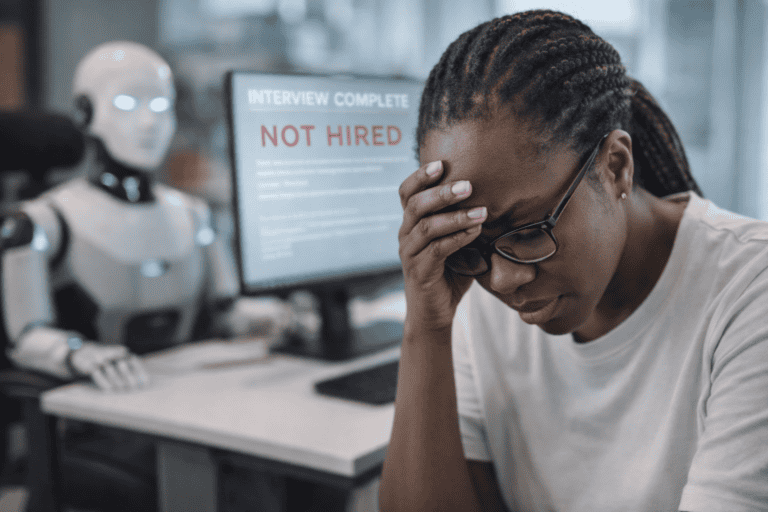
Nigeria’s recruitment industry is undergoing a significant transformation as organisations increasingly adopt artificial intelligence-powered hiring systems to improve efficiency, reduce costs, and speed up talent identification in a highly competitive labour market.
Across sectors such as banking, telecommunications, fintech, outsourcing, and technology, employers are integrating AI tools into recruitment processes, including résumé screening, aptitude testing, behavioural assessments, and candidate matching. Industry experts say these technologies are reshaping hiring standards and changing how organisations evaluate job applicants.
“AI-powered recruitment is redefining how Nigerian companies identify and evaluate talent.”
Human resources technology firms report that employers are now demanding faster, more data-driven recruitment processes as application volumes continue to rise. AI systems are being used to rank candidates, assess competencies, and automate administrative tasks such as interview scheduling and early-stage communication with applicants.
The shift toward AI-driven hiring reflects broader digital transformation efforts across Nigeria’s corporate sector. Companies are under pressure to shorten recruitment timelines while still ensuring candidates possess the technical skills and soft competencies required in an evolving economy. Predictive analytics is increasingly being used to identify candidates with the highest likelihood of success in specific roles.
Nigeria’s expanding digital economy and growing emphasis on technology adoption have also increased awareness of artificial intelligence and digital skills among job seekers. Recruiters say candidates are now expected to optimise their résumés for automated screening systems, replacing traditional manual review processes.
Global recruitment trends are also influencing the local labour market, with organisations deploying AI chatbots, automated testing platforms, and skills-matching tools to streamline hiring. Analysts note that when combined with human oversight, AI-assisted recruitment can improve efficiency and enhance the accuracy of candidate selection.
However, concerns are emerging over the broader implications of AI in hiring. Labour experts and HR professionals warn that poorly designed algorithms could reinforce bias if trained on flawed or unbalanced data. Issues such as transparency, data privacy, and weak regulatory frameworks are also raising concerns among industry stakeholders.
Some recruitment consultants caution that over-reliance on automation may lead employers to overlook candidates with unconventional career paths or limited digital exposure, even when such candidates possess strong practical abilities.
Experts stress that human judgment remains critical in the hiring process. While AI can improve speed and efficiency, they argue that fairness, context, and empathy must continue to guide final recruitment decisions.
“The future of recruitment in Nigeria will likely combine artificial intelligence with human judgment.”
In response to these changes, job seekers are increasingly enhancing their digital literacy and tailoring their applications to AI-driven screening systems. Career advisers say candidates now require measurable skills, professional certifications, online portfolios, and keyword-optimised résumés to remain competitive in the evolving job market.
The rise of AI-powered recruitment is also creating opportunities for Nigerian HR technology startups developing local solutions tailored to the country’s labour market. These platforms are introducing tools such as automated résumé scoring, candidate-matching systems, and virtual assessment technologies designed to improve hiring efficiency.
Looking ahead, analysts expect Nigeria’s recruitment landscape to adopt a hybrid model in which artificial intelligence supports, but does not replace, human decision-making. While automation is expected to continue reshaping hiring practices, experts say ethical standards, transparency, and accountability will determine how effectively AI transforms employment systems positively in the country.

AI Writer
Bio: Joseph Michael is an MBA graduate in Marketing from Ladoke Akintola University of Technology and a passionate tech enthusiast. As a professional writer and author at AIbase.ng, he simplifies complex AI concepts, explores digital innovation, and creates practical guides for Nigerian learners and businesses. With a background in marketing and brand communication, Joseph brings clarity, insight, and real-world relevance to every article he writes.