

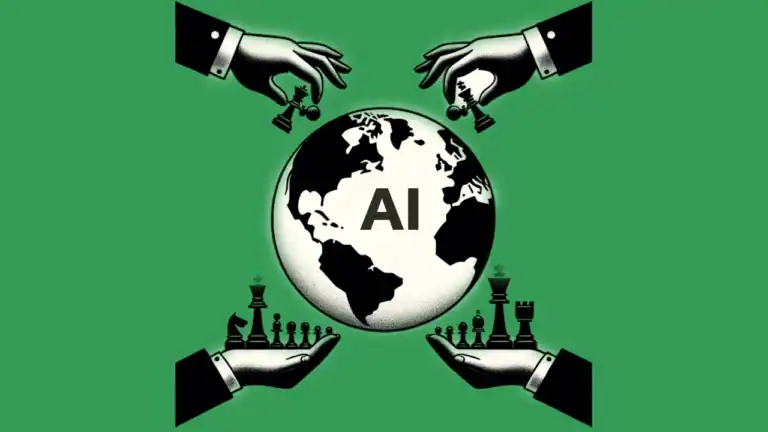
Artificial intelligence (AI) has evolved from a technological novelty into a central driver of global power. Beyond business and research, it now shapes international relations, economic competitiveness, and military strategy, offering nations that master it a chance at unprecedented global influence.
Governments worldwide are acting with urgency, investing in AI infrastructure, shaping national policies, and forging international partnerships to secure technological sovereignty. Experts say the race now goes beyond developing AI itself-it’s about controlling the networks, data flows, computational power, and regulatory frameworks that support it.
Below is an insight into how governments around the world are navigating the global AI revolution.
United States: Strategic Leadership and Competitive Offence
For the United States, AI represents both an economic engine and a national security imperative. Washington is pursuing a dual-track approach: strengthening domestic innovation while expanding the export of AI technology to allies. By fostering partnerships in Europe, Asia, and the Middle East, the U.S. aims to counter rival influences and ensure interoperable, trusted AI systems globally.
Simultaneously, the U.S. is investing in proactive “AI offence” strategies. These initiatives focus on infrastructure, research, and rapid deployment, emphasising flexibility and agility over heavy-handed regulation. Analysts highlight that this approach positions the U.S. to project economic and strategic power simultaneously, ensuring technological dominance in a rapidly shifting global landscape.
China: State-Led Development and Global Influence
China’s AI approach contrasts sharply with the U.S. model. Here, AI is state-directed, fully integrated into long-term strategies for economic development, military modernisation, and international influence. Beijing is actively promoting its AI standards abroad through diplomatic initiatives and partnerships, while simultaneously advancing domestic capabilities in data control, cloud infrastructure, and advanced research.
Beyond industrial and economic applications, AI also supports information influence and strategic communications, enhancing China’s ability to shape narratives internationally. China’s model reflects a deliberate balance between sovereign control and global engagement, ensuring that technological advancement translates into tangible geopolitical leverage.
European Union: Governance, Standards, and Digital Sovereignty
The European Union’s AI strategy emphasises ethical governance and digital sovereignty. Through initiatives like the AI Act, the EU aims to set global standards for transparency, safety, and human-centric AI use, while reducing dependency on U.S. and Chinese technology.
Yet Europe faces challenges. Fragmented policymaking and resource constraints slow its ability to compete directly with the superpowers. Still, the EU’s focus on rights-based regulation positions it as a potential global standard-setter, shaping the rules of engagement for AI on an international scale.
India: Inclusive Diplomacy and Emerging Strategic Autonomy
India is carving out a distinctive approach to AI, centred on inclusivity, global cooperation, and strategic autonomy. By engaging the Global South through initiatives like the AI Impact Summit, India positions itself as a leader in equitable AI development and governance, emphasising capacity-building and partnership over competition.
While gaps remain in infrastructure and research, India’s strategy focuses on bridging global divides and fostering collaborative, trust-based AI frameworks. This approach offers a model for developing nations seeking agency in the rapidly intensifying global AI race.
Middle Powers and Emerging Regions: Sovereignty and Strategic Positioning
Beyond the major powers, middle-tier nations and emerging economies are increasingly aware of AI’s strategic significance. Gulf states, Southeast European nations, and other middle powers are investing in “sovereign AI” strategies, building domestic capabilities to assert independence amidst U.S.–China competition.
In Africa, several countries are leveraging “Silicon diplomacy”, using AI partnerships, regional collaboration, and talent development to avoid marginalisation in the global AI ecosystem. These efforts illustrate that AI is not solely a tool for the largest nations; smaller and developing states are actively positioning themselves to gain influence.
The Geopolitical Implications
AI infrastructure, data control, and regulatory influence have become central pillars of national power. The competing models reflect broader political and cultural divides: the U.S. emphasises market-driven leadership, China relies on state-directed control, and the EU champions ethically grounded regulation.
Despite emerging international dialogues on AI governance, fundamental disagreements over sovereignty and technological control remain a barrier to unified global standards. Meanwhile, middle powers and the Global South are asserting autonomy, forging alliances, and positioning themselves strategically within a rapidly evolving global landscape.
Conclusion
AI has transcended its status as a technological advancement -it is now a geopolitical game-changer. Nations that invest in infrastructure, assert regulatory authority, and secure strategic partnerships are positioning themselves to shape the future global order. As the race for AI supremacy accelerates, it is redefining power, diplomacy, and economic influence, making it one of the most critical arenas of 21st-century geopolitics.
Related Articles:
- UN Calls On African Nations To Invest More In AI
- ECOWAS Targets Coordinated AI Governance Across West Africa
- Middle East Crisis Adds New Pressure on Global AI Investment Boom

Senior AI Writer
Bio: Okikiola is a writer and AI enthusiast with a background in Office Technology and Management from the Federal Polytechnic Offa. She went further to study an MSc in International Business at De Montfort University (DMU). With extensive work experience across administrative and business roles, she now focuses on exploring how artificial intelligence can transform work, innovation, and everyday life.