

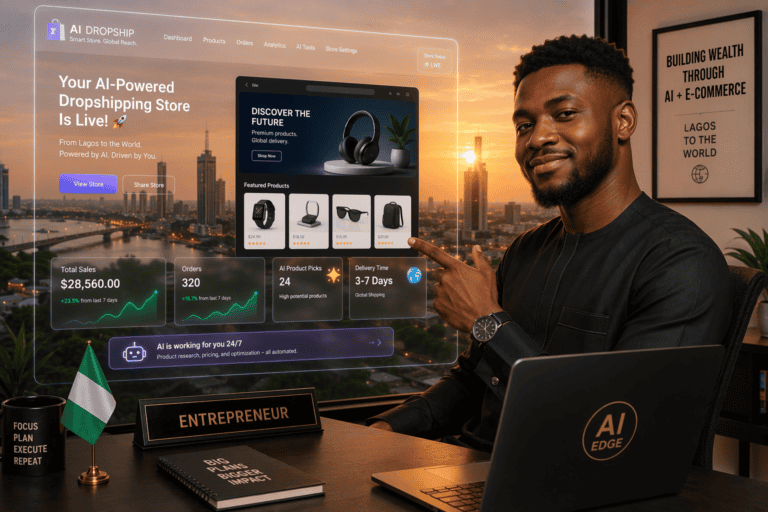
Starting an online business in Nigeria no longer means renting a shop or filling a room with stock. With the right business model, you can build a dropshipping store that sells to customers across borders while suppliers handle fulfilment.
Add AI tools, and many tasks become easier, from product research to customer service. If you want a practical way to launch with lower risk, AI-powered dropshipping gives you a realistic path to test ideas, build a brand, and grow step by step.
Key Highlights
- AI tools can help your dropshipping business handle product research, pricing, and customer support faster.You can launch an online store from Lagos without buying product inventory upfront.Global dropshipping works well when you use reliable ecommerce platforms and trusted suppliers.If you plan to start an AI dropshipping store in Nigeria, you should be aware of local legal requirements. Register your dropshipping business with the Corporate Affairs Commission (CAC), obtain any necessary tax identification, and ensure compliance with Nigerian e-commerce regulations regarding online payments and consumer protection. These steps are important to operate your business legally in Nigeria.
- You can launch an online store from Lagos without buying product inventory upfront.
- Global dropshipping works well when you use reliable e-commerce platforms and trusted suppliers.
- Nigeria gives online business owners access to a growing digital market and global buyers.
- Beginners can start with a free plan or free trial on selected tools and platforms.
- Strong product pages, secure payment processing, and automation tools improve daily store operations.
Understanding AI-powered Dropshipping from a Nigerian Perspective
AI-powered dropshipping combines a low-inventory business model with software that handles repetitive work. In the dropshipping market, that means less manual searching, faster product discovery, and better decisions based on live store data. You stay focused on selling, not chasing every small task.
For Nigerian store owners, this setup can work well with a Shopify store or other e-commerce platforms. AI tools can help you review trends, write product descriptions, and manage customer support. They do not replace judgment, though. You still need to watch product quality, supplier reliability, and the full customer experience.
What is AI-driven dropshipping and how does it work?
AI-driven dropshipping is a business model in which you sell products online without holding inventory yourself. Instead of buying goods in advance, you list items in your dropshipping store, accept customer orders, and let a supplier ship them. This cuts the need for upfront inventory costs and lowers early risk.
What changes with AI tools? They accelerate product research, suggest product ideas, generate product descriptions, assist with pricing, and enhance customer service. Some tools also track live store trends, automate order updates, and create ad copy or simple product videos. That means fewer manual tasks for you.
The basic steps are clear. Pick a product category, use AI tools to find promising items, choose a platform, build your store, import product listings, connect payment processing, and set up customer support. After launch, monitor results and improve what works.
Key advantages of using AI for dropshipping businesses
Running a store manually takes time. AI gives you speed where it matters most. It can help you spot trends, write faster, answer buyers, and automate tasks that usually slow down new sellers. That matters when you are competing in a busy market.
You also gain a competitive advantage when your store reacts faster to data. Some tools focus on product research, while others handle customer support, content, or pricing. Used well, they can protect profit margins and make your workflow easier.
- Sell The Trend combines product research, ad creation, and store import.
- AutoDS helps automate order fulfilment, pricing, and stock updates.
- Dropship.io focuses on proven products from real Shopify stores.
- Tidio supports customer support with chatbots and live chat.
- ChatGPT and Jasper help create product descriptions, emails, and ad copy.
In short, automation tools reduce routine work so you can focus on testing offers, improving store pages, and growing sales.
Why Nigeria is an ideal location for global e-commerce startups
Nigeria offers digital entrepreneurs a strong starting point for global dropshipping, as the model is online from day one. You are not limited to your city. Your target audience can sit in the United States or other markets while you run the store from Lagos.
That matters because many leading ecommerce platforms and AI tools are cloud-based. You can build an online business, research products, write content, and manage support from one dashboard. Platforms mentioned in the compiled information, such as Shopify, WooCommerce, eBay, and TikTok Shop, as well as integrations through tools like Sell The Trend or AutoDS, support inventory-light selling.
The real edge is flexibility. You can test demand, change product ideas quickly, and learn from live market data without buying stock first. For Nigerians who want a global path, that makes entry simpler and more practical.
The Rise of Zero-Inventory E-commerce from Lagos
Zero inventory has changed how many people think about starting an online store. Instead of tying money up in stock, a dropshipping business lets you publish product listings, attract buyers, and send orders to suppliers for fulfilment. That lowers pressure at the beginning.
From Lagos, this model is especially attractive because it removes the need for a warehouse. You can focus on building product pages, testing offers, and serving buyers in different countries. The next sections explain how zero inventory works, what success can look like, and which myths can hold new sellers back.
How dropshipping eliminates the need for upfront inventory
Traditional retail often starts with buying goods before any sale happens. In a dropshipping store, that step changes. You list products first, collect payment from buyers, and then pass the order to a supplier. Because of that business model, you do not need to hold product inventory yourself.
This is why many beginners see dropshipping as a lower-risk entry into ecommerce. It does not mean the store runs itself or that there are zero costs at all. You still need a platform, good product pages, and time for product research. Yet the biggest expense, stock purchase, is removed.
Can you start with very little money in Nigeria? The compiled information suggests yes, especially if you use a free plan or free trial where available. Success still depends on supplier choice, product quality, and smart testing.
Common misconceptions about starting a dropshipping business in Nigeria
Many new sellers think zero inventory means zero work. That idea creates problems fast. A business owner still needs to test products, review suppliers, and protect the customer experience. AI helps, but it does not fix weak choices.
Another common myth is that any trending item will sell. In reality, product research matters because demand, competition, and shipping all affect results. Product quality also remains your responsibility, even when a supplier ships on your behalf.
Common mistakes and myths include:
- Assuming a reliable supplier is optional.
- Copying random product ideas without market research.
- Ignoring product quality and shipping experience.
- Expecting instant profit margins without testing.
- Uploading poor product details or weak product images.
- Relying on automation without checking store performance.
The good news is that most of these mistakes can be avoided with due diligence and simple systems.
Essential Requirements to Start AI-powered Dropshipping
Before you build your store, you need a few basics in place. The strongest start usually comes from choosing a clear product category, selecting practical AI tools, and working with ecommerce platforms that match your goals. This keeps your online business simple from the start.
You also need stable internet access, a workable payment setup, and software that fits your skill level. None of this has to be complex. In the next sections, you will see what equipment to use, how payment processing works, and which beginner-friendly tools can support your first launch.
Devices and internet connectivity needed for online business
You do not need a full office to start an online business. A dependable laptop or smartphone can handle many tasks, especially in the early stage. Since store owners spend time on product research, uploads, and customer replies, stable internet connectivity matters more than fancy equipment.
A simple setup can support your main work: checking Google Trends, editing product pages, replying to customers, and using dashboards on ecommerce platforms. If your connection drops frequently, it can delay customer service and order handling.
Basic needs include:
- A laptop or smartphone that can manage browser-based tools
- Stable internet connectivity for store updates and support
- Access to Google Trends and product research tools
- A secure way to store passwords and account details
With these basics, you can move from idea to launch without heavy overhead.
Reliable payment gateways and banking solutions for Nigerians
Payment processing is the bridge between your customer and your store. In a dropshipping business, buyers pay at checkout, the funds pass through your chosen platform, and you then pay the supplier to fulfil customer orders. That means secure payment systems and practical banking solutions are essential.
The compiled information does not name Nigeria-specific providers, but it does make one point clear: your setup should work smoothly with ecommerce platforms and support buyer trust. Clear checkout pages, safe handling of payment data, and reliable withdrawals all support customer satisfaction.
| Payment Need | Why It Matters for Your Store |
|---|---|
| Secure payment checkout | Helps buyers trust your online store and complete orders |
| Platform integration | Connects payment processing with Shopify, WooCommerce, or other tools |
| Banking access | Lets you receive funds and pay suppliers on time |
| Order tracking links | Supports customer satisfaction after payment is confirmed |
| Fraud and data safety | Protects your business and customer information |
A smooth payment flow reduces friction and supports repeat sales.
Recommended platforms and AI tools for beginners
Beginners usually do best with tools that are simple and focused. You want ecommerce platforms that are easy to manage and AI tools that solve one clear problem at a time. The compiled information highlights several strong options for research, automation, support, and content.
Some tools offer a free plan, while others provide a free trial. That gives you room to test your workflow before paying for advanced features. The best starting setup depends on whether you need help with product discovery, design, customer support, or fulfilment.
Useful beginner options include:
- Shopify for store building, with Shopify Magic built in
- WooCommerce for flexible store setup
- Sell The Trend for all-in-one research and store import
- AutoDS for fulfilment and pricing automation
- DSers for bulk AliExpress ordering
- Tidio or ChatGPT for customer support and content
Start lean. Add more automation tools only when your daily tasks begin to pile up.
Step-by-Step Guide to Launching Your AI-Powered Dropshipping Store
Once your basics are ready, it is time to build. Launching an online store is easier when you follow a sequence rather than trying everything at once. That is where AI tools help store owners stay organised and faster on each task.
The process below follows a practical order: research, platform choice, store setup, automation, supplier checks, payments, and analytics. Follow these steps and keep your first version simple. You can improve later as data from your dropshipping store starts showing what customers actually want.
Step 1: Research profitable niches and trending products with AI
Product research is your first real decision. Start by looking for demand, not just interesting products. AI tools can show what is already selling, which niches are growing, and how competitors present their offers. This helps you avoid random guesses.
From Lagos, you can run product discovery using cloud tools with no warehouse. Combine AI results with Google Trends to compare patterns, spot seasonal spikes, and understand buyer interest before building full product pages.
A simple research flow looks like this:
- Use Sell The Trend or Dropship.io to see proven products in live stores
- Check Google Trends for rising interest and timing
- Review product category competition and pricing
- Compare supplier ratings, delivery time, and product quality
- Save several product ideas before choosing one winner
Good research improves your odds before you spend time on design or ads.
Step 2: Select a no-inventory dropshipping platform that works for Nigerians
Your platform is the base of your dropshipping business. It should support product imports, order flow, payment connections, and easy editing. Since you are not holding stock, choose a system that works well with suppliers and AI tools from the start.
The compiled information points to a few dependable ecommerce platforms and integrations used by global sellers. Some tools also include a free plan or free trial, which is useful when you want to test before making a bigger commitment.
Strong options include:
- Shopify for a fast, beginner-friendly setup
- WooCommerce for flexibility and plugin control
- eBay if you want marketplace exposure
- TikTok Shop integrations through selected tools
- DSers for AliExpress-connected order flow
- Sell The Trend or AutoDS for product import and automation
Pick one platform you can manage well. Simplicity usually beats complexity in the early stage.
Step 3: Set up your online store with user-friendly e-commerce builders
Now build the storefront. A clean online store creates trust and makes product discovery easier for visitors. If you use a Shopify store, built-in features and apps can speed up setup. Keep the design simple so buyers focus on the offer, not clutter.
Your product pages matter most. Buyers need clear product images, strong titles, useful product details, and simple shipping or return information. This is where tools like Shopify Magic, ChatGPT, and Canva can save time on content and visuals.
Focus on these store elements:
- A clear home page and easy navigation
- Strong product pages with accurate product images
- Simple product descriptions and FAQs
- Mobile-friendly design and fast-loading sections
You do not need a perfect site on day one. You need a store that looks credible and answers basic buyer questions.
Step 4: Integrate AI tools for product selection, pricing, and customer engagement
After the store is live, connect software that reduces manual work. AI tools can support product selection, generate ad copy, suggest pricing, and improve customer engagement. The goal is not to stack dozens of apps. It is to create a clean workflow.
Choose tools by function. One tool may help with product discovery, another with pricing or order handling, and another with customer replies. When each person has a clear job, automation tools become useful rather than distracting.
Helpful options include:
- Sell The Trend for product selection and ad creation
- AutoDS for pricing and order automation
- ChatGPT or Jasper for product descriptions and emails
- Tidio or Zipchat for customer engagement and support
- Canva AI for banners, visuals, and social media posts
This setup helps you move faster while keeping the store experience more consistent for buyers.
Step 5: Connect with trustworthy suppliers who ship globally
Suppliers can make or break your store. Since they handle fulfilment, you need a reliable supplier with stable shipping, clear communication, and consistent product quality. This matters even more when serving buyers outside Nigeria.
Global logistics feel easier when your process is simple. The order comes into your store; the supplier receives the request, ships the product, and shares tracking updates with the customer. Tools like AutoDS and DSers can help with that workflow and reduce manual errors.
Check suppliers for:
- Consistent product quality and accurate product details
- Reasonable delivery times to target markets
- Clear tracking for customer orders
- Good ratings and responsive communication
- Ability to handle overseas suppliers and repeat orders
Do your due diligence early. Fixing supplier problems after the sale starts is much harder.
Step 6: Set up secure payment processing for international customers
International selling only works when buyers can pay without friction. Your payment processing system should be easy to use, trusted by customers, and linked to your store and banking solutions. Smooth checkout improves customer satisfaction and reduces cart abandonment.
The process itself is straightforward. A customer places an order, your store collects payment through a secure payment setup, and you use the funds to pay the supplier. Then the order moves to fulfilment and tracking.
Prioritise these areas:
- A checkout that feels secure and easy to complete
- Clear pricing, currency, and order confirmation pages
- Reliable banking solutions for receiving payouts
- Fast follow-up emails or messages after purchase
If payment flow is confusing, even great product pages may not convert well. Keep it simple and trustworthy.
Step 7: Launch your store and monitor performance using AI analytics
Launch is the start, not the finish. Once visitors arrive, you need to study performance and improve weak points. AI tools and analytics help you see which product pages attract clicks, where buyers stop, and what content leads to more orders.
This is where customer data becomes useful. Heatmaps, session recordings, store reports, and chatbot transcripts can reveal what people need. When you learn from real behaviour, your next changes become smarter.
Watch these areas after launch:
- Traffic and engagement on product pages
- Conversion rates and checkout drop-off
- Customer data from chats, emails, and visits
- Top-selling products and weak listings
- Ad and campaign performance over time
Hotjar, platform analytics, and AI support tools can help you keep improving instead of guessing.
Top AI Tools and Platforms for Nigerian Dropshippers
There are many AI tools available, but not all of them solve the same problem. Some help you find products. Others improve customer support, write content, or track user behaviour. The best setup for your online store depends on your current bottleneck.
For Nigerian sellers, the most useful approach is to combine a few focused tools with strong ecommerce platforms. That gives you a practical system instead of a crowded dashboard. The next sections break down tools for research, support, and marketing so you can choose with more confidence.
AI software for automating product research and inventory updates
The strongest research tools do more than show random trends. They help you compare products, spot demand, and reduce waste. For a dropshipper, that means better product research and fewer weak tests.
On the backend, automation tools also support inventory management by syncing stock, prices, and order details. This matters because low stock or outdated pricing can damage trust and slow down store operations.
Useful software includes:
- Sell The Trend for product research, import, and ad creation
- Dropship.io for live Shopify store data
- AutoDS for stock, pricing, and order automation
- Ecomhunt for daily product ideas
- DSers for AliExpress fulfillment support
- FindNiche for niche and supplier-based product discovery
If your biggest issue is finding products and keeping listings updated, these AI tools can save a lot of manual effort.
Chatbots and virtual assistants for 24/7 customer support
Customer support affects trust more than many beginners expect. Buyers want quick answers about shipping, sizing, returns, or product details. Chatbots and virtual assistants help your store respond even while you sleep.
The compiled information highlights Tidio and Zipchat as strong options. Tidio combines live chat and AI responses. Zipchat goes further by guiding visitors, handling objections, and helping recover abandoned carts. That turns customer service into a sales asset.
Good uses for chatbots include:
- Answering common shipping and order questions
- Recommending products during browsing
- Handling simple support through live chat
- Assisting checkout and abandoned cart recovery
When support is fast and clear, customer experiences improve. That can lead to more conversions and fewer complaints.
Marketing automation tools for reaching a global audience
Marketing becomes easier when software helps you create and distribute content. In global dropshipping, that matters because you may be speaking to buyers in different countries and across several channels at once. Automation tools keep your messaging more consistent.
The compiled information lists tools that support email marketing, design, ad creation, and social media posts. You can use them to test messaging, save time, and improve output even if you are working alone.
Helpful marketing tools include:
- AdCreative.ai for ad images and text
- Canva AI for store visuals and social media posts
- GetResponse for email marketing workflows
- Copy.ai and Jasper for ad copy and captions
- PipiAds for TikTok ad research
- Ocoya for post scheduling and content management
These marketing strategies help you reach a broader target audience without having to handle every task manually.
Navigating Legal, Tax, and Regulatory Requirements in Nigeria
Even an online business needs a legal foundation. The compiled information makes a key point: store owners should follow data protection rules, consider tax obligations, and maintain compliance when using customer data or automation. That protects trust and lowers avoidable risk.
You also need to respect intellectual property and basic consumer protection standards. AI tools can speed up work, but they do not remove legal responsibility. The next sections cover registration, shipping rules, and practical ways to avoid common legal risks while running a store from Nigeria.
Business registration and compliance for Nigerian dropshippers
The compiled information does not give a step-by-step Nigeria registration guide, so the safest takeaway is simple: treat your store like a real online business from the beginning. Business registration, clear records, and proper compliance habits reduce confusion as you grow.
There is also a strong warning around customer data. If your tools analyse behaviour, personalise offers, or automate messages, be transparent about how data is used. That helps limit legal risks and supports buyer trust.
Smart compliance habits include:
- Keeping business registration and records organised
- Using clear store policies for orders and returns
- Being careful with customer data collection and storage
- Reviewing terms of the platforms and apps you use
If you are unsure about local rules, getting legal advice is the safer next step before scaling.
International trade regulations and shipping considerations
International sales bring extra responsibility. Even when overseas suppliers ship products, your store still shapes the customer experience. That means shipping timelines, tracking, and product quality should be carefully checked before you drive traffic to a listing.
Consumer protection matters here. If the product arrives late, damaged, or different from the page, the buyer will still blame your store. This is why clear product details and tested suppliers matter so much in international trade.
Focus on these points:
- Confirm expected shipping times for target countries
- Use suppliers with stable tracking systems
- Check product quality before scaling ad spend
- Make return and support policies easy to find
Global selling can work well, but only when the fulfilment side is reliable enough to match your marketing promise.
Tips for avoiding common legal pitfalls in online retail
Legal problems often start with small shortcuts. Many sellers copy content, use brand assets without permission, or publish thin product details that mislead buyers. These habits can create trust issues and expose the store to complaints.
The compiled information also warns about intellectual property rights and data privacy. If you use AI for product descriptions, emails, or customer targeting, you still need to review the final output and keep it honest. Automation does not excuse poor compliance.
To reduce risk:
- Do not copy protected images, logos, or brand content
- Review product details for accuracy before publishing
- Keep customer communication clear and fair
- Respect consumer protection standards on refunds and support
- Ask for legal advice when rules seem unclear
Careful review now can prevent expensive problems later.
Final thought
In conclusion, starting an AI-powered dropshipping business in Nigeria presents a unique opportunity to tap into the global e-commerce market without the burden of inventory costs.
With the right tools, strategies, and understanding of local and international regulations, you can establish a successful online store that caters to customers worldwide. Leveraging AI technology not only streamlines your operations but also enhances customer experience, giving you a competitive edge.
As you embark on this journey, remember that continuous learning and adaptation are key to thriving in this dynamic landscape. If you’re ready to take the first step, don’t hesitate to get a free trial or consultation to explore how you can turn your vision into reality!
Frequently Asked Questions
What are the most common mistakes Nigerians make when starting dropshipping with zero inventory?
Common mistakes include skipping product research, choosing weak suppliers, ignoring product quality, and expecting fast profit margins without testing. A business owner can also rely too heavily on automation and forget about the customer experience. In a dropshipping business, poor listings and weak follow-up often damage trust before sales can grow.
Can I really launch a successful dropshipping business in Nigeria in 2024 with no startup capital?
Yes, you can enter the dropshipping market with very low upfront cost because you do not buy stock first. A free plan or free trial on some e-commerce platforms and tools can help you test the model. A Shopify store or similar setup still needs time, smart product choices, and consistent effort.
How can I use AI tools to find profitable dropshipping products while running my store from Lagos?
Use AI tools such as Sell The Trend, Dropship.io, or FindNiche for product research and product discovery. Check a product category against live store data, trends, and supplier quality before importing product listings. Add Google Trends to track timing and demand, then test a few focused items rather than many random ones.
How does payment processing work for Nigerian dropshippers selling to customers worldwide?
Payment processing works by collecting customer orders through your store checkout, routing funds through a secure payment gateway, and then allowing you to pay suppliers for fulfilment. Strong banking solutions, clear confirmations, and smooth tracking updates support customer satisfaction. A simple, trusted checkout flow makes international sales easier to manage.

Senior AI Writer
Bio: Okikiola is a writer and AI enthusiast with a background in Office Technology and Management from the Federal Polytechnic Offa. She went further to study an MSc in International Business at De Montfort University (DMU). With extensive work experience across administrative and business roles, she now focuses on exploring how artificial intelligence can transform work, innovation, and everyday life.