

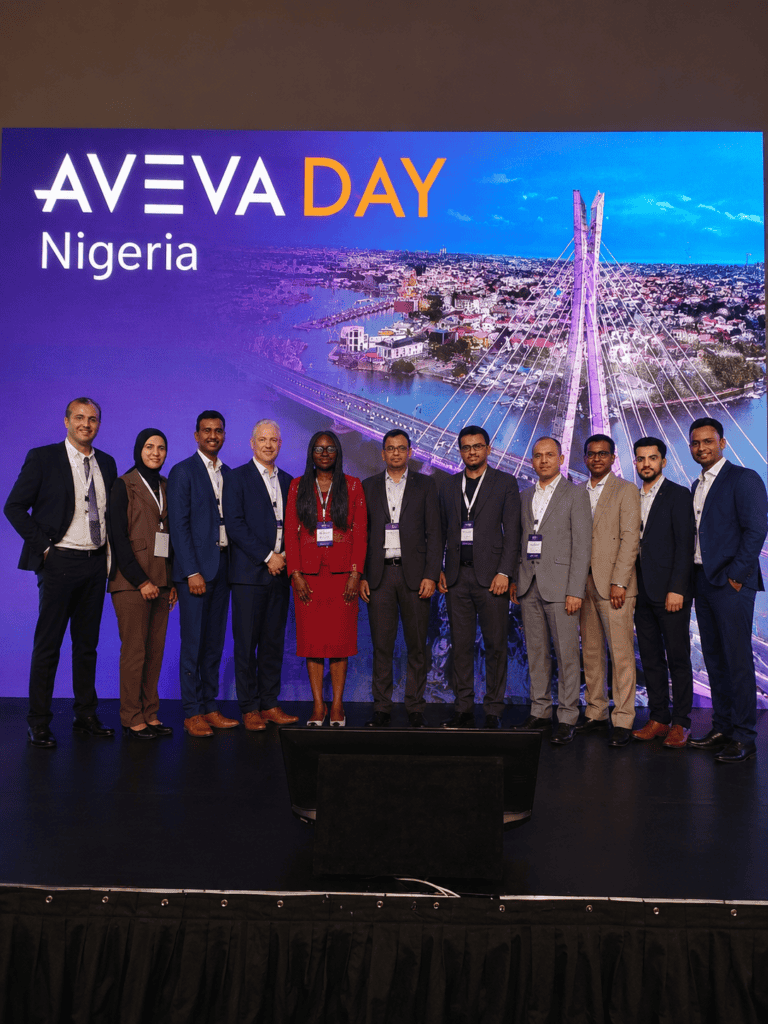
Industrial organisations must embrace artificial intelligence, digital twins, and connected data systems to remain competitive while meeting growing demands for efficiency, operational excellence, and sustainability, speakers at AVEVA Day Nigeria said on Thursday.
The event, held at Eko Hotels & Suites, Victoria Island, Lagos, brought together industry leaders, engineers, and digital transformation professionals to explore how digital technologies are reshaping industrial operations, with discussions focusing on asset reliability, project delivery, data-driven decision-making, and emissions reduction.
A recurring theme throughout the event was the growing role of AI-powered digital twins in helping organisations improve performance while reducing environmental impact.
Gaurav Panpaliya, Enterprise Architect at AVEVA, said that digital twin technologies, enhanced by artificial intelligence, are already enabling global energy companies to gain deeper visibility into their operations, improve decision-making, and move closer to autonomous industrial environments.
According to Panpaliya, “digital twin technologies powered by AI are helping industries achieve operational excellence while supporting long-term sustainability goals.”
He explained that virtual representations of industrial assets and operations enable organisations to monitor performance in real time, identify inefficiencies, and optimise processes to strengthen both productivity and environmental performance.
Speakers also highlighted the importance of integrating operational and enterprise data to unlock the full value of industrial AI.
Husain Al-Shaikh, Presales Consultant at AVEVA, said the convergence of information technology (IT) and operational technology (OT) is becoming increasingly critical as organisations seek to collect, contextualise, and analyse growing volumes of real-time operational data.
“The convergence of IT and OT data provides a scalable foundation for smarter decision-making and industrial transformation,” Al-Shaikh said.
He noted that cloud-based industrial intelligence platforms are helping businesses eliminate data silos and create a unified environment for advanced analytics, machine learning applications, and enterprise-wide decision-making.
The discussion on data integration was closely linked to the growing adoption of predictive analytics across industrial operations.
Madankumar Selvakumar, Presales Consultant at AVEVA, said organisations are increasingly leveraging predictive analytics to identify potential equipment failures before they occur, reducing unplanned downtime and improving asset reliability.
“Integrating predictive analytics with process optimisation enables organisations to improve reliability, reduce unplanned shutdowns, and support more sustainable operations,” Selvakumar said.
He added that combining predictive analytics with digital twins allows companies to make more informed maintenance decisions, improve energy efficiency, and reduce emissions while maintaining operational performance.
The event also examined how digital technologies are transforming the delivery of major industrial projects.
Revant Kommanapalli, Presales Manager at AVEVA, said data-centric engineering approaches are helping organisations improve project visibility, collaboration, and control throughout the lifecycle of capital projects.
“Digital technologies are changing how capital projects are delivered by improving visibility and enabling operations-ready digital plants,” Kommanapalli said.
According to him, these approaches not only improve project execution but also ensure the delivery of digital assets that support commissioning, start-up, and long-term operations.
Industry practitioners also shared practical insights on the application of digital engineering tools.
Akintunde Adegbayo, E3D/PDMS Administrator at ILF Engineers Nigeria Ltd, discussed how integrated engineering platforms are helping organisations streamline engineering workflows, improve collaboration, and enhance project execution.
Similarly, Bayo Ige, Managing Director and Chief Executive Officer of IESL Global Services, highlighted the role of advanced engineering design technologies in improving productivity and coordination across project teams, noting that digital tools are increasingly becoming essential to modern engineering operations.
Returning to the theme of sustainability, Panpaliya said organisations are increasingly combining digital twins, 3D visualisation technologies, and generative AI assistants to gain deeper visibility into energy consumption, greenhouse gas emissions, and overall operational performance.
“Bringing together data from across operations creates a single view that helps organisations identify new efficiencies and unlock greater value from their assets,” he said.
He added that contextualised access to enterprise data through AI-powered tools is helping industrial organisations accelerate analysis, improve decision-making, and prepare for more connected and intelligent operations.
The event concluded with interactive roundtable discussions on capital project delivery, process optimisation, predictive analytics, industrial intelligence platforms, and IT/OT integration, allowing participants to exchange ideas and discuss practical approaches to accelerating digital transformation.
Across the various sessions, speakers delivered a consistent message: the future of industrial operations will be defined by how effectively organisations harness data, AI, and digital technologies to improve efficiency, strengthen resilience, reduce emissions, and achieve sustainable objectives.

AI Writer
Bio: Joseph Michael is an MBA graduate in Marketing from Ladoke Akintola University of Technology and a passionate tech enthusiast. As a professional writer and author at AIbase.ng, he simplifies complex AI concepts, explores digital innovation, and creates practical guides for Nigerian learners and businesses. With a background in marketing and brand communication, Joseph brings clarity, insight, and real-world relevance to every article he writes.