

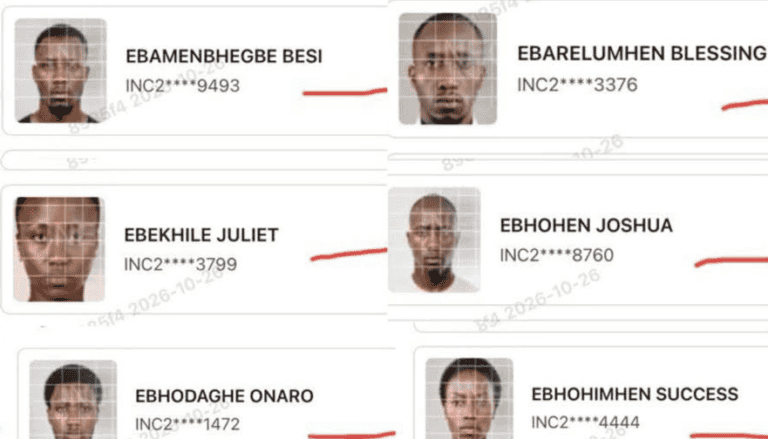
The Independent National Electoral Commission (INEC) has attributed the appearance of suspected artificial intelligence-generated photographs and other irregularities in its preliminary register of voters to alleged misconduct by some registration officers.
The commission’s Director of Information and Communication Technology, Dr Lawrence Bayode, disclosed this during an interview on Arise Television on Friday, explaining that some officers allegedly used their official login credentials to introduce questionable records into the voter registration database.
Bayode said the irregularities were identified through the commission’s Automated Biometric Identification System (ABIS), which was used to examine registration records and detect suspicious entries.
He explained that some of the photographs found in the register were generated using artificial intelligence, while others resulted from poor registration procedures.
According to him, the problem was not limited to one location, as some registration officers across different states were allegedly involved.
He said: “What we have found is that some of these registration officers, not all of them now, some of them across the states nationwide, they’ve done different things to bring these irregularities onto the register.”
Bayode clarified that not all the questionable photographs were AI-generated, noting that some resulted from unacceptable registration practices that allowed poor-quality images and questionable records into the database.
“Some of these pictures are AI-generated. Some of them not AI-generated, but very bad registration. And this thing got into the register by the registration officers because they have access to register people,” he said.
The ICT director added that the commission had identified the affected records and established how some of the irregularities occurred.
He, however, said he could not explain the reasons behind the actions of the officers involved.
The disclosure comes amid growing public concerns over the accuracy of Nigeria’s preliminary voter register ahead of the 2027 general elections.
INEC uploaded its preliminary register of voters to its website on 26 October, following the physical display of the records at Registration Areas nationwide between 9 and 15 October.
Shortly after the online publication, screenshots circulated on social media showing voter records containing photographs suspected to have been generated using artificial intelligence. Some of the widely shared examples were linked to Etsako West Local Government Area of Edo State.
Other complaints concerned alleged duplicate entries, names of deceased persons and reports from some registered voters who said they could not find their details in the online register.
The concerns triggered questions about the verification procedures used by the electoral commission and the reliability of the records being prepared for the next general election.
INEC had earlier explained that the online register was the same preliminary document displayed physically across the country during the October exercise. The commission also said questionable records had been identified and flagged for review.
Related
- INEC Probes Suspected AI-Generated Photos in Voter Register
- INEC Trains Officers to Counter AI Misinformation Ahead of 2027 Election
- The Invisible AI Threat to Nigeria’s 2027 Elections
- US Warns Nigerians Against AI-Edited Passport Photos
The electoral body maintained that the preliminary register was not the final certified register, explaining that the display exercise provided an opportunity for citizens and other stakeholders to identify inaccuracies and request corrections.
INEC said it would complete the necessary verification, adjudication and data-cleaning processes before certifying the final Register of Voters on 15 December 2026.
The latest disclosure has renewed attention on the security of the commission’s registration systems, the responsibilities of electoral officials and the measures required to protect the integrity of Nigeria’s voter database.
As the review continues, the accuracy of the final register will remain an important issue ahead of the 2027 general elections, particularly in ensuring that eligible voters are properly captured and questionable entries are addressed.

AI Writer
Bio: Joseph Michael is an MBA graduate in Marketing from Ladoke Akintola University of Technology and a passionate tech enthusiast. As a professional writer and author at AIbase.ng, he simplifies complex AI concepts, explores digital innovation, and creates practical guides for Nigerian learners and businesses. With a background in marketing and brand communication, Joseph brings clarity, insight, and real-world relevance to every article he writes.