

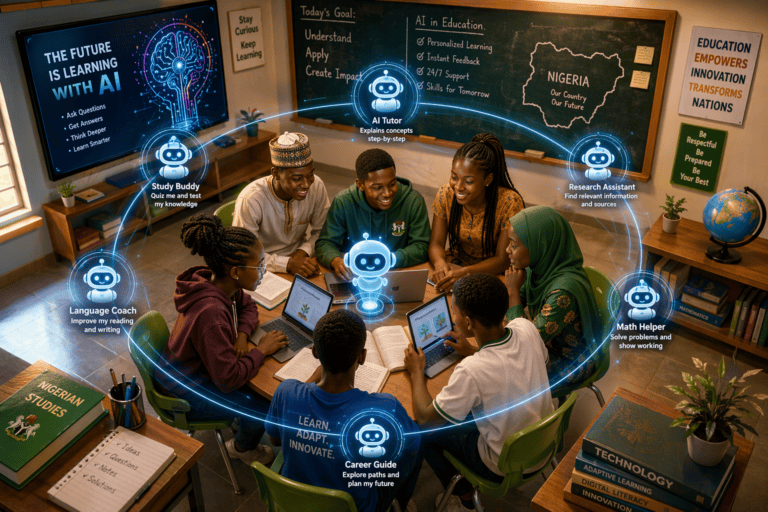
That convenience of using AI chatbots on almost daily tasks can help, but it can also create problems for critical thinking. In Nigerian education, when students depend too much on instant responses, they may stop questioning, comparing, and reasoning for themselves.
That matters because strong thinking skills shape judgement, creativity, and learning habits. So, what exactly should you watch out for? The next section gives a closer look.
Key Highlights
- Artificial intelligence chatbots can weaken critical thinking when students accept answers too quickly. In Nigerian education, heavy automation may reduce the habit of asking follow-up questions, particularly in contexts discussed in the April conferences on educational technology. Additionally, the rise of deepfakes raises concerns about misinformation. Large language models can make problem-solving feel easier, but that ease has hidden costs. To avoid negative effects, Nigerians should approach chatbot responses with scepticism, verify information from multiple sources, and continue practising critical thinking skills even when using automation.
- In Nigerian education, heavy automation may reduce the habit of asking follow-up questions.
- Large language models can make problem-solving feel easier, but that ease has hidden costs.
- The dangers of AI also include weaker academic integrity and poorer ethical judgement in classwork.
- Chatbot overuse may limit deep learning, knowledge construction, and original ideas among Nigerians.
- Careful guidance can help learners use AI without losing independent thought.
Five Major Dangers of AI Chatbots Impacting Nigerians’ Critical Thinking
An AI system can answer fast, but speed is not the same as understanding. For many Nigerians, especially learners, large language models can slowly replace reflection with convenience. That is one of the clearest dangers of AI and the impact of personal data in data centres used for these models. In fact, several technology experts in Nigeria have raised concerns that AI chatbots may pose risks to critical thinking, cautioning that over-reliance on these tools could diminish users’ ability to analyze, question, and reason independently.
In practice, these tools may weaken critical thinking by reducing independent reasoning, shrinking problem-solving effort, slowing knowledge construction, blurring ethical judgement, and limiting originality. These five risks, including the risk of AI affecting learning processes, do not mean chatbots, including those that integrate with Google, are useless. They mean you should use them carefully. Let’s break down each danger and see how it can affect learning and thinking in Nigeria.
1. Reduced Independent Reasoning Among Nigerian Students
Yes, they can. Large language models built on machine learning are designed to give polished answers in seconds. That sounds helpful, but it can train students to skip the hard mental work that builds critical thinking. Instead of comparing ideas or testing assumptions, a learner may just accept the first response from an artificial general intelligence.
In Nigerian education, this habit can become serious when assignments, summaries, or explanations are copied with little reflection. Once that happens, students may appear informed without actually understanding the topic, which can have implications in places like Lagos. The result is weaker confidence in their own judgement.
There is also an academic integrity issue. If students rely on chatbot wording too often, they may struggle to explain ideas in their own voice and discern misinformation. Over time, the classroom rewards output, while independent reasoning slowly fades in the background.
2. Over-dependence on AI for Problem-Solving Tasks
Generative AI can make difficult tasks feel easy. You ask a question, and an AI system offers steps, answers, and even explanations. However, if learners always turn to automation first, they may stop practising the mental struggle that strengthens problem-solving, which is essential even in the context of advanced technologies like artificial superintelligence, as discussed by Geoffrey Hinton.
You can see the risk in everyday study habits. When students depend on algorithms instead of working through challenges, they may lose patience with uncertainty. That matters because real learning often happens when you test, fail, and try again, skills that are essential for adapting to new jobs in our evolving job market.
- A learner may ask the chatbot to solve a task before attempting it alone.
- Another may use instant answers for homework instead of building a method.
- Over time, repeated shortcut use can reduce confidence in personal reasoning.
So yes, there are examples in learning behaviour itself. The tool does not remove skill overnight, but repeated dependence can weaken it gradually.
3. Hindrance to Knowledge Construction and Deep Learning
Knowledge construction takes time. You read, compare, question, connect ideas, and form meaning. When learners use LLMs too often for ready-made responses, they may skip that process. Intellectual property issues surrounding the answer look complete, but the mind has done less work.
That is where deep learning models can quietly affect Nigerian education in secondary schools. Students may collect polished explanations without building a solid structure of understanding. If they do not wrestle with concepts, their critical thinking stays shallow. They may remember conclusions but not know how those conclusions were reached.
Another issue is habit. Frequent chatbot use, including those powered by OpenAI, can train learners to search for finished thoughts instead of developing their own, a concern highlighted by the latest research. In the long run, this weakens deep learning and slows real knowledge construction. You get speed, but not always depth, retention, or intellectual growth.
4. Erosion of Ethical Judgement in Educational Contexts
Ethical problems appear when convenience starts replacing responsibility. In an educational context, students may use chatbot content without asking whether the work is honest, fair, or truly theirs. That weakens academic integrity and also affects ethical judgement.
The concern is bigger than copied text. The compiled information shows broader AI risks such as a lack of accountability, weak transparency, bias, and harmful use of systems like facial recognition, which have been voiced by tech leaders. These issues matter because education should strengthen human intelligence, not teach blind trust in outputs.
| Ethical issue | Why it matters in education |
|---|---|
| Academic integrity | Students may submit work they did not truly produce or understand. |
| Lack of accountability | It can be unclear who is responsible when AI output causes harm. |
| Transparency problems | Learners may not know how an answer was generated. |
| Biases in systems | Unfair or skewed outputs can shape judgement in hidden ways. |
When these patterns grow, students risk becoming less careful about honesty, fairness, and responsibility.
5. Weakening of Creativity and Original Ideas
Creativity depends on voice, struggle, and fresh perspective. Artificial intelligence can generate essays, scripts, and ideas quickly, but speed can tempt learners to settle for what the tool gives them, potentially hindering the governance of original thought. That can shrink the space where original ideas usually grow.
In Nigerian education, this matters for young people developing independent thinking. If students use chatbot drafts as final work, they may stop shaping arguments from personal reflection. Their writing may sound polished, yet less personal, less inventive, and less curious.
There is also the issue of AI bias and the use of AI. If a tool reflects patterns from its training data, it may keep repeating familiar views instead of encouraging new ones. Over time, creativity becomes narrower. Students may produce more content, but with less ownership, less imagination, and weaker intellectual independence.
Read also: Dangers In Asking AI Chatbots for Personal Advice
Conclusion
In conclusion, while AI chatbots offer innovative solutions, their impact on critical thinking among Nigerians cannot be overlooked.
The dangers we explored highlight the need for a balanced approach in integrating technology into education, such as insights from the Edo State pilot, and daily life.
Students and educators alike must remain aware of these challenges to foster independent reasoning, ethical judgement, and creativity.
By embracing technology responsibly, we can leverage its benefits while ensuring that our critical thinking skills remain sharp and relevant in an increasingly digital world.
If you have concerns about how AI is affecting your learning or teaching methods, feel free to reach out for guidance and support!
Frequently Asked Questions
What are the main ways AI chatbots may negatively affect critical thinking among Nigerians?
Artificial intelligence chatbots may weaken critical thinking by reducing independent reasoning, encouraging shortcut learning, and making users trust an AI system too quickly. For Nigerians, the dangers of ai also include weaker problem-solving, shallow understanding, and less careful ethical judgment when answers are accepted without enough questioning. Additionally, these technologies can potentially empower bad actors, leading to the spread of misinformation and promoting dangerous narratives.
Can AI chatbots make Nigerian students rely less on their own reasoning skills?
Yes. Because machine learning tools and generative AI give quick, polished responses, some students may skip personal effort in problem-solving. In Nigerian education, this can affect academic integrity and reduce confidence in their own reasoning, especially when chatbot answers are used before real thinking begins, much like the concerns raised in an open letter by tech leaders regarding the implications of such technologies.
Do Nigerian educators face challenges balancing AI chatbot usage and critical thinking training?
Yes, they do. In Nigerian education, teachers and policymakers must balance the usefulness of large language models like ChatGPT and Microsoft Copilot with the need to protect reasoning skills. The challenge is helping students use these tools for support without letting them replace reflection, analysis, and original thinking.

AI Writer
Bio: Joseph Michael is an MBA graduate in Marketing from Ladoke Akintola University of Technology and a passionate tech enthusiast. As a professional writer and author at AIbase.ng, he simplifies complex AI concepts, explores digital innovation, and creates practical guides for Nigerian learners and businesses. With a background in marketing and brand communication, Joseph brings clarity, insight, and real-world relevance to every article he writes.