

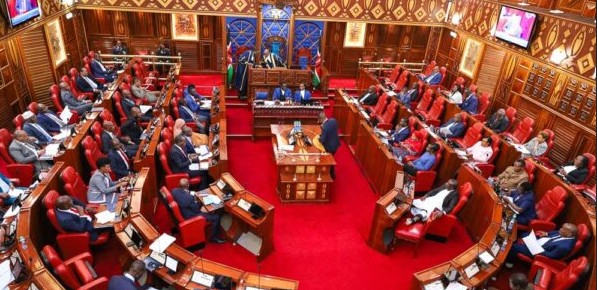
Kenya’s Senate is currently debating the Artificial Intelligence Bill, 2026, a landmark piece of legislation aimed at regulating artificial intelligence, criminalising deepfakes, and establishing a national regulator. The Bill is a response to growing concerns about the misuse of AI technologies, particularly the manipulation of digital content that can mislead the public, infringe on privacy, or disrupt democratic processes.
Sponsored by nominated Senator Karen Nyamu, the Bill proposes criminal penalties for individuals or organisations that create or distribute AI-generated content, including videos, images, or audio, without consent and in ways that cause harm, defame, or spread misinformation.
Offenders could face fines of up to 5 million Kenyan shillings and imprisonment for up to two years. Senator Nyamu explained that the law is designed to hold accountable those who “weaponise technology against Kenyans,” highlighting the urgent need for safeguards in a rapidly digitalising society.
The legislation goes beyond punishing misuse. It mandates that technology providers obtain explicit consent before using personal data to train AI systems capable of generating manipulated content, requiring transparency in how AI algorithms operate. Companies would also be expected to provide clear disclosures on the purpose, limitations, and decision-making processes of their AI tools, with penalties of up to one million shillings for non-compliance.
Central to the Bill is the creation of the Office of the Artificial Intelligence Commissioner, a regulatory body that would monitor AI deployment across sectors, investigate complaints, and enforce compliance. The regulator would maintain a public register of high-risk AI systems and oversee human-review mechanisms for automated decisions that affect critical areas such as employment, credit access, public services, and education. Proponents argue that this framework will protect citizens from harm while promoting trust in AI technologies.
While the Bill has received strong support, some lawmakers, civil society groups, and technology stakeholders caution that overly broad rules or punitive measures could inadvertently stifle innovation, burden startups, and slow the adoption of transformative AI technologies.
Analysts note that Kenya is positioning itself as a digital hub in Africa, and balancing regulatory oversight with opportunities for innovation will be key to maintaining competitiveness. Social media companies, fintech firms, and AI developers in Kenya could face stricter compliance requirements, potentially reshaping how content is created, shared, and monetised in the country.
The debate also underscores wider concerns about algorithmic bias and accountability. Citizens would be entitled to human review of automated decisions, and AI providers must demonstrate efforts to mitigate risks and ensure ethical use. This focus reflects Kenya’s broader National AI Strategy, launched in 2025, which seeks to harness AI for inclusive economic growth while safeguarding public interest.
The Bill is currently under committee scrutiny, with possible amendments expected before a full Senate vote. If passed, it could establish Kenya as one of Africa’s most advanced jurisdictions in AI governance, serving as a model for balancing innovation, accountability, and citizen protections in the age of artificial intelligence across the continent.

AI Writer
Bio: Joseph Michael is an MBA graduate in Marketing from Ladoke Akintola University of Technology and a passionate tech enthusiast. As a professional writer and author at AIbase.ng, he simplifies complex AI concepts, explores digital innovation, and creates practical guides for Nigerian learners and businesses. With a background in marketing and brand communication, Joseph brings clarity, insight, and real-world relevance to every article he writes.