

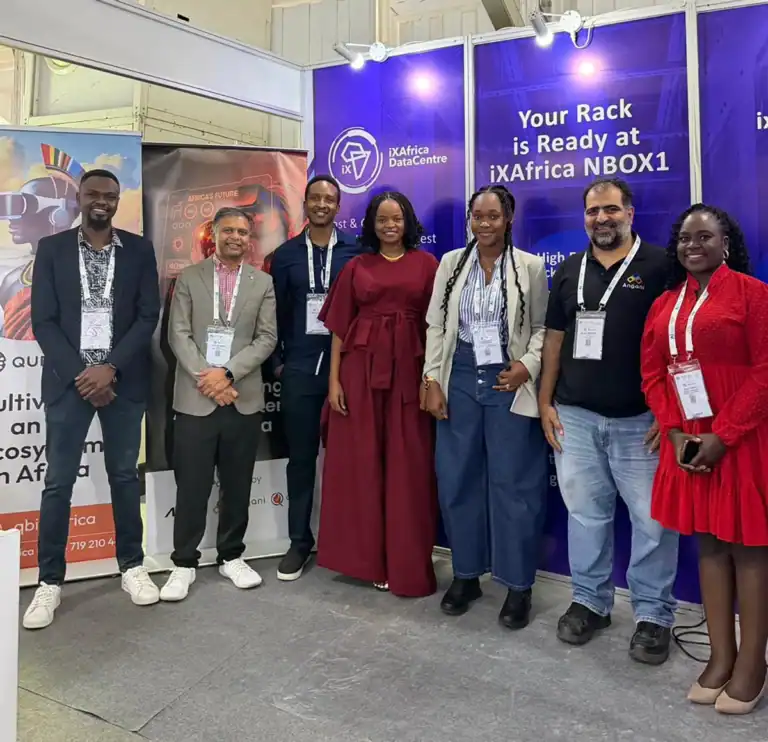
African technology companies Qhala, Amini AI, Angani and iXAfrica Data Centres have partnered to establish a new artificial intelligence research and innovation hub in Nairobi, in a move aimed at strengthening Africa’s digital sovereignty and expanding local AI infrastructure across the continent.
The initiative, known as “Qubit Hub,” will be hosted at iXAfrica’s NBOX1 data centre facility in Nairobi and was unveiled during AI Everything GITEX Kenya 2026. The companies say the hub is designed to support AI research, cloud computing, startup development and enterprise innovation while helping Africa build locally controlled digital systems.
The partnership combines several layers of AI connectivity, including cloud infrastructure, data hosting, AI research and innovation support. Qhala will oversee ecosystem development through its QTrust platform, while Amini AI will contribute sovereign AI and data infrastructure expertise. Angani will provide cloud computing services, and iXAfrica will host the infrastructure within its carrier-neutral data centre environment.
According to the companies, Qubit Hub will serve as a collaborative platform for researchers, startups, developers, policymakers and enterprises working on AI solutions tailored to African markets and local challenges.
Dr Shikoh Gitau said the initiative seeks to address major barriers currently limiting AI development across the continent.
“With this partnership, we are solving for compute, talent and community,” Gitau said.
She added that the collaboration is intended to ensure African innovators have access to the infrastructure and networks needed to develop scalable solutions.
Related:
- Liquid C2 Partners Google Cloud to Accelerate Africa’s AI Hub Development
- Nairobi Hosts Landmark AI Showcase for Global Tech and African Startups
- Kenya’s Senate Debates AI Bill That Would Criminalize Deepfakes and Establish
The launch comes at a time when governments and technology companies across Africa are increasingly emphasising digital sovereignty, the idea that countries should maintain greater control over their data, cloud systems and AI technologies. Much of Africa’s digital ecosystem still relies heavily on foreign-owned cloud providers and overseas data storage systems, creating concerns about governance, accessibility and technological dependence.
Industry analysts say the Nairobi-based initiative reflects a broader continental shift toward building localised AI ecosystems capable of supporting homegrown innovation. African startups have increasingly invested in AI-powered solutions across sectors such as agriculture, climate intelligence, healthcare, financial services and education.
By combining infrastructure, compute resources and research collaboration under one platform, the partners believe Qubit Hub could help reduce barriers that often prevent African startups and researchers from scaling AI projects.
The establishment of the hub also strengthens Kenya’s position as one of Africa’s leading technology and innovation centres. Nairobi has continued attracting investment in cloud infrastructure, startup frameworks and data centres, reinforcing its role as a regional technology gateway for East Africa.
Executives involved in the project say the hub will contribute to talent development and encourage collaboration between startups, researchers and academic institutions across the continent.
“We believe Africa’s AI future must be built within Africa,” a spokesperson for the partnership said during the launch event. “This initiative is about creating infrastructure that allows African innovators to compete in the global AI economy.”
As global competition around artificial intelligence intensifies, the companies behind Qubit Hub say the initiative represents an important step toward ensuring Africa is not only a consumer of AI technologies but also an active builder of the infrastructure and systems shaping the future of digital innovation.

Senior Reporter/Editor
Bio: Ugochukwu is a freelance journalist and Editor at AIbase.ng, with a strong professional focus on investigative reporting. He holds a degree in Mass Communication and brings extensive experience in news gathering, reporting, and editorial writing. With over a decade of active engagement across diverse news outlets, he contributes in-depth analytical, practical, and expository articles exploring artificial intelligence and its real-world impact. His seasoned newsroom experience and well-established information networks provide AIbase.ng with credible, timely, and high-quality coverage of emerging AI developments.