


What this scam is
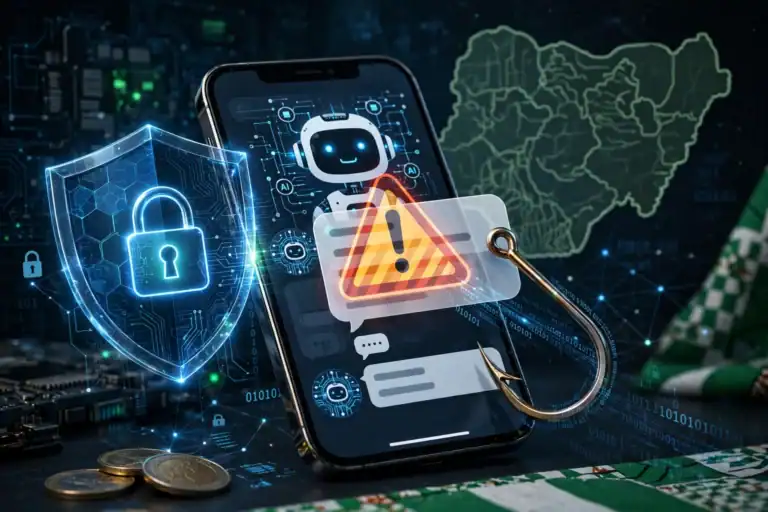
An AI Chatbot Phishing Assistant Scam embeds a highly conversational AI chatbot powered by large language model technology into a fraudulent website, mobile application, or messaging channel.
Once embedded, the bot poses as a customer care agent, a bank representative, or an investment consultant.
Unlike older, static phishing pages or rigid, scripted live-chat widgets, an AI chatbot can effortlessly answer complex follow-up questions, counter specific customer objections, and dynamically adjust its persuasion strategies in real time.
These rogue conversational tools commonly appear on cloned Nigerian banking portals, fake logistics and courier tracking pages, fraudulent investment platforms, and impersonation accounts on popular messaging networks.
They operate continuously, responding instantly to inputs without ever getting tired or slipping out of character.
Because a single AI instance can seamlessly hold hundreds of deeply personalised conversations at the same time, it scales fraudulent activities far beyond what any human scam operator could manage.
How it works
-
Cybercriminals prime a large language model with specific behavioural instructions, directing it to impersonate a legitimate organisation’s support desk.
-
Scammers set up cloned web links or rogue messaging accounts and attach the trained AI chat interface directly to the front-facing screen.
-
Victims land on these fraudulent chat screens after clicking malicious links embedded in unsolicited SMS alerts, deceptive social media ads, or manipulated search engine results.
-
The target initiates a chat to resolve an everyday problem, such as a blocked commercial bank account, a stuck international shipping parcel, or a sudden login issue.
-
The AI chatbot analyses the user’s specific text inputs instantly, feeding back highly realistic, empathetic responses that mirror genuine corporate customer care.
-
As the conversation progresses naturally, the bot asks the victim to provide sensitive authentication metrics under the guise of an identity verification process.
-
The chatbot instructs the user to type in credit card numbers, share an active one-time passcode (OTP), or click an external link to process a vital payment.
-
Once the victim inputs the requested details, the credentials are immediately harvested by the scam ring to drain the victim’s primary financial accounts.
Why this scam works
People naturally extend a higher degree of trust to interactive digital systems that demonstrate patience, active listening, and specific contextual knowledge.
Because mainstream financial institutions and retail brands across Nigeria increasingly use real AI tools for customer support, encountering a chat widget no longer raises red flags.
Furthermore, these interactions typically happen when a victim is experiencing heightened anxiety regarding a financial flag or a missing delivery.
The instant, reassuring feedback provided by the AI satisfies the victim’s urgent desire to solve the issue immediately, lowering their defences.
By eliminating the clumsy grammar, spelling mistakes, and abrupt tones historically associated with text-based fraud, generative AI bridges the last remaining detection gap that used to tip consumers off.
Real-life Context in Nigeria
In Nigeria’s digital space, this threat heavily targets users of fast-paced fintech apps, digital wallets, and commercial banking channels.
With millions of Nigerians actively using instant messaging platforms like WhatsApp and Telegram to interact with businesses, fraudsters regularly deploy automated conversational bots that perfectly mimic official corporate channels.
Cybercriminals capitalise on regular service disruptions or currency updates, programming their phishing bots to offer immediate, artificial remedies to frustrated account holders who believe they are chatting with an official help desk.
A typical pattern
A consumer receives an SMS alert stating that a high-value package is currently held up at a logistics hub in Lagos due to a minor customs documentation error.
The text message includes a direct link to a cloned tracking portal that features a prominent “Live Support Chat” button right in the corner.
When clicked, the chatbot introduces itself politely, confirms the exact dummy tracking number, and apologises profusely for the logistical delay.
When the user expresses scepticism, the bot provides a highly articulate breakdown of customs regulations to put the user at ease.
It then explains that a clearance fee of ₦4,500 must be paid immediately through an embedded gateway to secure release.
As the user attempts the payment, the bot states it has sent a verification token to their phone to secure the transaction.
The user reads the OTP out into the chat window, only to discover minutes later that the code was actually used by the automated system to authorise a massive, fraudulent transfer out of their real mobile banking application.
Common red flags
-
The digital assistant explicitly asks you to paste a one-time passcode (OTP) or your full debit card PIN directly into the chat box.
-
The chatbot insists that you must pay an upfront fee to unlock an account, verify a wallet, or release a stuck delivery parcel.
-
The bot applies heavy emotional pressure, stating that your funds will be permanently lost if you do not act within a few minutes.
-
You arrived at the support screen by clicking a link sent via an unsolicited text message or social media inbox message.
-
The chat assistant instructs you to download an external remote-desktop or screen-sharing application to let them assist you visually.
-
The tone of the conversation feels highly aggressive, unusually persuasive, or intensely focused on financial transactions for a basic technical inquiry.
-
The interface provides no clear option to escalate the conversation to a living, breathing human customer care representative when requested.
-
The organisation’s official telephone lines or verified mobile apps show absolutely no record of your ongoing service ticket.
Sanitised example messages
“I can see the security alert on your account dashboard. To help you block this unauthorised withdrawal of ₦150,000, please type the 6-digit verification code sent to your phone into this chat window right now.”
“Your international package has arrived at our facility. A processing fee of ₦5,000 is required to update your home address delivery status today. Please use this secure link: [fake link].”
“Welcome to our automated customer desk! Our financial algorithm yields up to 45% weekly returns for all active starters. Would you like me to guide you through your first deposit layout today?”
Common variations
-
Cloned bank fraud desks that use conversational AI to harvest active banking credentials under the guise of stopping a fake robbery.
-
Fake courier and delivery assistants that demand swift logistics fee micro-payments via malicious billing links to release physical goods.
-
Fraudulent wealth management bots posing as official investment officers to build rapport and systematically collect large upfront capital.
-
Impersonation bots deployed on mass messaging networks that set up fake corporate profiles to intercept daily inbound customer inquiries.
-
Malicious tech support assistants that guide users through installing remote control applications, allowing hackers to hijack the device entirely.
How to verify before you act
-
Never assume a chat interface is legitimate simply because it responds intelligently, types fluidly, or displays official corporate logos.
-
Close the chat window immediately and open your web browser to type in the company’s official web address manually.
-
Check the exact spelling of the website’s address bar character by character to ensure you have not been redirected to a spoofed domain.
-
Remember that no real Nigerian financial institution or logistics company will ever ask you to type your transaction PIN or OTP into a chat box.
-
Test the chatbot by asking highly unusual, completely off-topic questions or typing nonsensical phrases to see if the system breaks character or loops predictably.
Payment methods used
-
Bank/wire transfer
-
Cryptocurrency
-
Digital wallet transfers
-
Money transfer services
Who is usually targeted
-
Online shoppers tracking inbound consumer goods or local courier packages.
-
Bank account holders seeking rapid assistance during active service downtimes or security scares.
-
Independent retail investors looking for licensed asset management firms online.
-
Everyday internet users looking for quick troubleshooting help for their mobile apps or profiles.
What to do immediately
-
Disengage from the conversation immediately and close the suspicious application or browser tab completely.
-
Get in touch with your financial institution directly using the verified customer care number printed on the back of your debit card.
-
Freeze your bank accounts and change your online banking passwords immediately if you mistakenly shared an OTP or login credential.
-
Alert the real company being impersonated by sending their official compliance team screenshots of the fake chat interface.
-
Lodge a formal cybercrime report with national security agencies to track the malicious infrastructure.
-
Capture comprehensive screenshots of the entire text exchange, including the active web address, timestamps, and the account details provided by the bot.
How to prevent it
-
Always access customer service channels directly through the verified, official mobile applications provided on authorised app stores.
-
Treat any digital chat assistant that introduces unexpected financial demands or verification loops with immediate suspicion.
-
Never share authentication codes, password resets, or personal identification data with any automated assistant or messaging profile.
-
Refuse to install any third-party remote access tools or utility software recommended to you during a casual customer support conversation.
-
Educate family members and workplace colleagues on how generative AI language models are used to mimic human customer service professionals.
Evidence to preserve
-
Full-page screenshots of the entire chat history showing all text interactions and accompanying timestamps.
-
The specific URL web link or social media profile handle used by the cybercriminals to host the AI assistant.
-
The original SMS text notification, alert email, or online advertisement that directed you to the fake portal.
-
Official transaction alerts or digital receipts showing bank names and account numbers if any funds were transferred out.
Where to report it
-
Nigeria Police Force National Cybercrime Centre (NPF-NCCC): Submit a formal incident report regarding text fraud, credential harvesting, and malicious AI automation through the NPF-NCCC Cyber Reporting Portal.
-
Economic and Financial Crimes Commission (EFCC): Report electronic payment scams, fake banking customer care networks, and web-based impersonation schemes directly via the EFCC Portal.
-
Federal Competition and Consumer Protection Commission (FCCPC): File official regulatory complaints against deceptive online advertisements and fraudulent corporate websites through the FCCPC Online Channel.
-
Your Bank’s Emergency Support Line: Call the official emergency fraud department numbers visible on your banking card or within your secure, verified mobile banking application to instantly lock compromised profiles.
Warning: Following an online cyber incident, victims are routinely approached by recovery scammers. These threat actors operate across social media message boards and chat groups, falsely claiming they can retrieve stolen money or track down anonymous servers for an upfront fee. Legitimate investigative bodies and financial regulators do not charge upfront fees over messaging apps to process cyber fraud complaints.
Frequently asked questions
How can I tell if I’m chatting with a scam AI chatbot? Look out for requests involving highly sensitive data like passcodes or debit cards, check if the website link looks strange, and note if the assistant persistently blocks you from speaking with a real human agent.
Are AI chatbots used for real customer service too? Yes, many legitimate businesses use conversational AI to resolve basic account questions, but a real corporate bot will never demand that you transfer money to an unknown account or read out your private security passcodes to proceed.
What if I already gave a one-time passcode to a chatbot? You must call your bank’s fraud unit immediately to freeze all outbound electronic transactions. An OTP allows the automated system to take full control of your profile, so acting within the first few minutes is vital.
Can these chatbots hold multiple conversations at once? Yes, because they run on cloud-based large language model configurations, a single phishing bot instance can simultaneously talk to hundreds of different targets, providing custom, convincing replies to every individual user.
