


What Is AI-Enabled Synthetic Identity Fraud?
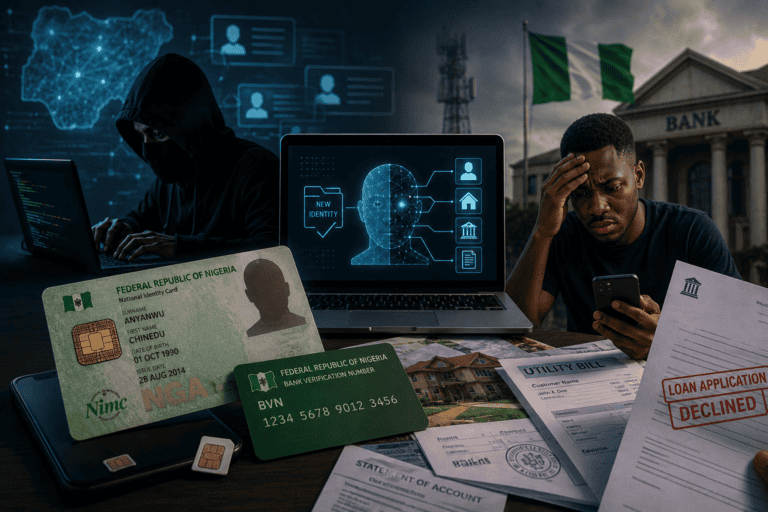
AI-enabled synthetic identity fraud is a growing form of financial crime where fraudsters create an entirely new identity using a mix of real and fake information.
Unlike traditional identity theft, where criminals steal and impersonate a real person, synthetic identity fraud involves creating a new identity that does not belong to any real individual.
In Nigeria, criminals may combine:
- A real National Identification Number (NIN)
- A real Bank Verification Number (BVN)
- A stolen phone number
- A legitimate email address
- A fake name
- A fake date of birth
- A fake residential address
- AI-generated documents
The result is a synthetic identity that appears legitimate to banks, fintech companies, loan providers, and online platforms.
Artificial intelligence has made this fraud much easier because criminals can now generate realistic documents, profile photos, signatures, utility bills, and supporting information within minutes.
Why Nigerians Should Care
Nigeria’s growing digital economy relies heavily on digital identity verification.
Today, many services require:
- NIN verification
- BVN verification
- Facial recognition
- Selfie verification
- Digital KYC checks
These systems improve security, but they can also be targeted by sophisticated fraudsters.
If your personal information is exposed through a data breach, phishing attack, or social engineering scam, parts of your identity may be used to create synthetic profiles.
The consequences can include:
- Loan applications linked to your information
- Fraudulent accounts being opened
- Debt recovery calls
- Incorrect credit records
- Banking restrictions
- Reputational damage
How AI-Enabled Synthetic Identity Fraud Works in Nigeria
Step 1: Criminals Obtain Real Personal Information
Fraudsters first acquire genuine identity information.
This may happen through:
- Data breaches
- Phishing scams
- Fake job portals
- Fake loan applications
- Social media impersonation
- SIM registration leaks
- Compromised databases
Information commonly targeted includes:
- NIN
- BVN
- Phone numbers
- Email addresses
- Date of birth
- Home address
Step 2: AI Creates Missing Identity Details
Using generative AI tools, criminals generate:
- Fake names
- Fake addresses
- Fake employment records
- Fake utility bills
- Fake bank statements
- Fake ID cards
- Fake profile photographs
These details are designed to appear consistent across multiple applications.
Step 3: Fraudsters Build Credibility
The synthetic identity is gradually used to establish trust.
Examples include:
- Opening low-risk financial accounts
- Applying for small loans
- Maintaining accounts for several months
- Creating social media profiles
- Building a digital footprint
The goal is to make the synthetic identity appear genuine.
Step 4: The Fraudster Cashes Out
Once sufficient trust has been established, criminals may:
- Apply for multiple loans simultaneously
- Obtain credit facilities
- Access buy-now-pay-later services
- Register merchant accounts
- Commit financial fraud
After collecting funds, they disappear.
The financial institution bears the loss, while innocent individuals may discover their information has been linked to fraudulent activity.
A Nigerian Example
While specific synthetic identity fraud cases are often not publicly disclosed due to ongoing investigations, Nigerian authorities have repeatedly warned about identity-related fraud involving stolen NINs, BVNs, and personal information.
For example, both the National Identity Management Commission (NIMC) and the Nigeria Inter-Bank Settlement System (NIBSS) have issued public warnings encouraging Nigerians to protect their identity information and avoid sharing sensitive personal details with unauthorised parties.
As AI tools become more accessible, experts expect synthetic identity fraud attempts to become increasingly sophisticated.
Sanitised example messages for this type of fraud
“Your loan application reference number [number] has been approved. Please log into your dashboard at [fake link] to confirm your monthly repayment structure.”
“FINAL NOTICE: Your outstanding balance of ₦45,000 to [Fintech App] is overdue. Failure to pay will result in legal action and credit blacklisting.”
“A credit inquiry was performed on your NIN record by [Lender Name] on [Date]. If this was not you, contact your credit bureau immediately.”
Why This Scam Is Difficult to Detect
Synthetic identity fraud often remains hidden for months or even years.
Several factors make detection difficult:
There Is No Obvious Victim
The fake identity may not match a real person’s name.
This means nobody immediately notices suspicious activity.
The Fraud Appears Legitimate
Fraudsters often behave like genuine customers.
They may:
- Make repayments on time
- Maintain active accounts
- Build transaction history
AI Documents Look Convincing
Modern AI tools can generate realistic documents that may pass basic automated checks.
Victims May Not Know Their Data Was Exposed
Many Nigerians are unaware their information has appeared in a data breach until problems emerge later.
Common Warning Signs
Watch out for these red flags:
- You receive loan repayment demands for loans you never took.
- A lender contacts you about an account you do not recognise.
- Your BVN or NIN appears linked to unfamiliar accounts.
- You discover unauthorised financial products in your name.
- You are denied a loan because of negative records you cannot explain.
- Debt collectors contact you unexpectedly.
- You receive verification messages for services you never registered for.
- Your personal information appears in a breach notification.
Who Is Most at Risk?
Certain groups are often targeted more frequently. These include:
- Young Adults – Young people often share personal information online.
- Students – Students may unknowingly submit identity documents to fake scholarship or job websites.
- Elderly Individuals – Older adults may be less likely to monitor digital accounts regularly.
- Frequent Online Users – People who use many apps and websites expose more personal information.
- Victims of Previous Data Breaches – Previously leaked information is often reused by fraudsters.
How to prevent it
-
Check your personal credit status annually to catch unauthorised profiles early.
-
Never share your original NIN slips or full BVN details on unverified web links.
-
Shun informal, unverified lending apps that demand excessive personal permissions.
-
Monitor public data breach announcements involving corporate entities or government portals.
You can also monitor whether your email address has appeared in known data breaches through Have I Been Pwned
What To Do Immediately If You Suspect Synthetic Identity Fraud
Preserve All Evidence: Keep copies of: SMS messages, Emails, Loan notifications, Debt collection notices, Bank correspondence, Fraud reports, screenshots
Contact Your Bank Immediately: Report any suspicious activity. Request an investigation where necessary.
Where to report it
-
CRC Credit Bureau Dispute Desk – Submit a credit dispute at the CRC Credit Bureau Consumer Portal.
-
Nigeria Police Force National Cybercrime Centre (NPF-NCCC) – Report synthetic identity fraud and digital forgery through the official NPF-NCCC e-Reporting Portal.
-
Central Bank of Nigeria (CBN) – For unresolved identity disputes with financial institutions, contact the Consumer Protection Department via cpd@cbn.gov.ng.
-
Economic and Financial Crimes Commission (EFCC) – Report corporate identity scams, cyber fraud networks, and financial impersonation directly to the EFCC Portal.
-
National Identity Management Commission (NIMC) – Report compromised National Identification Numbers or extortion to nimccustomercare@nimc.gov.ng.
- Contact NIBSS – If the issue involves BVN misuse or banking identity concerns, contact: Nigeria Inter-Bank Settlement System (NIBSS)
How to Protect Yourself
Follow these simple precautions:
- Protect Your NIN. Never share your NIN unnecessarily.
- Protect Your BVN. Do not send your BVN through social media or messaging apps.
- Use Strong Passwords. Use unique passwords for important accounts.
- Enable Multi-Factor Authentication. Activate MFA wherever available.
- Verify Before Uploading Documents. Confirm the legitimacy of any platform requesting identity documents.
- Avoid Public Document Sharing. Never post ID cards, NIN slips, or sensitive documents online.
- Monitor Your Financial Accounts. Review transactions regularly.
- Be Careful With Job Applications. Many fake recruiters collect identity information for fraudulent purposes.
Warning: After falling victim to a scam, you may be targeted by recovery scammers. These are individuals who reach out privately claiming they can scrub your credit file or track down fraudsters for an upfront fee. Official credit bureau corrections and law enforcement investigations do not require private processing fees.
What to Do Immediately and Where Nigerians Can Get Help
-
Request your full credit history from a registered agency: Download your breakdown from major services like the CRC Credit Bureau to spot any unauthorised entries.
-
File an official dispute for all unrecognised accounts: Submit a formal dispute directly to the credit bureau to flag and isolate the fraudulent records.
-
Report the identity compromise to your primary banks: Inform your financial institutions immediately so they can apply heightened security oversight to your accounts.
-
Escalate unaddressed financial issues to the regulator: If a bank or lender fails to resolve your identity dispute within a reasonable timeframe, file an official report with the Central Bank of Nigeria Consumer Protection Department.
-
Report the cybercrime to federal authorities: Submit a detailed incident notification to the Nigeria Police Force National Cybercrime Centre.
You may also get help from
- National Identity Management Commission (NIMC)
- Economic and Financial Crimes Commission (EFCC)
- Nigeria Inter-Bank Settlement System (NIBSS)
- Nigeria Computer Emergency Response Team (ngCERT)
How do I know if my information has been leaked?
Signs may include:
- Unexpected verification messages
- Unrecognized accounts
- Debt collection notices
- Breach notifications
- Fraud alerts from banks
Final Thoughts
AI-enabled synthetic identity fraud is one of the fastest-evolving forms of financial crime. As artificial intelligence becomes more powerful, fraudsters are finding new ways to combine stolen personal information with AI-generated documents and identities.
The best defence is awareness.
Protect your NIN, BVN, phone number, and personal information. Monitor your accounts regularly, report suspicious activity promptly, and verify any organisation requesting sensitive information before sharing it.
Staying informed today can help prevent significant financial and reputational damage tomorrow.
Frequently Asked Questions
Can someone use my NIN or BVN to create a fake identity?
Potentially, yes. If fraudsters obtain enough personal information, they may attempt to create synthetic identities or commit other forms of identity fraud.
Will I be responsible for loans taken by fraudsters?
Liability depends on the circumstances and the findings of investigations by the lender and relevant authorities. Report suspected fraud immediately and keep records of all communications.
