

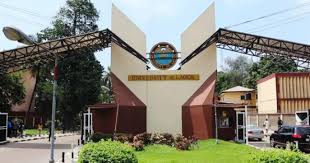
The University of Lagos (UNILAG) will host leading technology experts, policymakers, researchers, innovators, and business executives from around the world for a high-level Digital Transformation Conference scheduled for November 5 and 6, 2026.
The two-day summit is expected to provide a platform for discussions on digital innovation, artificial intelligence (AI), telecommunications, cybersecurity, data science, and digital infrastructure, with participants exploring how emerging technologies can accelerate economic growth and sustainable development across Nigeria and Africa.
Organisers said the conference comes at a time when governments, businesses, and educational institutions are increasingly adopting digital technologies to improve productivity, expand access to services, and strengthen competitiveness.
The event will bring together experts from academia, government, industry, and the technology sector to exchange ideas and develop practical strategies for advancing digital transformation across key sectors of the economy.
Speaking on the significance of the conference, the Chief Coordinator, Prof. Ifeyinwa Eucharia Achumba of the Department of Computer Engineering, Federal University of Technology, Owerri (FUTO), described the gathering as a vital platform for connecting research, policy, and industry.
“This conference serves as a strategic bridge connecting academic research, government policy, and private sector execution. As Nigeria’s digital economy contributes significantly to our national GDP, bringing together global technology experts and industry leaders at the University of Lagos enables us to co-create actionable frameworks,” she said.
“We are moving beyond theoretical discussions to actively drive inclusive economic growth, improve public sector efficiency, and enhance industrial competitiveness across Africa,” Achumba added.
The conference agenda will focus on key areas including telecommunications and the Internet of Things (IoT), artificial intelligence and data science, digital infrastructure, cybersecurity, robotics, smart cities, and technology-driven governance.
Experts participating in the telecommunications and IoT track will examine advancements in 5G deployment and next-generation connectivity, while discussions on AI and data science will explore machine learning applications, cybersecurity frameworks, and data-driven innovation.
Sessions on digital infrastructure will address emerging trends in green energy technologies, robotics, and smart city development. Policymakers and governance experts are also expected to deliberate on technology-enabled solutions capable of transforming healthcare, education, public administration, and financial services.
The conference aligns with Nigeria’s broader digital development agenda and follows recent efforts to strengthen innovation frameworks within higher education institutions.
UNILAG has increasingly positioned itself as a hub for technology research and innovation, including participation in initiatives such as the Artificial Intelligence University Innovation Pods (UniPods) programme aimed at fostering AI-driven solutions and entrepreneurship.
According to the organisers, the summit will move beyond conventional presentations by incorporating collaborative working sessions designed to generate practical solutions and actionable outcomes. Participants will engage in knowledge-sharing sessions focused on translating research findings and technological innovations into real-world applications.
The organising committee comprises notable academics and technology experts, including Prof. Nasir Faruk of the Faculty of Computing and Information Technology, Sule Lamido University; Prof. Peter Olabisi Oluseyi of the Department of Electrical and Electronics Engineering, University of Lagos (UNILAG); Dr Agbotiname Lucky Imoize of the Department of Electrical and Electronics Engineering, University of Lagos (UNILAG); and Chukwuemeka Gerald Okafor of the IEEE Nigeria Section.
Stakeholders are expected to explore opportunities for strategic partnerships, innovation funding, technology transfer, and workforce development as part of efforts to strengthen Africa’s digital economy.
Industry observers believe the conference could provide a valuable platform for shaping conversations on the responsible deployment of emerging technologies while addressing challenges related to infrastructure, digital inclusion, cybersecurity, and regulatory frameworks.
The conference is anticipated to attract hundreds of participants from across Africa and beyond, reinforcing UNILAG’s growing role as a centre for innovation, research, and technology-driven development.

Senior Reporter/Editor
Bio: Ugochukwu is a freelance journalist and Editor at AIbase.ng, with a strong professional focus on investigative reporting. He holds a degree in Mass Communication and brings extensive experience in news gathering, reporting, and editorial writing. With over a decade of active engagement across diverse news outlets, he contributes in-depth analytical, practical, and expository articles exploring artificial intelligence and its real-world impact. His seasoned newsroom experience and well-established information networks provide AIbase.ng with credible, timely, and high-quality coverage of emerging AI developments.