

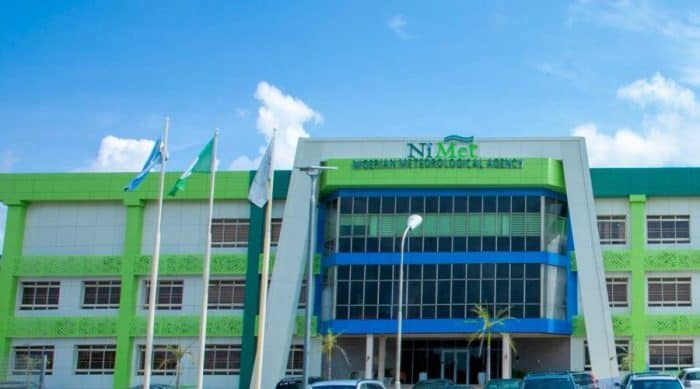
The Nigerian Meteorological Agency (NiMet) has intensified its call for deploying advanced technologies- including artificial intelligence, satellite systems, and big data analytics — to strengthen Nigeria’s capacity to withstand escalating climate risks.
Professor Charles Anosike, Director‑General and Chief Executive Officer of NiMet, made the appeal at the opening ceremony of the 2026 International Conference of the Nigerian Meteorological Society (NMetS) and its 35th Annual General Meeting at the University of Lagos, Akoka, Lagos State.
The conference theme, “Advancing Meteorology: Harnessing AI Satellites, and Big Data for Climate Resilience and Sustainability,” illustrates the agency’s commitment to modernising weather and climate services.
In his keynote address, Prof. Anosike emphasised that climate change is no longer a distant threat but a lived reality in Nigeria, manifesting through rising temperatures, unpredictable rainfall patterns, flooding, droughts, and other extreme events that disrupt communities and economies. Traditional meteorological approaches alone, he said, are insufficient to address these complex and evolving challenges.
“Climate change is no longer a distant concern. It is a lived reality,” Anosike stated, highlighting the urgent need to translate scientific knowledge into actionable solutions that protect lives, livelihoods and national development. The NiMet boss also identified specific climate threats facing the country, including temperature extremes, fluctuating rainfall, desertification in the north, and coastal erosion in the south.
He maintained that integrating AI and satellite technologies into meteorological work will improve forecasting accuracy, enhance early warning systems, and support impact‑based services for sectors such as agriculture, disaster management and infrastructure planning.
NiMet’s push for innovation aligns with broader efforts to leverage technology for climate adaptation and resilience. Investments in digital tools, remote sensing, and partnerships with international and private entities are seen as critical to building a robust weather and climate services infrastructure in Nigeria.
The conference draws meteorological professionals, researchers, policymakers, and industry stakeholders to explore how cutting‑edge technologies can bolster climate services and contribute to sustainable development in Nigeria and across the African continent.

Senior AI Writer
Bio: Okikiola is a writer and AI enthusiast with a background in Office Technology and Management from the Federal Polytechnic Offa. She went further to study an MSc in International Business at De Montfort University (DMU). With extensive work experience across administrative and business roles, she now focuses on exploring how artificial intelligence can transform work, innovation, and everyday life.