

Across Africa’s anti-corruption agenda, a noticeable shift is underway from traditional enforcement mechanisms toward the integration of artificial intelligence and emerging technologies as core tools to strengthen governance, oversight, and institutional accountability.
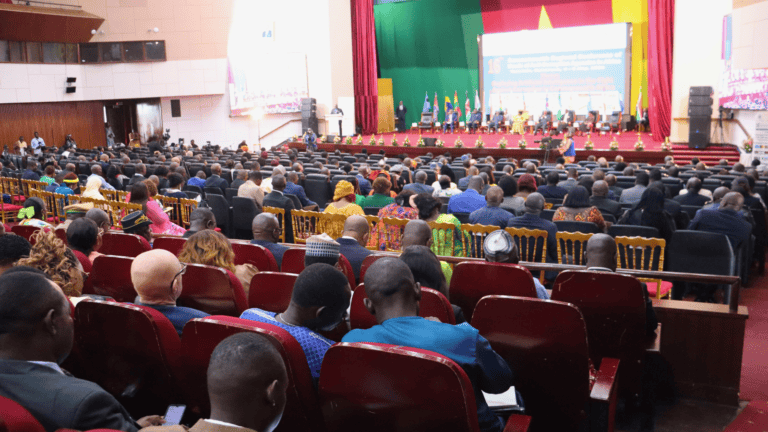
This direction was strongly reflected at the 16th Commonwealth Regional Conference of Heads of Anti-Corruption Agencies in Africa, held in Yaoundé, Cameroon, from 4 to 8 May 2026. The meeting convened senior anti-corruption leaders, policymakers, and international experts to examine how digital systems can be practically deployed to improve the detection, analysis, and prevention of corruption.
Rather than treating AI as an abstract innovation, discussions framed it as an operational instrument for governance reform capable of improving risk identification, supporting investigations, and enhancing public-sector monitoring systems. The emphasis was on practical deployment, ethical safeguards, and adaptation to local administrative realities.
Dr Roger Koranteng, Acting Senior Director of the Governance and Peace Directorate at the Commonwealth Secretariat, described the broader governance transformation driven by technology, stating: “We meet at a moment when technology is reshaping governance, accountability, and the very architecture of public service. Artificial Intelligence offers new tools, new insights, and new opportunities, but only if we harness it with integrity, wisdom, and purpose.”
He further stressed the importance of shared learning and cooperation among member states, noting: “Our comparative advantage as the Commonwealth lies in our ability to bring nations together in the fight against corruption, and to exchange experiences and identify ‘best fit’ solutions tailored to local realities remains.”
The conference also placed strong emphasis on ethical deployment and institutional readiness, with case studies from across Africa highlighting both the promise and the risks of AI-driven governance systems, particularly regarding transparency, accountability, and data protection.
From the host country’s perspective, Cameroon underscored the continued scale of the corruption challenge and its impact on public resources. Rev. Dr Massi Gams, Head of Cameroon’s National Anti-Corruption Commission, stated: “Corruption and similar offences continue to wreak havoc in our society. In 2024 alone, the Commission received 10,520 reports. The financial loss suffered by the State of Cameroon as a result of corrupt practices was estimated at 4,061,806,711 CFA francs.”
He also stressed the importance of tangible outcomes from the conference, saying: “Cameroon has high expectations for this Conference being held on its soil. We hope the outcome will be innovative and practical solutions to enhance our capacity to fight corruption, thereby ensuring our country’s development and the well-being of our people.”
Beyond national experiences, delegates reaffirmed that corruption remains a systemic barrier to development and public trust across Africa, requiring stronger institutions and sustained regional cooperation. These discussions align with broader Commonwealth commitments and global governance goals, including Sustainable Development Goal 16 on peace, justice, and strong institutions.
Since 2011, the Commonwealth Secretariat and the Commonwealth Africa Anti-Corruption Centre in Botswana have trained more than 7,000 officials across all 21 African member countries, strengthening institutional capacity in anti-corruption practice.
The conference concluded with an agreement on practical recommendations to strengthen inter-agency cooperation, improve institutional capacity, and guide the responsible integration of artificial intelligence into national anti-corruption frameworks across the continent.

Senior Reporter/Editor
Bio: Ugochukwu is a freelance journalist and Editor at AIbase.ng, with a strong professional focus on investigative reporting. He holds a degree in Mass Communication and brings extensive experience in news gathering, reporting, and editorial writing. With over a decade of active engagement across diverse news outlets, he contributes in-depth analytical, practical, and expository articles exploring artificial intelligence and its real-world impact. His seasoned newsroom experience and well-established information networks provide AIbase.ng with credible, timely, and high-quality coverage of emerging AI developments.