

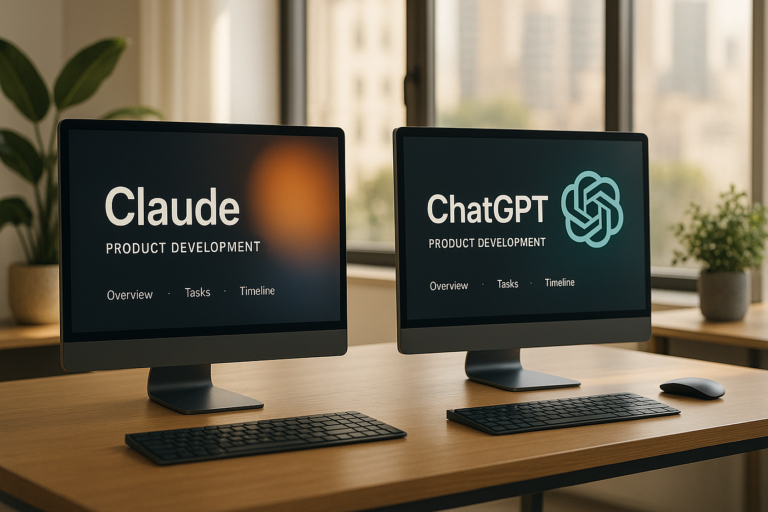
The AI assistant space has become one of the most dynamic sectors in technology. ChatGPT, developed by OpenAI, was long the frontrunner in conversational AI, powering creative writing, research, coding, and casual Q&A. However, in early 2026, Claude, built by Anthropic, has emerged as a serious competitor, drawing attention and users away from ChatGPT. To understand why, it’s important to explore what each tool offers, how they differ, and why users are increasingly reconsidering their loyalty.
The Tools
ChatGPT (OpenAI)
ChatGPT has become a household name in AI, known for its ability to generate human-like text across a variety of topics. Its versatility has made it the go-to AI for many casual and professional tasks.
- Core Function: Conversational AI capable of answering questions, generating creative content, assisting with coding, summarising documents, and even tutoring in multiple subjects.
- Key Features:
- GPT-4-powered responses, providing nuanced answers to complex queries
- Memory function (premium version) that can recall user preferences and previous interactions
- Integration with tools for browsing the web, coding execution, and accessing real-time information
- Best Use Cases: Brainstorming creative ideas, coding support, casual Q&A, learning explanations, drafting emails, and content creation.
Claude (Anthropic)
Claude is designed with a strong emphasis on ethical AI and reliability, positioning itself as a safe alternative for users concerned about AI accountability. Its capabilities are particularly tailored for tasks that require precision and extended reasoning.
- Core Function: AI assistant built for long-form reasoning, careful analysis, and ethical AI deployment.
- Key Features:
- Exceptionally large context windows, allowing it to retain more information over extended interactions
- Cautious, fact-aware responses that minimise errors or fabricated information (“hallucinations”)
- Built-in ethical safeguards that prevent its use in military or harmful applications
- Best Use Cases: Legal and business document analysis, research-intensive projects, strategy planning, programming, and any task where accuracy and context continuity are critical.
Key Differences Between ChatGPT and Claude
Ethical Concerns
- ChatGPT: Some users are uneasy about OpenAI’s partnerships with defence and government agencies, raising questions about potential military or surveillance use.
- Claude: Anthropic emphasises ethical AI and explicitly avoids military applications, making it appealing to ethically minded users.
Context Handling
- ChatGPT: Maintains context moderately well, with memory features in premium versions, but can lose track over very long or multi-part conversations.
- Claude: Offers large context windows, retaining detailed information across extended sessions and multi-step tasks, ideal for research, coding, or complex document review.
Response Style
- ChatGPT: Creative and flexible, often imaginative, which is great for brainstorming but can occasionally lead to inaccurate information or “hallucinations.”
- Claude: Cautious, fact-driven, and precise, minimising errors and providing reliable outputs for high-stakes work.
Integration & Ecosystem
- ChatGPT: Highly integrated with Microsoft Office, coding platforms, browsing tools, and extensive APIs for diverse tasks.
- Claude: Fewer integrations but optimised for deep text analysis, research-heavy tasks, and professional workflows.
Migration & Switching
- ChatGPT: Users typically start fresh unless they manually export memory or preferences.
- Claude: Provides tools to import ChatGPT memories, instructions, and preferences, making the transition smoother and lowering barriers for new users.
User Focus
- ChatGPT: Suited for creative professionals, learners, and general productivity users.
- Claude: Designed for professionals handling high-stakes work, researchers, legal analysts, and those who prioritise ethical AI use.
Why Users Are Switching
The movement from ChatGPT to Claude is not accidental. Several factors explain this shift:
- Ethical Concerns
- ChatGPT: Some users are uneasy about OpenAI’s partnerships with defence and government agencies, raising questions about potential military or surveillance use.
- Claude: Anthropic emphasises ethical AI and explicitly avoids military applications, making it appealing to ethically conscious users.
- Technical Advantages
- ChatGPT: Maintains context moderately well, but may lose track in very long or complex conversations. Occasional hallucinations can reduce reliability for critical work.
- Claude: Large context windows allow it to retain detailed information across extended sessions. Responses are cautious and fact-checked, reducing the risk of errors in high-stakes tasks.
- Ease of Migration
- ChatGPT: Users typically start fresh unless they manually export memory or preferences, which can be cumbersome.
- Claude: Offers tools to import ChatGPT memories, instructions, and preferences, making the switch smooth without losing personalised settings.
- Social & Cultural Momentum
- ChatGPT: Some users feel pressure from community backlash over ethical concerns, leading to cancellations or disengagement.
- Claude: Social media movements like #QuitGPT have amplified awareness of Claude as a safe alternative, encouraging adoption and building trust within the community.
- Task Specialization
- ChatGPT: Excels at creative, exploratory, and casual tasks such as brainstorming, learning, and casual Q&A.
- Claude: Ideal for structured, high-stakes work such as legal analysis, business strategy, research projects, and complex programming, where accuracy and continuity of context are critical.
The Verdict
The rise of Claude highlights that AI adoption is no longer only about raw capability; ethics, reliability, and trust are increasingly shaping user preference. While ChatGPT remains versatile and powerful, Claude has carved out a niche among professionals and ethically conscious users seeking accuracy, safety, and continuity in their AI interactions.

Senior Reporter/Editor
Bio: Ugochukwu is a freelance journalist and Editor at AIbase.ng, with a strong professional focus on investigative reporting. He holds a degree in Mass Communication and brings extensive experience in news gathering, reporting, and editorial writing. With over a decade of active engagement across diverse news outlets, he contributes in-depth analytical, practical, and expository articles exploring artificial intelligence and its real-world impact. His seasoned newsroom experience and well-established information networks provide AIbase.ng with credible, timely, and high-quality coverage of emerging AI developments.