

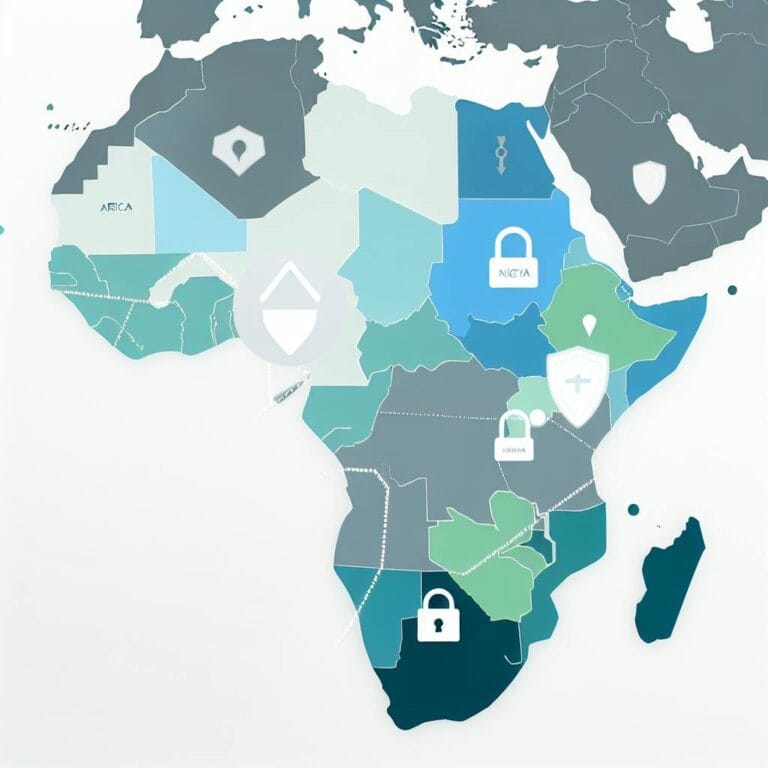
African countries are moving beyond basic data protection laws and implementing enforceable artificial intelligence regulations, with at least 16 nations now developing or rolling out national AI governance frameworks.
According to recent continental policy assessments, the shift marks a transition from establishing privacy and data protection standards to directly regulating how AI systems are built, deployed, and monitored.
Officials involved in the process say the new approach aims to address the growing use of AI in public services, finance, security systems, and digital infrastructure.
One policy summary describes the change as a regulatory turning point, stating that “Africa is moving from foundational data protection laws to enforceable AI governance frameworks,” with compliance increasingly becoming mandatory for companies operating in key digital sectors.
Countries leading the development include Nigeria, Kenya, South Africa, Ghana, Rwanda, and Morocco, as well as others currently drafting national AI strategies or updating digital economy laws to include AI-specific provisions.
The emerging frameworks typically focus on risk classification of AI systems, accountability requirements for developers and deployers, and oversight mechanisms for high-risk applications such as biometric identification and automated decision-making.
Regulators are also introducing compliance tools such as algorithmic audits, impact assessments, and licensing requirements for certain AI applications.
Officials say the goal is to balance innovation with safeguards while preventing the misuse of AI in sensitive areas such as surveillance, credit scoring, and public-sector decision systems.
However, implementation challenges remain uneven across the continent, with concerns about regulatory capacity, enforcement consistency, and cross-border coordination.
Despite these gaps, policymakers say the direction is clear: Africa is entering a phase in which AI governance is becoming legally enforceable rather than advisory, marking a significant expansion beyond earlier data privacy regimes.
Read Also:
- AI Regulations in Nigeria: Current Laws, Draft Policies and What Comes Next
- Fragmented Data Rules Threaten Africa’s AI Ambitions
- Nigeria Advances Plans for Comprehensive AI Regulation

Senior Reporter/Editor
Bio: Ugochukwu is a freelance journalist and Editor at AIbase.ng, with a strong professional focus on investigative reporting. He holds a degree in Mass Communication and brings extensive experience in news gathering, reporting, and editorial writing. With over a decade of active engagement across diverse news outlets, he contributes in-depth analytical, practical, and expository articles exploring artificial intelligence and its real-world impact. His seasoned newsroom experience and well-established information networks provide AIbase.ng with credible, timely, and high-quality coverage of emerging AI developments.