

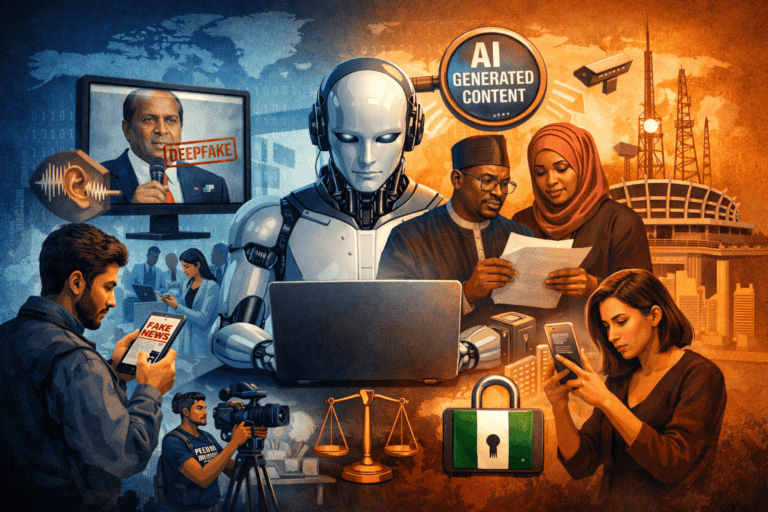
The ability to generate human-like content-text, images, audio, and video-quickly and at scale is reshaping how we work, communicate, learn, and create.
While this opens significant opportunities for productivity and creativity, the misuse of AI-generated content can distort facts, manipulate opinions, and erode trust. This topic, though seemingly straightforward, spans a wide range of issues, exploring its effects on the economy, education, governance, and society, and providing a clear, factual framework for responsible engagement
What Is AI‑Generated Content?
AI‑generated content is material created by artificial intelligence systems that learn patterns from large datasets. Once trained, these systems can produce text, images, audio, or video that closely resembles human-made content.
Some common forms of AI‑generated content include:
- Text: Articles, essays, summaries, scripts, social media posts and messages.
- Images: Photorealistic scenes, artwork, product visuals, designs or illustrations.
- Audio: Synthetic speech, music or soundscapes.
- Video: Deepfake clips, animated narratives or edited sequences.
The underlying technologies range from large language models for text to generative adversarial networks for images and transformer‑based methods for multi‑modal content.
What Constitutes Misuse?
AI‑generated content misuse happens when these tools are used to cause harm, deceive, or disrupt. It goes beyond poor-quality output, involving deliberate use that misleads, violates rights, invades privacy, or erodes public trust.
Common patterns of misuse include:
- Disinformation: Deliberately producing false narratives that are designed to mislead audiences.
- Impersonation: Using synthetic likenesses or voices to pose as real individuals without consent.
- Spam and Fraud: Automating fake communications to lure, trick or swindle people.
- Manipulation: Tailoring generated content to influence opinions, behaviour or decisions in covert ways.
Misuse is not always malevolent. It can also arise from negligence, lack of oversight, or insufficient quality control, leading to harmful side effects even when the intent is benign.
Paths to Misuse
AI‑generated content can be misused along several vectors:
1. Political Disinformation
In political contexts, generative AI can produce false reports, fabricated statements attributed to leaders, or doctored images that appear real. Because these systems can create content rapidly and at scale, bad actors can overwhelm moderation or bypass traditional fact‑checking mechanisms.
The danger lies not merely in individual falsehoods, but in the erosion of collective confidence in truth. When people cannot distinguish what is real from what is fabricated, democratic processes and civil discourse suffer.
2. Impersonation and Synthetic Media
Deepfakes and synthetic voices have been used to impersonate public figures or ordinary citizens. This misuse can facilitate fraud, defamation or personal harm. For instance, an artificial voice mimicking a business leader could be used to issue fraudulent instructions to staff or investors.
In some cases, intimate or compromising deepfake videos have been weaponised against individuals, particularly women, in ways that violate privacy and dignity.
3. Commercial Fraud and Scams
Commercial misuse includes generating fake reviews, fabricated testimonials, fake product claims, or automated outreach designed to deceive consumers. When fraudulent content is scaled through automation, the effects can be widespread.
Scammers use AI to generate convincing phishing emails or messages that mimic familiar communication patterns. The human eye often cannot distinguish AI‑generated text from genuine correspondence, raising the stakes for fraud prevention systems.
4. Academic and Professional Misuse
In educational and professional settings, individuals may use AI to produce essays, reports or credentials without proper attribution. While this may be framed as ‘assistance’, in many contexts it constitutes academic dishonesty or professional misrepresentation.
Without robust norms and safeguards, such misuse undermines the value of genuine achievement.
Technological and Human Factors
Ease of Access
A key reason misuse has proliferated is the democratisation of generative tools. Many models are accessible via web interfaces or open‑source code, requiring little technical skill. This accessibility is beneficial for creativity and productivity, but it also lowers the barrier for malicious or negligent misuse.
Scale and Speed
Generative systems can produce vast quantities of content in minutes. This amplification potential means harmful narratives can spread quickly, often outpacing efforts to contain them.
Detection Challenges
Detecting AI‑generated content can be difficult. As models improve, synthetic output becomes harder to distinguish from human‑created material. While forensic tools exist to flag certain artefacts, they are often reactive and imperfect. This makes prevention and education just as important as detection.
See also:
Real cases of AI-generated content misuse
1. Deepfake Adverts Targeting Entrepreneurs
In June 2025, FactCheck Africa reported that cloned voices and images of Nigerian public figures were used in fraudulent adverts to promote fake investment schemes. Victims, including Lagos‑based entrepreneurs, lost significant sums after trusting what appeared to be genuine endorsements. These deepfakes eroded consumer confidence in online advertising and highlighted the vulnerability of small business owners to AI‑powered fraud.
2. Election Disinformation in 2023
During the 2023 Nigerian presidential elections, voters were inundated with AI‑generated deepfakes and manipulated posts. False audio recordings and videos linked candidates to militant groups, spreading rapidly across social media. Journalist Hannah Ajakaiye documented how these clips polarised communities and misled voters, sparking heated debates and mistrust within families and neighbourhoods.
3. Surge in AI‑Driven Fraud
Reports in February 2024 revealed a 700% surge in deepfake fraud in Nigeria compared to the previous year. Fraudsters exploited AI to create convincing fake job adverts, tricking university students in Abuja into paying “application fees” to non‑existent companies. This trend reflects how cybercriminals are lowering the barrier to entry by automating scams, making them more widespread and harder to detect.
The roles of Industry
Technology companies offering generative AI tools must implement safeguards, transparency measures, and systems to detect misuse, including clear policies, content‑flagging tools, and collaboration with regulators. However, responsibility should be shared; effective public‑private cooperation is needed to establish common standards and to develop rapid-response mechanisms.
Public Engagement and Media Standards
Journalists and media organisations are crucial in identifying AI misuse and educating the public. Training newsrooms in AI detection and running public awareness campaigns on deepfakes and misinformation can help users navigate digital content more safely and confidently.
AI-generated content misuse involves the harmful or deceptive use of AI-created text, images, audio, or video. It can spread misinformation, impersonate individuals, facilitate fraud, and erode public trust, highlighting the need for regulation, media vigilance, digital literacy, and responsible industry practices.

Senior Reporter/Editor
Bio: Ugochukwu is a freelance journalist and Editor at AIbase.ng, with a strong professional focus on investigative reporting. He holds a degree in Mass Communication and brings extensive experience in news gathering, reporting, and editorial writing. With over a decade of active engagement across diverse news outlets, he contributes in-depth analytical, practical, and expository articles exploring artificial intelligence and its real-world impact. His seasoned newsroom experience and well-established information networks provide AIbase.ng with credible, timely, and high-quality coverage of emerging AI developments.