

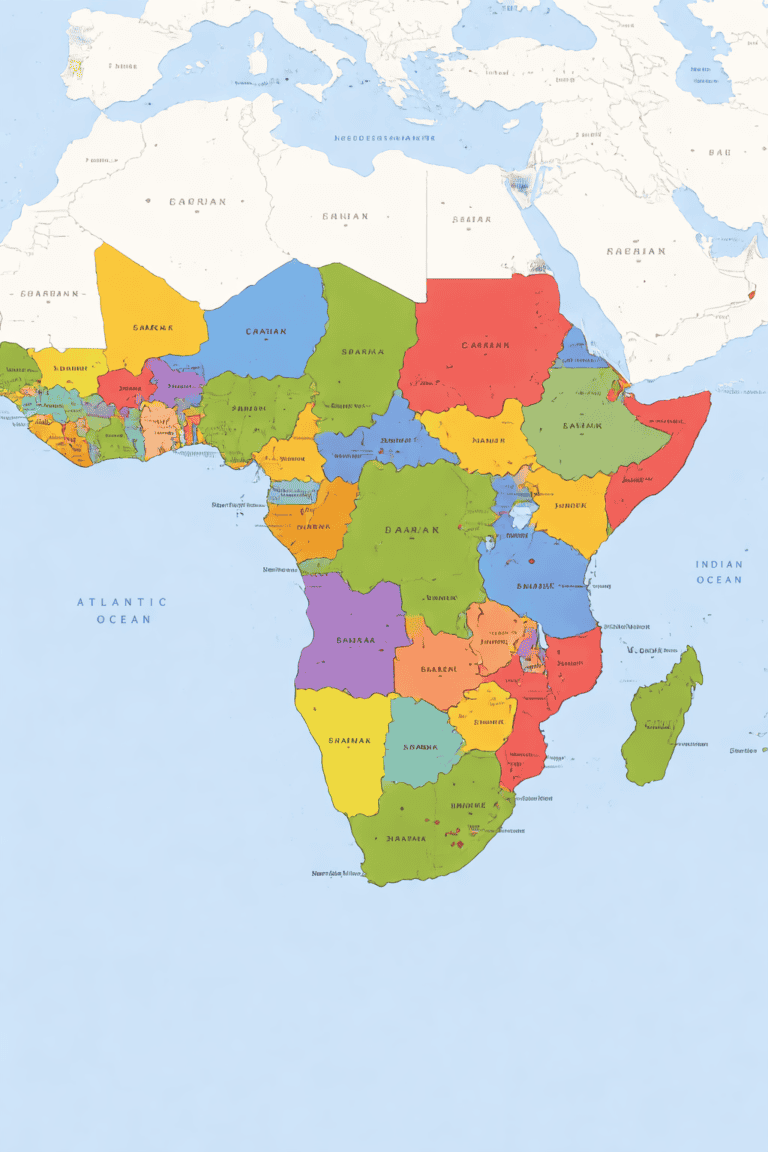
The adoption of AI remains uneven, especially in Africa, constrained by structural challenges. Despite the continent’s abundant human capital, natural resources, and growing digital ambitions, limitations in power infrastructure, data connectivity, and policy frameworks continue to slow progress.
A clear understanding of these challenges is crucial for governments, businesses, investors, and civil society actors seeking to harness AI for sustainable and inclusive development on the continent. This article, therefore, examines the key obstacles to AI adoption in Africa, explores how they manifest in practice, compares regional trends with global experiences, and considers the changes necessary to enable meaningful advancement.
Core Concepts of AI Adoption
What is AI Adoption?
AI adoption refers to the process by which organisations, governments, and individuals integrate artificial intelligence technologies, such as machine learning, natural language processing, computer vision, and automation, into products, services, business processes, and decision‑making systems. Adoption encompasses investment in hardware and software, development of data pipelines, training of personnel, and establishment of governance systems that ensure ethical and effective deployment.
AI systems depend on three foundational elements:
- Power and infrastructure: Reliable electricity and physical computing infrastructure such as servers and data centres.
- Data connectivity: High‑quality, relevant, and accessible data that can be used to train, validate and operate models.
- Policy and governance: Laws, regulations, standards, and institutional capacities that regulate AI use, protect citizens, and drive investment.
Deficiencies in any of these areas can slow or distort AI adoption. In Africa, all three present persistent hurdles.
The prerequisite of power and infrastructure
Electricity reliability and computing infrastructure form the bedrock of any modern digital system. For AI, however, the stakes are higher: training advanced models or servicing real‑time applications demands large, stable energy supplies and robust computational environments.
Unreliable Electricity and Its Consequences
Many parts of Africa, especially outside major cities, face unreliable electricity, with frequent blackouts, limited grid capacity, and heavy reliance on diesel generators. This disrupts AI operations, particularly for real-time applications, and increases operational costs—startups and research labs may spend 30–50 per cent more on energy. In Nigeria, despite installed capacity exceeding 13 000 MW, frequent outages persist due to under-investment, hampering digital infrastructure and costing the economy billions in lost productivity each year.
Data Centre Shortages and Computing Bottlenecks
AI adoption in Africa is further constrained by limited access to data centres, which are essential for storing, processing, and hosting large-scale data. The continent accounts for less than 1 per cent of global data centre capacity, with most capacity concentrated in countries such as South Africa. Without local facilities, organisations rely on overseas cloud services, increasing costs and latency and raising concerns about data sovereignty. The high cost of building Tier‑3 data centres, which offer reliability and security, often deters investment from both public and private sectors.
The Data Dilemma: Scarcity, Quality, and Governance
Data as the Lifeblood of AI
AI systems extract patterns and make predictions from large datasets. The more relevant, complete, and clean the data, the better the models perform. This places a premium on data collection, storage, governance, and sharing frameworks that ensure datasets are both usable and representative of local contexts.
Limited Data Availability and Quality
AI development in Africa is hampered by a lack of comprehensive, digitised public records across sectors like healthcare, agriculture, and finance. Many datasets remain incomplete, paper-based, or difficult to access due to bureaucratic barriers, resulting in a scarcity of high-quality local data. Available data often underrepresents rural populations and marginalised groups, leading to biased AI models or reduced effectiveness in rural or poorly resourced areas.
Data Governance and Privacy Frameworks
Data governance-how data is collected, stored, used, and protected-is critical for AI adoption. Strong frameworks protect privacy, clarify ownership, and enable secure data sharing. In many African countries, however, regulations are fragmented or underdeveloped, creating legal uncertainty and discouraging investment. This lack of comprehensive governance also complicates cross-border partnerships and compliance with international privacy and cybersecurity standards.
Policy and Regulatory Barriers
Weak AI Policy Frameworks
Regulation plays a key role in guiding responsible AI adoption, addressing issues such as bias, transparency, and accountability. Across much of Africa, AI policy frameworks are still in their infancy, offering limited guidance on liability, safety, or equitable access. The lack of coherent strategies creates uncertainty for businesses, discouraging investment. Even where policies exist, implementation is often hindered by limited institutional capacity or competing priorities. In contrast, regions like the European Union and the United States have established comprehensive regulatory frameworks that provide clear guidelines for AI deployment and innovation.
Data Sovereignty and Cross‑Border Issues
With much data generated in African countries being stored on foreign servers, questions of sovereignty arise. Local data retention and processing can enhance security and compliance, but without the necessary infrastructure or policy incentives, foreign cloud providers dominate the landscape. Some governments are responding by mandating local data storage, but this imposes additional costs on organisations that may already struggle with infrastructure limitations.
Policy frameworks need to balance data localisation with incentives for investment in secure data centres and cloud ecosystems.
Internet Connectivity and Political Risks
Reliable and affordable internet connectivity is indispensable for cloud‑based AI applications, distributed computing, and remote collaboration. Yet only around 43 per cent of Africans have internet access — far below global averages, and significantly lower in rural and underserved regions.
Internet shutdowns, increasingly deployed during political unrest or elections, further undermine digital access. In 2024, a record number of shutdowns was documented across multiple African countries, illustrating how political decisions can abruptly sever digital connectivity.
Talent and Skills Gap
Africa faces a shortage of skilled professionals in AI, data science, and advanced computing. While educational programmes are expanding, gaps in training quality and quantity persist, and the migration of talent to better-resourced regions worsens the scarcity of local expertise needed to develop and maintain AI systems.
Comparative Global View
Globally, AI adoption has been driven by long-term investment in infrastructure, education, and regulation. Regions like North America, Europe, and East Asia benefit from reliable power, high-speed connectivity, mature data governance, and large local datasets. In contrast, Africa’s slower progress in broadband and digital policy has widened the gap in technological capacity and economic benefits.
Implications for Economy, Society, and Governance
Economic Growth and Productivity
For economies seeking diversification, AI offers opportunities to boost productivity across sectors such as agriculture, healthcare, finance, and logistics. However, infrastructure and policy constraints can mute these gains. Without stable electricity or widespread connectivity, AI innovations may remain concentrated in major cities, deepening urban‑rural divides.
Governance and Public Services
AI could improve public service delivery, from automated fraud detection in tax systems to predictive maintenance of infrastructure. To realise such benefits, governments must invest not only in technology but also in institutional capacity to use data ethically and effectively.
Education and Employment
AI reshapes labour markets by automating routine tasks and creating demand for digital skills. Africa’s young population presents a demographic boon, but without targeted education and training, many will lack the competencies needed for future jobs. Investment in curriculum reform, vocational training, and partnerships with the private sector can help build a more competitive workforce.
Steps to Sustainable Development
Overcoming the challenges to AI adoption in Africa requires a multi‑pronged approach:
Strengthen Power and Digital Infrastructure
Expanding reliable electricity, particularly through renewables such as solar microgrids, must go hand‑in‑hand with investments in broadband and data centres. Governments and investors should prioritise projects that expand capacity in underserved regions, reduce costs, and support distributed computing.
Efficient Data Systems and Governance Frameworks
Establishing robust data governance laws that balance privacy, innovation, and security is essential. Initiatives to digitise public records, foster data sharing across sectors, and incubate local datasets can provide the raw material AI needs to be effective and equitable.
Related: ECOWAS targetd cordinated AI governance across West Africa
Human Capital Development
Scaling AI education from primary to tertiary levels, promoting specialised data science training, and creating incentives to retain talent domestically are critical. Collaborative programmers with industry can help align skills training with market needs.
Foster Policy and Regulatory Leadership
African governments and regional bodies must accelerate the development of coherent AI strategies that provide clarity and encourage responsible innovation. This includes establishing ethical guidelines, liability standards, and incentives for local AI research and development.
Encourage Local Innovation and Investment
Domestic entrepreneurs are key to embedding AI in locally relevant solutions. Public and private investment through grants, venture capital, and public‑private partnerships can support startups tackling region‑specific problems.
Imagining an Inclusive AI Future
Africa’s journey to AI maturity will be distinct, shaped by its unique demographics and emerging digital ecosystems. By tackling the intertwined challenges of power, data, and policy, the continent can unlock AI’s potential to drive inclusive, sustainable growth. For governments, businesses, and innovators alike, success will depend on strategic investments that balance ambition with practical constraints. With focused effort, Africa has the opportunity to move from AI awareness to global leadership in areas that truly transform lives and economies.

Senior Reporter/Editor
Bio: Ugochukwu is a freelance journalist and Editor at AIbase.ng, with a strong professional focus on investigative reporting. He holds a degree in Mass Communication and brings extensive experience in news gathering, reporting, and editorial writing. With over a decade of active engagement across diverse news outlets, he contributes in-depth analytical, practical, and expository articles exploring artificial intelligence and its real-world impact. His seasoned newsroom experience and well-established information networks provide AIbase.ng with credible, timely, and high-quality coverage of emerging AI developments.