
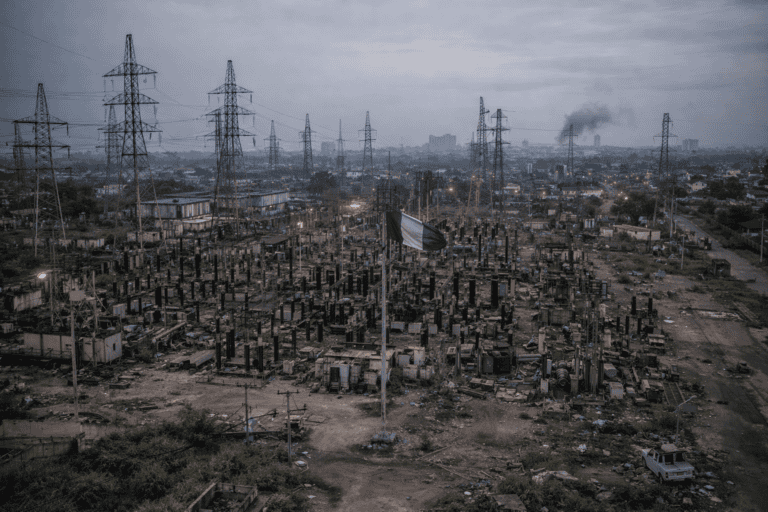
When the International Energy Agency (IEA) warned that the rapid adoption of artificial intelligence (AI) is pushing electricity demand higher and potentially straining power grids, the signal underscored a stark reality in Nigeria: the national grid collapses are a recurring phenomenon.
Artificial Intelligence (AI) is transforming industries worldwiden from healthcare and agriculture to logistics and finance. Its unprecedented capabilities to deliver insights, automate tasks, and optimise processes have driven many nations and businesses to accelerate their adoption of AI technologies.
However, behind the promise of a smarter, more efficient future lies a critical challenge that is often overlooked: the rising demand for energy to power AI infrastructure.
In countries such as Nigeria, where electricity supply has long been unstable, and electricity demand routinely outstrips generation capacity, the rapid growth of AI adoption risks exacerbating systemic power shortages.
This article examines the nexus between AI growth and electricity consumption in Nigeria, assesses the vulnerabilities in the nation’s grid, and proposes strategies to manage the impending energy-AI challenge.
1. Understanding Nigeria’s Power Landscape
Nigeria — Africa’s most populous nation, with an estimated 220 million people – has long struggled with grid reliability. Despite being rich in energy resources like natural gas and crude oil, and possessing significant renewable potential (solar, hydro), the country’s electricity sector is characterised by:
✦ Chronic Under-Generation
Nigeria’s grid typically produces between 4,000 and 5,000 megawatts (MW) of electricity daily – far below the 30,000+ MW needed to reliably serve the entire population. This means that even at peak generation, fewer than 25% of citizens have access to stable grid power.
✦ High Transmission Losses
System losses (energy lost due to outdated infrastructure, theft, and inefficiency) average 30–40%, substantially higher than the <10% observed in more developed grids. This further reduces the electricity available to homes and businesses.
✦ Uneven Consumption
Urban areas account for disproportionate demand, while rural regions remain largely off-grid. Businesses and industries often invest in diesel generators to address gaps, thereby increasing operational costs and contributing to environmental degradation.
✦ Demand Growth
Electricity demand in Nigeria grows by an average of 6–8% annually, driven by population growth, urbanisation, and increased adoption of energy-intensive technologies.
The result? A fragile grid under perennial strain, frequent load shedding, and industries facing energy insecurity — a context in which the electricity demands of AI infrastructure could present both challenges and opportunities.
2. AI Infrastructure and Electricity Demand
AI technologies are powered by computationally intensive processes. Whether training deep learning models or running large-scale inference systems, these tasks are energy hungry.
✦ Energy Intensity of AI Workloads
Artificial intelligence workloads — particularly those involving deep learning and large language models (LLMs) — require extensive computing resources. These translate into significant electricity consumption because:
-
Training Models involves repeated processing of large datasets using high-performance GPUs or specialised accelerators such as TPUs.
-
Inference Tasks (execution of trained models) require lower peak energy, but as deployment scales, cumulative energy use becomes substantial.
-
Data Centres, where much of this computing occurs, depend on continuous cooling systems, which further increase energy consumption.
To illustrate the scale:
-
A large AI model training run can consume hundreds of megawatt-hours of energy — comparable to the annual electricity consumption of many small towns.
-
A single large data centre can require tens of megawatts of continuous power, equating to the energy needs of thousands of average households.
✦ Global AI Energy Trends
Globally, data centres — driven increasingly by AI workloads consume an estimated 1–2% of total electricity demand, a figure projected to rise in the coming decade. In countries with robust grids, this demand is absorbed through infrastructure upgrades. In Nigeria, where energy systems are already overloaded, even marginal increases in demand can have outsized impacts.
3. Projected AI Growth in Nigeria
AI adoption in Nigeria is growing across several sectors:
✦ Financial Services
Banks and fintech companies use AI for credit scoring, fraud detection, and customer service automation.
✦ Healthcare
AI supports diagnostics, telemedicine, and predictive analytics.
✦ Agriculture
Machine learning enables precision farming, yield prediction, and supply chain optimisation.
✦ Telecommunications and Retail
Chatbots, user analytics, and recommendation systems are becoming standard practice.
✦ Government and Public Services
Efforts are underway to integrate AI into public planning, smart city initiatives, and digital identity systems.
With this expansion comes AI infrastructure—local servers, cloud integration hubs, and edge computing nodes—each consuming electricity. Nigeria’s digital economy is expected to grow by 15–20% annually, with tech investment increasing correspondingly. While figures on AI-related energy demand in Nigeria remain preliminary, estimates suggest that even modest AI integration (e.g., enterprise-level deployments and data centres) could add 5–10% to energy demand in urban tech hubs over the next five years.
4. Grid Vulnerabilities and AI Demand Pressures
The pressing question: What happens when AI’s electricity demand scales faster than Nigeria’s grid capacity?
✦ 1) Increased Load on an Already Strained System
With grid output often below 5,000 MW, any additional load — especially from AI data centres requiring stable, high-throughput power — can intensify shortfalls. This could lead to:
-
More frequent load shedding
-
Longer outages
-
Greater reliance on backup generators
✦ 2) Higher Operational Costs
Power instability forces AI infrastructure operators and tech companies to rely on:
-
Diesel generators
-
Solar plus battery systems
-
Uninterruptible power supplies (UPS)
These alternatives significantly increase operating expenditures (OPEX). Diesel alone can cost commercial users tens of thousands of Naira per day, reducing profitability and slowing digital investment.
✦ 3) Environmental Impact
Heavy reliance on fossil fuel generators to support AI infrastructure increases carbon emissions and air pollution. This counters sustainability goals and places additional public health burdens on urban populations.
✦ 4) Inequitable Energy Access
As commercial AI users secure more reliable power through private solutions, residential and small-business users might face deeper outages—widening socioeconomic inequities.
5. Why the Grid Remains Fragile
To understand why rising demand could compound problems, we must examine core structural issues:
✦ Fragmented Sector Governance
Nigeria’s electricity sector has undergone numerous reforms, but coordination remains weak. Multiple agencies and private operators struggle with:
-
Contract enforcement
-
Maintenance funding
-
Infrastructure planning
✦ Inadequate Investment
Despite deregulation and private sector participation, capital investment in generation, transmission, and distribution remains insufficient. Ageing infrastructure has not kept pace with technological demands.
✦ Gas Supply Constraints
Most power plants in Nigeria are gas-fired. However, inconsistent gas supply — due to pipeline theft, maintenance lapses, and pricing anomalies — disrupts generation.
✦ Renewables Underutilised
Nigeria has abundant solar and hydro potential, but deployment has been slow due to financing barriers, policy gaps, and grid integration challenges.
✦ Revenue Collection Issues
Utilities struggle with cost-reflective tariffs and bill collection. This undermines operational funding and discourages investment.
6. Balancing AI Growth With Electricity Realities
Expanding AI adoption in Nigeria doesn’t have to worsen the grid crisis — but it requires strategic planning. Below are key considerations.
A. Accurate Demand Forecasting
Predictive analytics must be applied to anticipate how AI workloads will grow and what electricity they will consume.
-
Scenario modelling can project energy demand for varying AI adoption rates.
-
By 2030, if AI infrastructure grows at current global digitalisation rates (20%+ annually), Nigeria’s AI-related electricity demand could rival that of medium-sized industrial sectors.
Understanding this trend empowers policymakers to plan capacity expansions proactively.
B. Policy and Regulatory Frameworks
Nigeria needs clear policies that:
-
Incentivise energy efficiency in data centres and AI facilities.
-
Establish power usage effectiveness (PUE) standards for tech facilities.
-
Support demand response programs that align AI workloads with periods of excess generation.
Regulatory tools can also encourage time-of-use pricing, enabling operators to schedule energy-intensive AI tasks when supply is abundant.
C. Decentralised and Renewable Energy Solutions
Distributed energy resources (DERs) — especially solar and battery storage — can supplement grid supply:
✦ Solar-Powered AI Hubs
AI infrastructure can be co-located with solar arrays and battery systems, reducing grid dependence and providing stable power for critical workloads.
-
Solar yields in Nigeria are high — average daily irradiance often exceeds 5 kWh/m².
-
Battery storage systems can provide firm capacity during outages.
✦ Microgrids
Microgrids that integrate renewable energy with localised generation (e.g., solar, small hydro) and smart controls can serve AI facilities, campuses, or industrial parks independently or in concert with the main grid.
Such systems increase resilience and reduce the burden on central transmission networks.
D. Energy Efficiency in AI Operations
Efficiency measures can dramatically cut energy demand:
-
Hardware Optimisation — using energy-efficient GPUs, ASICs, or AI accelerators.
-
Software Efficiency — algorithms designed for lower computation footprints.
-
Dynamic Scaling — adjusting compute resources in real time based on workload.
These strategies reduce peak loads and lower total energy consumption without hindering AI performance.
E. Cloud vs. Local Data Centres
Many Nigerian businesses rely on international cloud providers for AI computing. This offloads the energy burden to data centres abroad, but raises concerns around:
-
Data sovereignty
-
Latency
-
Foreign currency costs
Developing local hyperscale data centres with dedicated power solutions can keep economic value within the country, but requires careful integration with energy planning to avoid overwhelming local grids.
7. Case Studies: Lessons for Nigeria
While specific local data on AI energy use in Nigeria is still emerging, we can draw lessons from analogous situations:
Case Study: AI Demand in India’s Tech Hubs
India — with large tech clusters in Bengaluru, Hyderabad, and Pune — has faced similar pressures:
-
Rising data centre demand has increased energy consumption by an average of 10–15% annually in some states.
-
Governments responded by:
-
Offering incentives for renewable-powered data centres
-
Mandating energy efficiency standards
-
Prioritising grid capacity expansions around tech corridors
-
These policies demonstrate the positive impact of proactive planning.
Case Study: Denmark’s Data Centres and Renewable Integration
Denmark actively promotes data centre growth while achieving high renewable penetration:
-
Data centres often pair with wind and solar farms.
-
Excess heat from data centres is reused for district heating — an innovative energy-circular model.
Nigeria could explore similar synergies, particularly in thermal reuse and power-to-heat systems within industrial parks.
8. Future Scenarios: What Could Happen?
Let’s model three hypothetical futures for Nigeria’s grid and AI demand:
Scenario 1: Business as Usual
-
Grid generation improves marginally (5–7% annual growth).
-
AI adoption accelerates rapidly (20% annual growth).
-
Result: System overload, increased outages, higher energy costs, and widened inequality.
Scenario 2: Renewable and Efficiency-Led Transformation
-
Significant investment in solar, mini-grids, and storage.
-
AI energy efficiency standards are enforced.
-
Result: Managed load growth, resilient infrastructure, and sustainable AI ecosystem.
Scenario 3: Centralised Scale-up Without Reforms
-
Major investment in centralised generation (gas and hydro).
-
Little focus on renewables or decentralisation.
-
Result: Improved supply but continued vulnerability to fuel supply issues and grid losses.
9. Strategic Roadmap: Policy and Investment Priorities
Here’s a high-level roadmap for aligning AI adoption with energy stability:
1. National AI-Energy Task Force
Establish a multi-stakeholder body including:
-
Energy regulators
-
Tech industry leaders
-
Grid operators
-
Renewable energy developers
This task force would define standards, forecast demand, and coordinate investments.
2. Incentives for Clean Power Solutions
Government and finance institutions should offer:
-
Tax credits for solar/battery integration
-
Low-interest loans for renewable projects
-
Grants for energy efficiency research
3. Investment in Grid Modernisation
Upgrading transmission and distribution infrastructure can:
-
Reduce losses
-
Increase capacity
-
Enable smart grid functionality
Advanced grid systems support real-time demand management, which is essential when balancing AI loads.
4. Data Centre Power Standards
Mandate:
-
Minimum PUE requirements
-
Renewable energy procurement targets
-
Reporting on power usage and emissions
This ensures transparency and drives improvements.
10. Conclusion: Turning a Challenge into an Opportunity
Rising AI adoption in Nigeria holds enormous promise – for economic growth, innovation, improved services, and global competitiveness. Yet it also intersects with a persistent and deep-seated challenge: electricity scarcity.
If unmanaged, the energy demands of AI infrastructure could:
-
Worsen grid instability
-
Increase costs for businesses and households
-
Exacerbate socio-economic inequalities
-
Increase environmental harm. AI in Nigeria
However, by aligning AI growth with smart energy planning—including renewable deployment, decentralisation, efficiency standards, and grid modernisation—Nigeria can navigate this transition without sacrificing stability. In fact, strategic investments could:
-
Enhance grid resilience
-
Attract global digital investment
-
Improve energy access for broader populations
-
Foster a sustainable digital economy
The future of AI in Nigeria need not be at odds with the future of energy security. With forward-looking policies, technological innovation, and coordinated action, the nation can harness AI’s potential while strengthening its grid, thereby charting a sustainable path for development in the 21st century.

Senior Reporter/Editor
Bio: Ugochukwu is a freelance journalist and Editor at AIbase.ng, with a strong professional focus on investigative reporting. He holds a degree in Mass Communication and brings extensive experience in news gathering, reporting, and editorial writing. With over a decade of active engagement across diverse news outlets, he contributes in-depth analytical, practical, and expository articles exploring artificial intelligence and its real-world impact. His seasoned newsroom experience and well-established information networks provide AIbase.ng with credible, timely, and high-quality coverage of emerging AI developments.