


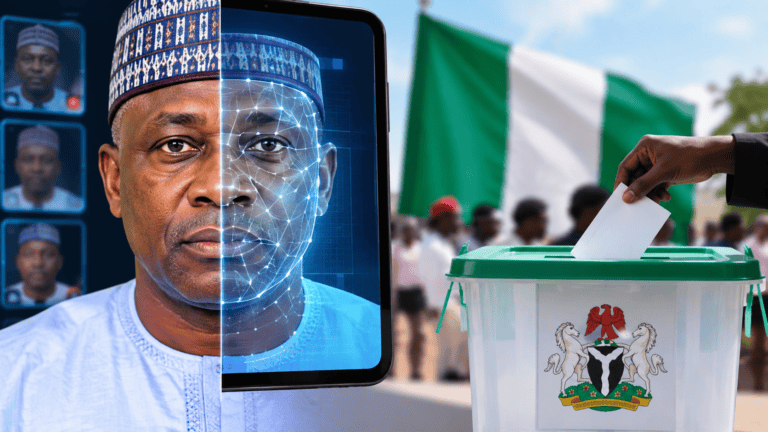
Media experts have called for coordinated action to tackle AI election misinformation Nigeria could face ahead of the 2027 general elections, warning that deepfakes, fabricated election results and manipulated audio could undermine credible journalism and electoral integrity.
The call was contained in a communiqué issued after the eighth Bagauda Kaltho Media Lecture Series, organised by the Africa Media Development Foundation (AMDF) in Abuja.
The event focused on the challenges facing journalism, press freedom and election information ahead of the 2027 elections.
Participants said artificial intelligence was making it easier to create and distribute deceptive content, while social media platforms could allow misinformation to spread faster than journalists and fact-checkers can verify it.
Related:
Assessing the Threat of AI Misuse to Nigeria’s Electoral Integrity
INEC Collaborates with Google on AI and Election Integrity Ahead of 2027
Stakeholders Call for Safeguards Against AI Election Manipulation
They urged journalists and media organisations to strengthen professional and ethical standards, particularly when dealing with AI-generated and digitally manipulated content.
The experts also called for continuous newsroom training in fact-checking, digital verification, artificial intelligence and investigative journalism, while urging journalists to verify social media claims before publishing or reproducing them.
The communiqué recommended stronger cooperation between media organisations, journalists’ unions, professional bodies and civil society groups to combat misinformation.
It also called on government institutions to support credible fact-checking systems, improve engagement between security agencies and the media, and review laws considered restrictive to press freedom.
Technology companies and digital platforms were urged to work with journalists, government and civil society organisations to improve the detection of manipulated and AI-generated content.
The experts further advocated wider media literacy programmes to help citizens verify information before sharing it, particularly during election periods.
They recommended extending media literacy efforts through schools, religious organisations, communities and other social institutions to strengthen public awareness and critical evaluation of online information.
The participants said addressing AI election misinformation Nigeria faces ahead of 2027 would require a coordinated response involving journalists, media organisations, government, technology companies, civil society groups, educators and citizens.

Lawrence Orjime is an AI and technology writer at AIBase.ng, covering the latest developments in artificial intelligence, emerging technologies, and the companies shaping the future of AI.
With a background in content strategy, SEO, and digital media, Lawrence Orjime combines technology reporting with a strong understanding of what makes information useful and easy to find online.