

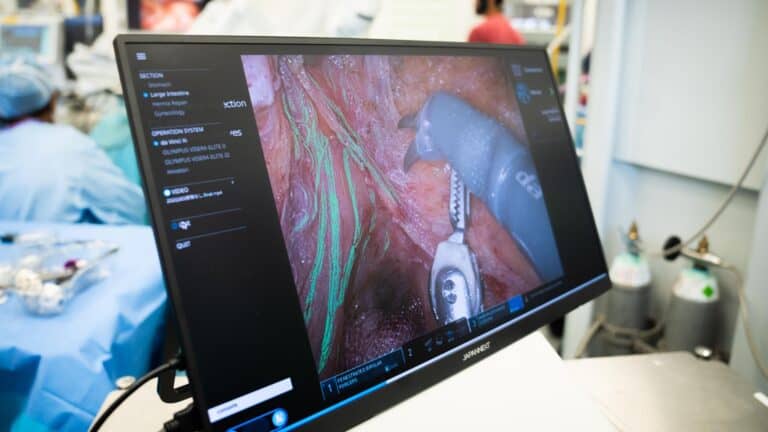
Surgeons in the United Kingdom have used an artificial intelligence-powered tool during a live operation for the first time, a development that experts say could mark the beginning of a new chapter in modern healthcare.
The breakthrough procedure saw medical professionals employ advanced AI technology to assist with decision-making and surgical planning during an operation, highlighting the growing role of artificial intelligence in clinical settings.
Healthcare leaders said the technology has the potential to improve precision, support surgeons during complex procedures and enhance patient outcomes.
While AI has already been used in areas such as diagnostics, medical imaging and administrative tasks, its integration into live surgical environments represents a significant milestone for the sector.
The operation was carried out as part of ongoing efforts to explore how artificial intelligence can support healthcare professionals without replacing human expertise.
Surgeons remained fully responsible for all clinical decisions throughout the procedure, with the AI tool serving as an additional source of real-time analysis and guidance.
Medical experts believe AI-powered systems could help reduce surgical errors, improve efficiency and provide doctors with valuable insights based on vast amounts of clinical data.
Supporters argue that such technologies could become increasingly important as healthcare providers face growing demand and pressure on resources.
The use of AI in surgery has attracted considerable interest from researchers and healthcare organisations worldwide.
Advances in machine learning and data analysis have enabled developers to create tools capable of identifying patterns and offering recommendations that may not be immediately apparent to clinicians.
However, experts have also stressed the importance of robust testing and oversight before AI systems are adopted more widely across hospitals.
Concerns surrounding patient safety, data privacy and accountability remain central to discussions about the technology’s future role in healthcare.
The successful use of the AI-powered tool is expected to contribute to further research and evaluation programmes aimed at assessing its effectiveness in real-world clinical environments.
Healthcare authorities will continue monitoring outcomes as part of broader efforts to determine how artificial intelligence can be integrated safely into patient care.
Related
- AI Chatbots Misdiagnose Over 80% of Early Medical Cases, Study Finds
- Microsoft unveils Copilot Health in latest push into AI‑powered healthcare
The development comes as hospitals and research institutions across the UK increase investment in digital health technologies designed to improve treatment, streamline services and support medical staff.
While it remains too early to predict the full impact of artificial intelligence on surgical practice, the latest procedure is being viewed as an important step towards a future in which AI becomes a routine part of healthcare delivery.
For patients and healthcare professionals alike, the operation offers a glimpse into how emerging technologies could help shape the next generation of medical treatment.

Senior AI Writer
Bio: Okikiola is a writer and AI enthusiast with a background in Office Technology and Management from the Federal Polytechnic Offa. She went further to study an MSc in International Business at De Montfort University (DMU). With extensive work experience across administrative and business roles, she now focuses on exploring how artificial intelligence can transform work, innovation, and everyday life.