

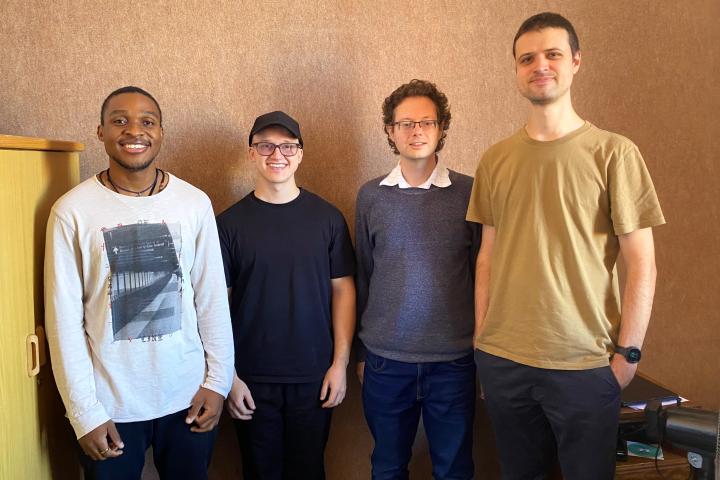
Researchers at the University of Cape Town (UCT) have unveiled a new multilingual artificial intelligence model, named MzansiLM, designed to support a wide range of South African languages and address long-standing gaps in digital language representation.
The model, developed by a team of computer scientists and linguists, incorporates languages such as isiXhosa, isiZulu, and Sepedi, alongside several others. Its release marks a significant step toward improving access to AI tools for speakers of indigenous African languages, which have historically been underrepresented in global technology systems.
South Africa is home to 11 official languages, yet most mainstream AI platforms are primarily trained on English and a limited number of widely spoken international languages. This imbalance has restricted the usability of AI technologies for millions of people. MzansiLM aims to bridge that divide by enabling more inclusive communication, translation, and content generation across local languages.
“MzansiLM was built to reflect the linguistic diversity of South Africa and to respond to the clear shortage of AI tools for indigenous languages,” the UCT research team said in a statement accompanying the unveiling. “By integrating languages like isiXhosa, isiZulu, Sepedi, and others into a single model, we are working toward a more inclusive digital future.”
According to the researchers, the model was trained using a combination of publicly available datasets and locally sourced linguistic materials, ensuring that it captures the nuances and contextual richness of South African languages. The system is capable of performing a range of tasks, including text generation, translation, and basic conversational interaction.
The team noted that MzansiLM could have wide-ranging applications across sectors. In education, it could help produce learning materials in students’ home languages, potentially improving comprehension and engagement. In healthcare, it may assist in translating medical information or facilitating communication between healthcare providers and patients.
- Related: Intron Launches Voice AI For Africa
Experts say the development aligns with a broader global effort to make artificial intelligence more equitable and culturally relevant. Language remains a major barrier to technology adoption in many regions, particularly in Africa, where linguistic diversity is high.
“We see MzansiLM as a foundational tool that others can build on,” the researchers said. “It is not just about technology, but about ensuring that innovation serves all communities, not only those already well represented online.”
The team also emphasised ethical considerations, including data privacy and bias mitigation, as central to the model’s development. They indicated that ongoing testing and refinement are underway, with plans to collaborate with public- and private-sector partners to expand the model’s practical use.
UCT researchers plan to release further technical details in an upcoming academic publication and are exploring ways to make aspects of the model accessible to developers and institutions interested in advancing local-language AI solutions.
The unveiling of MzansiLM highlights the growing role of African research institutions in shaping globally relevant technologies while addressing local challenges, positioning South Africa as an emerging contributor to inclusive AI innovation.

Senior Reporter/Editor
Bio: Ugochukwu is a freelance journalist and Editor at AIbase.ng, with a strong professional focus on investigative reporting. He holds a degree in Mass Communication and brings extensive experience in news gathering, reporting, and editorial writing. With over a decade of active engagement across diverse news outlets, he contributes in-depth analytical, practical, and expository articles exploring artificial intelligence and its real-world impact. His seasoned newsroom experience and well-established information networks provide AIbase.ng with credible, timely, and high-quality coverage of emerging AI developments.