

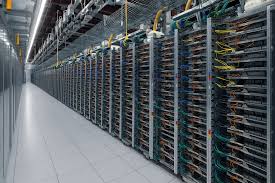
Global data centre capacity is expected to expand sharply over the coming years, with projections indicating an additional 125 gigawatts (GW) of demand, driven largely by artificial intelligence workloads worldwide.
Industry analysts say the rapid rise of generative AI, large language models, and cloud computing is fundamentally reshaping infrastructure requirements, pushing hyperscalers and investors to accelerate data centre development at an unprecedented scale.
A McKinsey analysis projects that global data centre demand could rise from about 82 GW in 2025 to more than 200 GW by 2030, with AI accounting for a majority of the incremental growth. The report notes that AI applications alone could require well over 100 GW of additional capacity within the decade, reflecting the energy-intensive nature of advanced model training and inference.
“The race is on to build sufficient data centre capacity to support a massive acceleration in the use of AI,” McKinsey researchers observed, adding that supply expansion risks falling behind demand if investment does not scale quickly enough.
Energy and infrastructure analysts also point to mounting pressure on power grids as a key constraint. S&P Global Market Intelligence estimates that global data centre electricity demand could nearly double by 2030, driven primarily by hyperscale expansion in the United States, Europe, and parts of Asia.
“There is a structural shift underway where computing demand is becoming a core driver of electricity consumption growth,” the report notes, highlighting grid congestion and permitting delays as emerging bottlenecks for new facilities.
The investment response has been swift. Major technology firms and infrastructure developers are committing billions of dollars to new hyperscale campuses, with some exceeding 100 megawatts per site. In one recent example, an AI-focused data centre operator secured a multi-billion-dollar lease agreement covering roughly 300 MW of computing capacity, underscoring strong long-term demand expectations.
Meanwhile, energy equipment manufacturers are reporting rising orders linked to data centre expansion. Industry executives have cited AI-driven demand as a major factor behind increased requirements for turbines, transformers, and grid upgrades.
Despite the bullish outlook, analysts caution that execution risks remain significant. Power availability, supply chain constraints, and lengthy grid connection timelines could slow deployment in several regions, even as demand continues to accelerate.
Still, forecasts remain strongly upward. Some industry estimates suggest global data centre capacity could approach 200 GW by 2030, nearly doubling current levels as AI becomes embedded across nearly every sector of the global economy. AIBase Nig
Overall, the projected 125 GW expansion highlights the scale of transformation underway, positioning AI as one of the most powerful forces reshaping global infrastructure, energy systems, and digital economies.
Read Also:
- Challenges of AI Adoption in Africa: Power, Data, and Policy
- AI Boom Drives Surge In Investment And Industry Growth

Senior Reporter/Editor
Bio: Ugochukwu is a freelance journalist and Editor at AIbase.ng, with a strong professional focus on investigative reporting. He holds a degree in Mass Communication and brings extensive experience in news gathering, reporting, and editorial writing. With over a decade of active engagement across diverse news outlets, he contributes in-depth analytical, practical, and expository articles exploring artificial intelligence and its real-world impact. His seasoned newsroom experience and well-established information networks provide AIbase.ng with credible, timely, and high-quality coverage of emerging AI developments.