

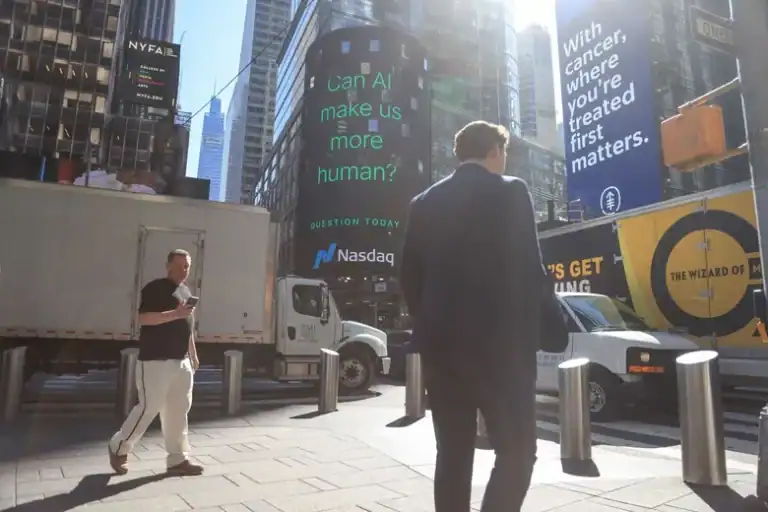
A high-profile legal filing tied to Wall Street activity has come under scrutiny after it contained apparent AI-generated hallucinations, including inaccurate or nonexistent legal citations-an incident that is intensifying concerns about the use of artificial intelligence in sensitive professional workflows.
According to reports, the filing included references that could not be verified in established legal databases, a hallmark of what experts describe as “hallucination,” where AI systems generate plausible but incorrect information. Legal analysts note that such errors, when embedded in court documents, can undermine both the integrity of the case and professional credibility.
“This is not a new technical flaw, but it is a serious operational risk when deployed without proper oversight,” said Gary Marcus, an AI researcher who has frequently warned about the limitations of large language models. “The systems can produce text that looks authoritative, but that doesn’t make it accurate.”
The issue echoes earlier incidents in U.S. courts in which lawyers faced sanctions for submitting AI-generated briefs with fabricated citations. In those cases, judges emphasised that attorneys remain fully responsible for verifying the accuracy of their filings, regardless of the tools used.
Industry leaders have also cautioned against overreliance on generative AI in high-stakes environments. Sam Altman, CEO of OpenAI, previously noted that current AI systems “can make mistakes” and should be used with human oversight, particularly in professional settings such as law and finance.
Legal experts say the latest development could accelerate the push for stricter internal controls within law firms and financial institutions adopting AI tools. “Verification cannot be optional,” said a senior compliance advisor at a New York-based firm. “If AI is part of the workflow, then validation must be part of the process.”
The incident also adds momentum to ongoing discussions around AI governance. Policymakers and regulators in the U.S. and Europe have been exploring frameworks to ensure transparency and accountability in AI-assisted decision-making, especially in sectors where errors carry significant legal or financial consequences.
While AI continues to offer efficiency gains in document drafting and research, this case underscores a critical limitation: without rigorous human oversight, even advanced systems can introduce risks into environments where precision is non-negotiable. AIBase Nig
Consider Reading
- What Are AI Hallucinations? Examples And Types
- Judge Issues AI Warning After Landlord Uses Fake Law Defence
- Should AI Be Used in Courtrooms? Legal and Ethical Boundaries

Senior AI Writer
Bio: Okikiola is a writer and AI enthusiast with a background in Office Technology and Management from the Federal Polytechnic Offa. She went further to study an MSc in International Business at De Montfort University (DMU). With extensive work experience across administrative and business roles, she now focuses on exploring how artificial intelligence can transform work, innovation, and everyday life.