

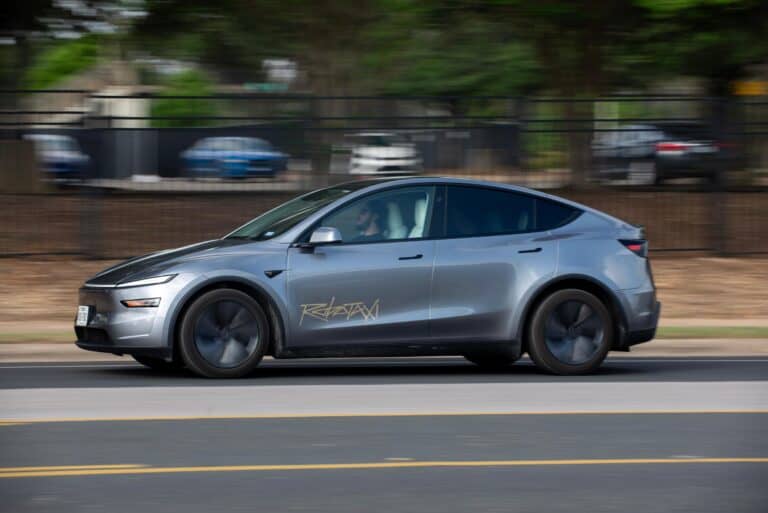
Tesla, Inc. has expanded its robotaxi rollout to include Dallas and Houston, marking a further step in the company’s push to establish a foothold in the autonomous ride-hailing market across the United States.
The move extends Tesla’s ongoing efforts to deploy its Full Self-Driving (FSD) technology in real-world urban environments, as it seeks to transition from traditional electric-vehicle manufacturing to a broader artificial-intelligence and mobility-services provider. The introduction of robotaxi operations in the two major Texas cities follows earlier testing and limited deployments in select locations, where the company has been refining its software and operational model.
Tesla’s robotaxi concept differs from some competitors in that it is expected to rely, at least in part, on privately owned vehicles equipped with its FSD system, rather than a fully centralised fleet. This approach could enable faster scaling if regulatory approval is secured, though it also raises questions about safety oversight, liability, and operational consistency.
The expansion into Dallas and Houston places Tesla in more direct competition with established autonomous mobility operators such as Waymo, which has already launched commercial driverless ride services in several U.S. cities, and Cruise, which has pursued similar ambitions despite recent operational challenges.
Regulatory scrutiny remains a key factor in the rollout. Autonomous vehicle deployments in the United States are governed at both state and local levels, and Texas has generally maintained a relatively permissive framework compared with states such as California. This regulatory environment has made the state an attractive testing ground for companies advancing self-driving technologies.
Industry analysts note that while Tesla has made significant progress in developing its FSD capabilities, the system has yet to achieve full regulatory approval for unsupervised operation in most jurisdictions. As a result, the robotaxi rollout in Dallas and Houston is expected to begin in a controlled or limited capacity, potentially involving safety drivers or restricted service areas.
Related: How AI-Powered Traffic Management Can Transform Nigerian Cities
The expansion underscores Tesla’s broader strategy to position autonomous driving as a core revenue stream in the coming years. Chief executive Elon Musk has repeatedly highlighted robotaxis as central to the company’s long-term valuation, arguing that a scalable autonomous network could transform urban transportation and reduce reliance on personal car ownership.
However, the timeline for widespread adoption remains uncertain. Technical challenges, public trust, and evolving regulatory standards continue to shape the pace at which robotaxi services can be deployed at scale.
For now, Tesla’s entry into Dallas and Houston represents another incremental step in a highly competitive and closely watched sector, as companies race to define the future of autonomous mobility.
Bio: An (HND, BA, MBA, MSc) is a tech-savvy digital marketing professional, writing on artificial intelligence, digital tools, and emerging technologies. He holds an HND in Marketing, is a Chartered Marketer, earned an MBA in Marketing Management from LAUTECH, a BA in Marketing Management and Web Technologies from York St John University, and an MSc in Social Business and Marketing Management from the University of Salford, Manchester.
He has professional experience across sales, hospitality, healthcare, digital marketing, and business development, and has worked with Sheraton Hotels, A24 Group, and Kendal Nutricare. A skilled editor and web designer, He focuses on simplifying complex technologies and highlighting AI-driven opportunities for businesses and professionals.
LinkedIn