

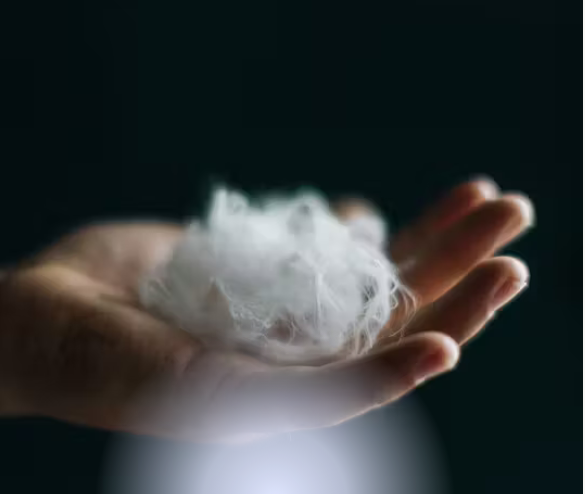
Everbloom, a material science startup, is making waves in sustainable textiles by using artificial intelligence to transform waste streams – including keratin-rich poultry feathers – into high-performance fibres comparable to luxury cashmere.
The company’s proprietary AI system, known as Braid AI, combines advanced molecular engineering and predictive modelling to analyse and optimise protein-based waste materials. This technology enables scalable production of fibres that can mimic the softness, strength and texture of cashmere, while also significantly reducing environmental impact.
From Waste to Luxury Fibre
Everbloom’s process begins by collecting keratin-rich waste from the textile and agricultural sectors – including down bedding and discarded fibre – with plans to expand into poultry feathers from farms and suppliers. Through chemical processing and machine extrusion, the material is reshaped into pellets that can be spun on standard textile machines, producing fibres suitable for luxury fabrics.
The startup says the AI fine-tunes manufacturing parameters far more rapidly than traditional lab methods, cutting months of testing down to weeks and ensuring consistency and quality at scale.
Sustainability and Market Potential
Everbloom positions its innovation at the intersection of sustainability and luxury fashion. By repurposing waste that would otherwise contribute to landfill volume and greenhouse gas emissions, the company aims to introduce biodegradable alternatives to conventional and fossil-fuel-based fibres – without the premium price often associated with eco-friendly materials.
The firm has already raised over $8 million in funding from investors, including Hoxton Ventures and SOSV, to advance its technology and scale manufacturing. While the startup’s initial focus has been on general textile waste, expanding into poultry feather keratin represents a broader effort to tap underutilised waste streams globally.
Read Also
- Funding providers for Nigerian AI startups
- Essential AI skills Nigrians need to launch a career in AI
- Artificial Intelligence in Nigerian Agriculture
Challenges and Next Steps
Industry experts highlight both the promise and challenges of repurposing animal-derived waste for high-end textiles. Converting inconsistent raw materials like feathers into reliable, luxury-grade fibres requires sophisticated modelling and precise control of biochemical processes – areas where AI plays a crucial role.
Everbloom’s spokespersons emphasise that their approach has the potential to reduce water use, land impact and greenhouse gas emissions compared with traditional fibre production. However, broader commercial adoption will depend on proving performance and economy at scale.
As fashion brands and manufacturers seek sustainable alternatives, Everbloom’s AI-driven innovation exemplifies how artificial intelligence and material science can converge to transform waste into value, potentially reshaping how luxury fabrics are made.

Senior Reporter/Editor
Bio: Ugochukwu is a freelance journalist and Editor at AIbase.ng, with a strong professional focus on investigative reporting. He holds a degree in Mass Communication and brings extensive experience in news gathering, reporting, and editorial writing. With over a decade of active engagement across diverse news sources, he contributes in-depth analytical, practical, and expository articles that explore artificial intelligence and its real-world impact. His seasoned newsroom experience and well-established information networks provide AIbase.ng with credible, timely, and high-quality coverage of emerging AI developments.