
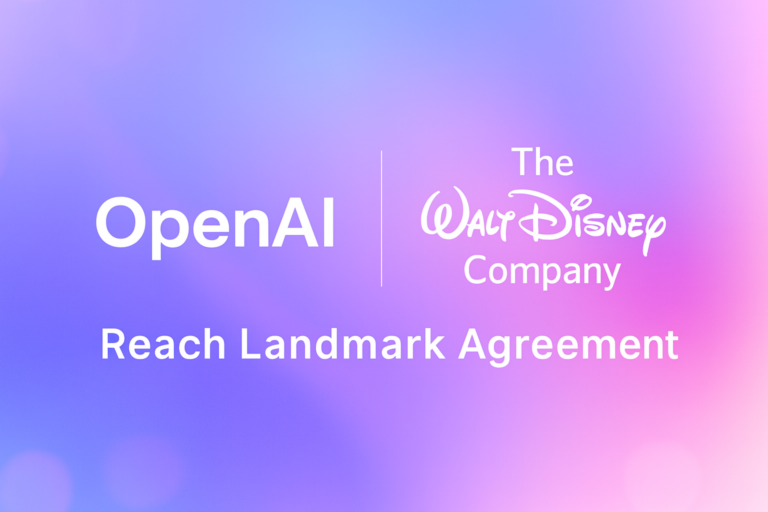
Disney has agreed to invest $1bn (£740m) in OpenAI as part of a deal which will let people use many of its iconic characters in the chatbot ChatGPT and video-generation tool Sora.
The deal combines an investment and a commercial collaboration between the two companies; official statements describe it as both a strategic investment and a licensing arrangement. Precise contractual terms (equity stake, duration and financial structure) have not been published publicly and are being verified.
It is the first major studio to agree a licensing arrangement at this scale with the company. This move could reshape how studios license their content to artificial intelligence platforms and how audiences interact with branded content.
Under the deal, fans are expected to be able to generate and share pictures and videos of more than 200 Disney characters across Disney’s franchises — including examples from Pixar, Marvel and Star Wars — using Sora and ChatGPT. Further technical and commercial limits (for instance, on voices and talent likenesses) are outlined later in this story.
The move comes as OpenAI faces mounting questions about how its rapidly advancing artificial intelligence is used, and amid growing anxiety in Hollywood over the impact of AI on creators, performers and the wider creative industries. For more on safeguards and controversies, see the “Content concerns” section below.
Disney’s announcement, published as a blog post, lists a wide range of eligible characters from films such as Zootopia, Moana, and Encanto, alongside franchise names and individual figures like Star Wars’ Luke Skywalker, Marvel’s Deadpool, and, of course, Mickey and Minnie Mouse.
Key examples (representative, not exhaustive): Mickey & Minnie; Moana; characters from Zootopia and Encanto; Luke Skywalker; Deadpool. The blog post indicates that more than 200 Disney characters are covered, but Disney has not published a complete public list — that list remains under verification.
The agreement specifies critical limits: it “does not include any talent likenesses or voices, meaning actors’ vocal performances and personal likenesses are excluded from the licensing rights being granted to OpenAI for the tools. Precise technical and commercial restrictions (for example, on commercial use or modification) will be set out in product rules and the licensing agreement.
Disney chief executive Bob Iger framed the collaboration as a chance to extend the studio’s storytelling: “The rapid advancement of artificial intelligence marks an important moment for our industry,” he said. “Through this collaboration with OpenAI, we will thoughtfully and responsibly extend the reach of our storytelling.”
OpenAI and Disney say users should be able to begin generating images and videos featuring the authorised characters in Sora and ChatGPT in early 2026. However, exact dates and regional rollouts are to be confirmed.
The deal is being announced against a fraught legal backdrop: reports say Disney lawyers sent Google a cease-and-desist letter this week, accusing the tech firm of infringing its copyrights “on a massive scale” — the Variety report is linked below for reference, and BBC editors have asked Google for comment.
Legal and industry voices say the arrangement is part of a broader shift. Joel Smith, an intellectual property partner at Simmons & Simmons, commented that the Disney OpenAI deal showed “rights owners and major AI developers are moving fast to strike collaborative licensing deals to access content for training and future use.
Performers’ groups, however, warn of risks for creative workers. Equity — the entertainment trade union — is balloting thousands of performers on whether they will refuse digital scanning on set as it seeks stronger AI safeguards. Cathy Sweet, Equity’s head of TV and Film, said the agreement with OpenAI reinforced “exactly why our members are fighting for AI protections.
“The recorded material that will be sold on as part of this eye-watering big money deal is the result of creatives’ professional work, and their rights must be protected,” she added. We have asked Disney and OpenAI for further details about the licensing agreement, including the duration, financial terms, and any safeguards required of the company; this article will be updated once those specifics are confirmed.
Content concerns
Sora’s capacity to produce hyper‑realistic videos has made it popular with users in the US. Still, the technology has also sparked serious content concerns about how the platform can be used to create misleading or offensive material.
In October, OpenAI temporarily paused parts of the video tool after it produced “disrespectful” depictions of Dr Martin Luther King Jr, a move the company said was necessary while it strengthened safeguards. The BBC’s report on that pause is linked above for reference.
Clips purporting to show public figures — including President John F. Kennedy, the late Queen Elizabeth II and Professor Stephen Hawking — speaking in offensive ways circulated on social media, prompting public outcry and calls from family members and campaigners for OpenAI to act.
OpenAI has said it is working to improve moderation and technical controls on the platform. Still, critics argue that the rapid pace of model development and content generation requires continual oversight. Industry groups and unions have called for more explicit protections for performers and creators as these technologies and licensing agreements become more widespread.
What this means for the Disney OpenAI deal is that both companies will face scrutiny over how authorised Disney characters are used, the safeguards built into product workflows, and the enforcement of limits, such as the exclusion of talent likenesses and voices. We will update this story as OpenAI and Disney publish further details about the guardrails, moderation policies and the rollout timeline.
AI Writer
Bio: Joseph Michael is an MBA graduate in Marketing from Ladoke Akintola University of Technology and a passionate tech enthusiast. As a professional writer and author at AIbase.ng, he simplifies complex AI concepts, explores digital innovation, and creates practical guides for Nigerian learners and businesses. With a background in marketing and brand communication, Joseph brings clarity, insight, and real-world relevance to every article he writes.