

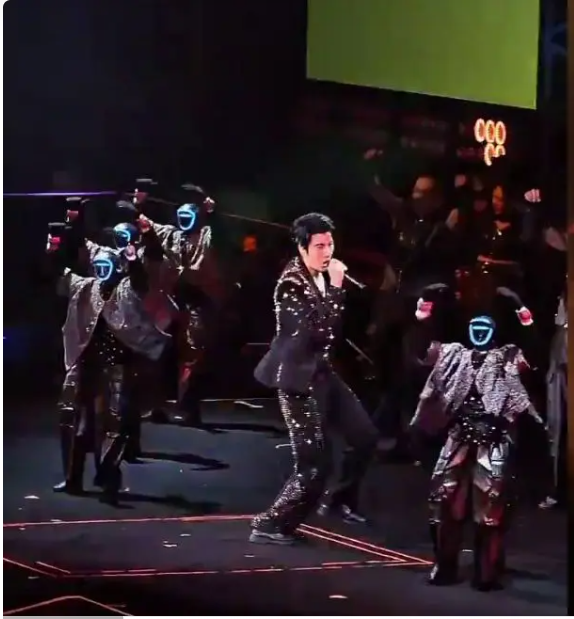
Six humanoid robots developed by Chinese technology firm Unitree Robotics captured global attention last week when they performed a coordinated dance routine at a high-profile concert in Chengdu. The demonstration, which featured the robots moving in time with live music, has sparked discussion about the role of advanced robotics in entertainment and broader public life.
The spectacle took place during a stop on Chinese-American singer-songwriter Wang Leehom’s “Best Place Tour” at the Chengdu Dong’an Lake Sports Park. As the pop star performed his song “Open Fire,” the six Unitree G1 humanoids appeared on stage dressed in silver sequined tops and black trousers, executing tightly choreographed movements. Concert footage shared widely online shows the machines performing arm swings, leg kicks and turns that were closely synchronised with the music and lighting. The routine climaxed with all six robots simultaneously performing Webster flips – a demanding acrobatic front flip – to the delight of the 18,000-strong audience.
The performance quickly went viral on social media platforms, drawing commentary from both technology enthusiasts and the general public. Tesla and SpaceX chief executive Elon Musk reposted footage on the platform X with the single-word comment “Impressive,” contributing to the international buzz surrounding the event.
Developed by Hangzhou-based Unitree Robotics, the G1 humanoid is designed for agility and versatility. According to available specifications, the robot stands approximately 1.27 to 1.30 metres tall, weighs around 35 kilograms and features numerous joint motors that support a wide range of motion. The robots use onboard sensors and artificial intelligence to maintain balance and precision during complex movements, including flips and synchronised choreography.
Audience reaction has been mixed. While many concert-goers and online viewers expressed admiration for the robots’ seemingly fluid performance and technological prowess, others have debated the implications of robotics increasingly entering spaces traditionally reserved for human performers. Some commentators have playfully suggested that machines could one day rival human dancers, while others have seen the event as a milestone in the integration of robotics into popular culture.
In statements following the concert, Wang Leehom described the inclusion of robotic dancers as a unique moment that blended cutting-edge technology with live music, reflecting the evolving nature of contemporary performance art. Unitree Robotics has indicated that the appearance is part of broader efforts to showcase the capabilities of its humanoid robots, which it hopes will eventually be used in diverse settings, from entertainment to everyday domestic tasks.
The Chengdu concert marks one of the most visible demonstrations to date of humanoid robots performing alongside human artists on a major stage, highlighting rapid advancements in robotics and their growing presence in public life. aicareers.ng
China’s Six Humanoid Robots Perform Synchronized Dance at Chengdu Concert

Director/CEO
As the co-founder of AIBase, Joy established this platform to make artificial intelligence knowledge more accessible and relevant within the Nigerian ecosystem. She is an accounting graduate with a diverse professional background in multimedia and catering, experiences that have strengthened her adaptability and creative problem-solving skills.
Now transitioning into artificial intelligence and technology writing, Joy blends analytical thinking with engaging storytelling to explore and communicate emerging technology trends. Her drive to establish aibase.ng is rooted in a passion for bridging the gap between complex AI innovations and practical, real-world understanding for individuals and businesses.