

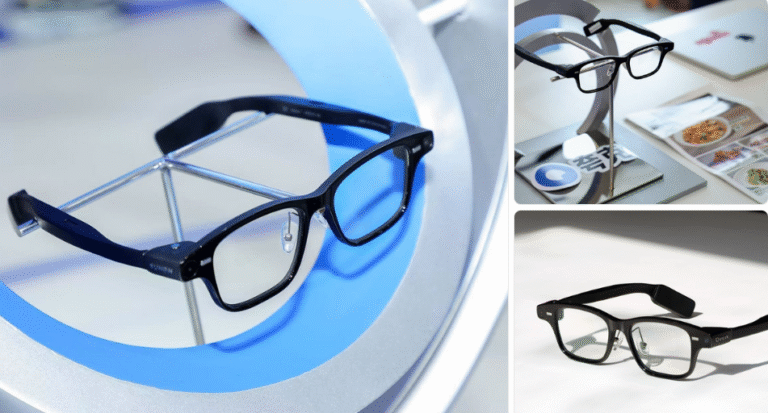
Alibaba’s New AI Glasses Hit the Market, Aimed at Rivalling Meta
What’s the news
Alibaba has officially launched its first AI-powered smart glasses, called Quark, marking its entry into the competitive wearable-tech market dominated by players like Meta.
The launch includes two models:
-
S1 (flagship) – a high-end version with built-in micro-OLED displays and advanced AI integration.
-
G1 (lifestyle / budget-oriented) – a more affordable version for general users.
Pricing starts at about ¥1,899 (-US $268) for the G1, while the S1 retails at ¥3,799 (US $537).
What the glasses can do
Powered by Alibaba’s proprietary AI model (the Qwen large-language model) and the Quark assistant, the glasses bundle several smart features:
-
Real-time language translation – useful for travellers or multilingual users.
-
On-the-go navigation and contextual information overlays via translucent displays.
-
Integrated e-commerce and payment services via Alibaba’s ecosystem – enabling shopping, price checks, and payments without touching a smartphone.
-
Hands-free calls, music playback, and media consumption.
-
Camera, voice interaction, and AI-powered assistance for daily tasks – turning the glasses into a wearable AI assistant.
Why it matters
-
Accessible AI wearables: With a lower-cost model (G1), Alibaba might popularise AI glasses among everyday consumers – not just early adopters.
-
Ecosystem integration: By linking the glasses with its payment, shopping, navigation, and media platforms, Alibaba aims to make these glasses part of daily life – a “smartphone replacement” wearable.
-
Competitive pressure on rivals: The move intensifies competition with Meta and other wearables manufacturers, accelerating innovation in AI-driven eyewear.
-
Potential global impact: While the current sale is in China, the global rollout is expected next year, which could pave the way for these glasses to reach international markets.
What to watch
Privacy and security remain top concerns. Experts warn that AI eyewear – with cameras and always-on microphones – could raise data-protection and consent issues, especially in public spaces.
User adoption will also depend on comfort, battery life, software support, and how smoothly the device integrates into everyday life compared to a smartphone.
The release of Alibaba’s Quark AI glasses may mark a turning point in how we use technology – shifting computing from handheld devices to wearables. If executed well, these glasses could redefine daily interaction with AI: from navigation and translation to shopping and payments, all hands-free.

AI Writer
Bio: Joseph Michael is an MBA graduate in Marketing from Ladoke Akintola University of Technology and a passionate tech enthusiast. As a professional writer and author at AIbase.ng, he simplifies complex AI concepts, explores digital innovation, and creates practical guides for Nigerian learners and businesses. With a background in marketing and brand communication, Joseph brings clarity, insight, and real-world relevance to every article he writes.