


Current AI Applications in Nigeria’s Education Sector
Despite infrastructure challenges, several AI applications are already making inroads into Nigeria’s education ecosystem, particularly in private institutions and well-resourced public schools. These technologies are helping address some of the most pressing challenges in the Nigerian education system.
Adaptive Learning Platforms
AI-driven adaptive learning systems are emerging in Nigeria’s education landscape, particularly in private schools and well-funded institutions. These platforms analyse student performance data to personalise learning paths, adjusting content difficulty and presentation based on individual progress and learning styles.
In schools where these platforms have been implemented, teachers report significant improvements in student engagement and comprehension. The technology is especially valuable for addressing the diverse learning needs in Nigeria’s typically overcrowded classrooms, where teacher-to-student ratios can reach 1:80 in some public schools.
Platforms like Tuteria and uLesson, developed with Nigerian curricula in mind, incorporate AI elements to help students progress at their own pace while providing teachers with valuable insights into areas where students may need additional support.
Stay updated on AI Analysis and trends in Nigeria.
Join our newsletter to receive the latest updates on AI applications in Nigerian, including case studies, implementation guides, and funding opportunities.
Automated Assessment Systems
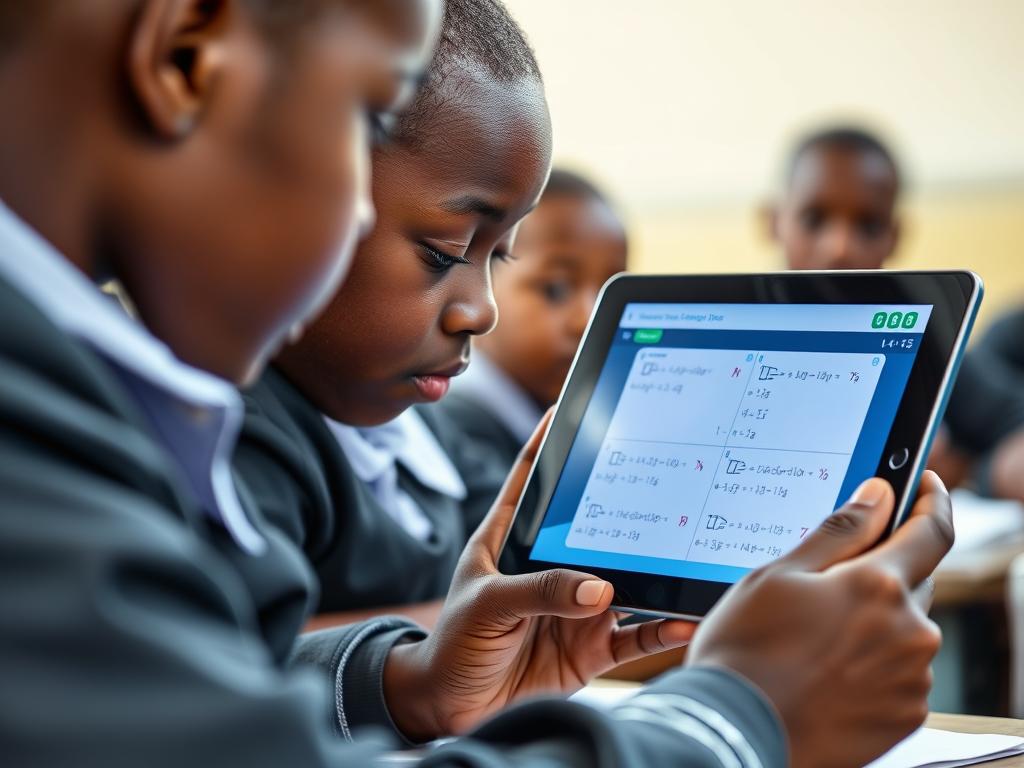
AI-powered assessment tools are gaining traction in Nigerian educational institutions, particularly for standardised testing and routine evaluations. These systems can automatically grade multiple-choice questions, fundamental mathematical problems, and even certain types of written responses, significantly reducing the time teachers spend on evaluation.
For Nigerian educators who often manage large class sizes, these tools provide timely feedback to students while freeing up valuable teacher time for more qualitative aspects of education. Several universities and secondary schools have begun implementing these systems for continuous assessment tests and entrance examinations, though adoption remains limited primarily to institutions with adequate technological infrastructure.
Virtual Tutors and Educational Chatbots

AI-powered virtual tutors and educational chatbots are emerging as valuable tools in Nigeria’s education sector. These applications provide 24/7 support to students, answering questions, explaining concepts, and guiding learners through complex problems outside regular school hours.
In a country where access to qualified tutors is limited and often expensive, these AI assistants offer an affordable alternative. Several Nigerian edtech startups have developed chatbots tailored to the Nigerian curriculum, providing support in subjects ranging from mathematics and sciences to language arts and social studies.
Learning Analytics for Educational Insights
Forward-thinking Nigerian educational institutions are adopting AI-driven learning analytics tools to gain deeper insights into student performance and engagement. These systems analyse data from various learning activities to identify patterns, predict outcomes, and flag students who may be at risk of falling behind.
For school administrators and teachers, these analytics provide valuable information for early intervention strategies. Some private school networks in Lagos, Abuja, and Port Harcourt have implemented learning analytics systems to track student progress across multiple campuses, enabling data-driven decision-making and targeted support for struggling learners.
Course Recommendation Engines
AI-powered recommendation systems are beginning to appear in Nigerian higher education and online learning platforms. These tools analyse a student’s academic history, performance, interests, and career goals to suggest relevant courses, learning resources, and educational pathways.
For Nigerian students navigating complex educational choices with limited career guidance resources, these recommendation engines provide valuable direction. Several universities and online learning platforms serving Nigerian students have implemented basic recommendation systems to help learners make informed decisions about their educational journeys.

Future Potential Applications of AI in Nigeria’s Education
Looking beyond current implementations, AI holds tremendous potential to transform Nigeria’s education sector in more profound ways. The following applications represent promising future directions that could address persistent challenges in the Nigerian educational landscape.
Personalised National Learning Systems
A nationwide AI-powered learning platform could revolutionise education across Nigeria by creating personalised “learning passports” for students. Such a system would adapt to individual learning styles, pace, and interests while aligning with the national curriculum standards.
This approach could be particularly transformative for underserved communities, including rural areas where access to quality education is limited. By leveraging AI to deliver personalised content through low-bandwidth applications or offline modes, students across Nigeria could access quality educational experiences regardless of their location or socioeconomic status.

AI Teacher Assistants
AI-powered teaching assistants could significantly enhance teacher effectiveness in Nigerian schools. These tools would help educators design lesson plans, generate assessment materials, create engaging content, and simulate classroom scenarios for practice.
For Nigerian teachers who often manage large classes with limited resources, AI assistants could reduce administrative burdens and support more effective pedagogy. These systems could be particularly valuable in remote areas where teacher training and professional development opportunities are scarce.
Intelligent School Management Systems
AI-driven administrative systems could transform school management across Nigeria by optimising enrollment processes, attendance tracking, timetable scheduling, and resource allocation. These systems would analyse patterns and predict needs, helping school administrators make data-informed decisions.
In a country where educational resources are often stretched thin, intelligent management systems could ensure more efficient use of available assets. From predicting enrollment trends to optimising teacher assignments, these tools could help Nigerian schools operate more effectively despite resource constraints.

Language Localisation Through AI
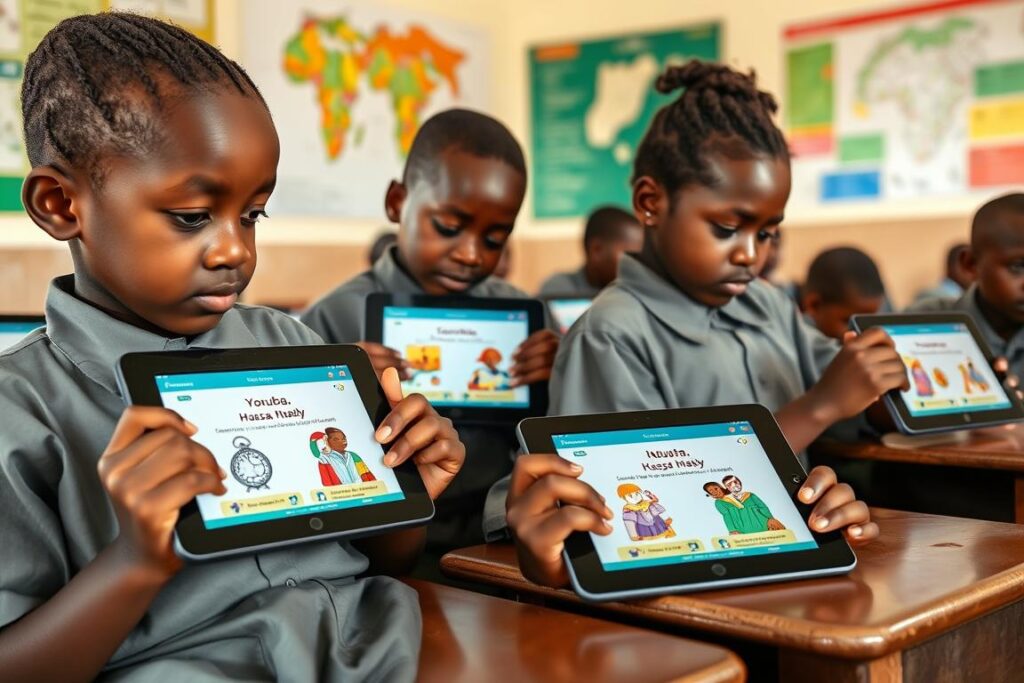
AI translation tools could make education more inclusive across Nigeria by converting learning materials into major Nigerian languages, including Hausa, Yoruba, and Igbo. This would support mother-tongue education in early years and help preserve linguistic diversity.
For millions of Nigerian students who speak local languages at home, learning in their native tongue before transitioning to English could improve comprehension and retention. AI-powered translation could make this approach more feasible by efficiently converting educational content into multiple languages.
Predictive Analytics for Dropout Prevention
AI systems could analyse student data to identify learners at risk of dropping out, enabling early intervention. By examining patterns in attendance, engagement, academic performance, and socioeconomic factors, these systems could flag vulnerable students before they leave school.
In Nigeria, where dropout rates remain high due to various socioeconomic factors, predictive analytics could help target limited intervention resources more effectively. Schools could deploy counselling, additional academic support, or community resources to support at-risk students and improve retention rates.
Immersive AI-Powered Learning Environments
AI combined with virtual reality (VR) or augmented reality (AR) could create immersive learning environments for Nigerian students, particularly valuable for subjects that require hands-on experience, such as science, technology, engineering, and mathematics (STEM).
In contexts where many schools lack well-equipped laboratories or specialised facilities, these immersive environments could offer virtual alternatives. Students could conduct virtual experiments, explore historical sites, or practice technical skills in simulated environments, expanding learning opportunities despite physical resource limitations.

Implementation Strategies for AI in Nigerian Education
Successfully integrating AI into Nigeria’s education sector requires thoughtful strategies that address the country’s unique context and challenges. The following approaches could help facilitate effective AI adoption across Nigerian educational institutions.
Curriculum Integration
The Federal Ministry of Education should develop comprehensive frameworks for integrating AI literacy and digital skills into national curricula from primary through tertiary levels. This would ensure students develop AI competencies early while teachers receive guidance on incorporating AI tools into their teaching practices.
Public-Private Partnerships
Collaboration between government agencies, educational institutions, technology companies, and international organisations is essential for successful AI implementation. These partnerships could provide funding, technical expertise, infrastructure support, and capacity building necessary for sustainable AI integration.
Teacher and Student Training
Comprehensive capacity-building programs must be developed to equip educators and learners with the skills needed to utilise AI tools effectively. Teacher training institutions should incorporate AI literacy and digital pedagogy into their curricula, while in-service training should be provided for current teachers.
Affordable Access Solutions
Developing low-cost, energy-efficient devices and offline-capable AI applications would make educational technology more accessible across Nigeria. Subsidised tablets, solar-powered charging stations, and applications that function with limited connectivity could help bridge the digital divide.
Local Content Development
AI systems must be trained on Nigerian curricula, cultural contexts, and learning approaches to be truly effective. Investing in local content development would ensure that AI tools reflect Nigerian educational priorities and cultural nuances, rather than importing solutions designed for other contexts.
Infrastructure Enhancement
Strategic investments in internet connectivity, reliable power supply, and digital infrastructure in schools are fundamental prerequisites for AI integration. Creative solutions like community technology hubs, solar power systems, and low-bandwidth applications could help overcome infrastructure limitations.

Key Challenges to AI Integration in Nigerian Education
Despite its promising potential, AI integration in Nigeria’s education sector faces significant obstacles that require coordinated efforts from various stakeholders.
Opportunities
- Personalised learning experiences that adapt to individual student needs
- Reduced administrative burden for teachers through automated tasks
- Expanded access to quality education in underserved communities
- Data-driven insights to improve educational policies and practices
- Enhanced engagement through interactive, immersive learning experiences
Challenges
- Inadequate infrastructure, including unreliable electricity and internet
- Shortage of AI expertise among educators and administrators
- High implementation costs for resource-constrained institutions
- Digital literacy gaps among students and teachers
- Underdeveloped policy frameworks for AI in education
Stay updated on AI Analysis and trends in Nigeria.
Join our newsletter to receive the latest updates on AI applications in Nigeria
Infrastructure Deficit
Nigeria’s education sector continues to struggle with fundamental infrastructure challenges that impede AI adoption. Unreliable electricity supply, limited internet connectivity, and insufficient hardware resources create significant barriers, particularly in rural and low-income areas.
According to UNICEF, only a small fraction of Nigerian schools have reliable internet access and a power supply necessary for technology integration. Without addressing these basic infrastructure needs, even the most promising AI applications will remain inaccessible to most Nigerian students and teachers.
Human Capital Shortage
There is a pronounced shortage of AI expertise within Nigeria’s education workforce. Many teachers and administrators lack training in digital pedagogy, data literacy, and AI applications, limiting their ability to implement and utilise these technologies effectively.
This skills gap extends to technical support personnel, instructional designers, and education policymakers who need specialised knowledge to develop, deploy, and govern AI systems in educational contexts. Building this human capital requires significant investment in professional development and education programs.
Cost and Resource Constraints
The financial requirements for implementing AI in education present significant challenges in Nigeria’s resource-constrained environment. Hardware costs, software licenses, maintenance expenses, and training requirements often exceed available budgets for many educational institutions.
Public schools, which serve the majority of Nigerian students, typically operate with limited funding and may struggle to prioritise technology investments amid competing needs for basic facilities, learning materials, and teacher salaries. Sustainable financing models are needed to make AI integration economically viable across diverse educational settings.
Digital Literacy Gaps
Limited digital literacy among students, teachers, and parents creates barriers to effective AI adoption. Many stakeholders lack the fundamental skills needed to navigate digital environments, utilise educational technology, and understand AI capabilities and limitations.
These literacy gaps are often more pronounced in rural communities and among older educators who may have had limited exposure to technology throughout their careers. Comprehensive digital literacy programs are needed to build the foundational skills upon which AI literacy can develop.
Policy and Governance Frameworks
Nigeria’s policy environment for AI in education remains underdeveloped, with limited guidance on data privacy, ethical AI use, quality standards, and implementation approaches. Clear governance frameworks are needed to ensure responsible AI deployment that protects student interests and promotes educational quality.
While Nigeria has taken initial steps toward developing a national AI strategy, education-specific policies require further development to address the unique considerations of AI in learning environments. This includes guidelines for data collection, algorithmic transparency, and equitable access.
The Way Forward for AI in Nigeria’s Education Sector
The integration of AI into Nigeria’s education sector presents both significant opportunities and substantial challenges. While current applications remain limited primarily to well-resourced institutions, the potential for AI to transform teaching and learning across Nigeria is considerable. Realising this potential requires coordinated efforts from government agencies, educational institutions, technology providers, and international partners.
Nigeria must prioritise human capital development by investing in teacher training programs that build AI literacy and digital pedagogy skills. Simultaneously, infrastructure improvements are essential to provide the technological foundation for AI integration. Policy frameworks must evolve to guide responsible AI implementation while protecting student data and ensuring equitable access.
Through strategic public-private partnerships, Nigeria can develop sustainable financing models that make AI accessible across diverse educational settings. By focusing on locally relevant content and solutions designed for Nigeria’s unique context, AI can become a powerful tool for addressing persistent educational challenges and preparing Nigerian students for an increasingly digital future.


Senior Reporter/Editor
Bio: Ugochukwu is a freelance journalist and Editor at AIbase.ng, with a strong professional focus on investigative reporting. He holds a degree in Mass Communication and brings extensive experience in news gathering, reporting, and editorial writing. With over a decade of active engagement across diverse news outlets, he contributes in-depth analytical, practical, and expository articles exploring artificial intelligence and its real-world impact. His seasoned newsroom experience and well-established information networks provide AIbase.ng with credible, timely, and high-quality coverage of emerging AI developments.