

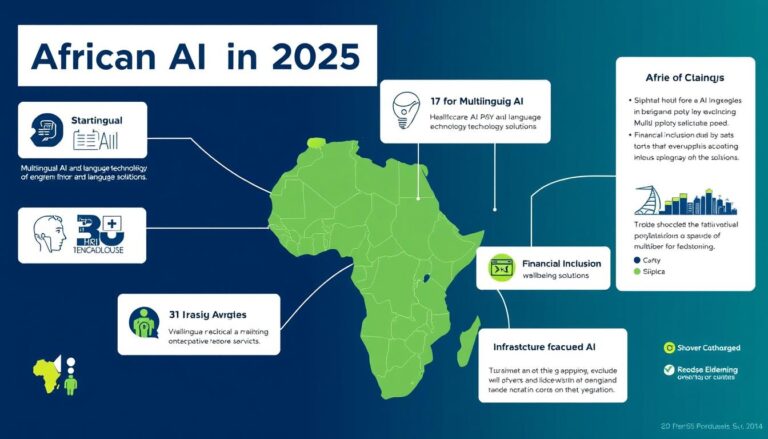
With major telecom operators like MTN and Airtel activating new data centres, Africa’s AI ambitions to leverage technology for economic growth and social development are moving closer to reality. The continent is now buzzing with AI products that reflect different aspirations and address local challenges in innovative ways. Let’s explore the ten most exciting African AI products launched in 2025 that are making waves across industries and borders.
1. Gebeya Dala (Ethiopia): AI App Builder Revolutionising Software Development
Gebeya Dala’s intuitive interface lets users create apps using natural-language commands in multiple African languages.
Launched by Ethiopian software company Gebeya in October 2025, Gebeya Dala is transforming how applications are built across Africa. Founded by Amadou Daffe and Hiruy Amanuel, this AI app builder was explicitly designed for the African context after recognising that most global no-code tools present significant barriers, including language limitations, payment challenges, and device constraints.
What makes Gebeya Dala stand out is its mobile-first approach, which lets users describe their desired app in plain language, including local languages such as Hausa, Swahili, Amharic, and Arabic. The platform then automatically generates full-stack code optimised for low-data environments and integrates features such as mobile money payment gateways, which are essential for African markets.
The democratisation of app development is perhaps its most revolutionary aspect. Users without technical backgrounds can create functional applications by simply describing what they need. For example, a farmer could tell the AI they want an app to track local crop prices, and Gebeya Dala will generate a fully functional solution tailored to their specific requirements.
“We built Gebeya Dala after realising that global coding tools often don’t account for the unique challenges faced by African developers and entrepreneurs. Our platform removes these barriers by making app creation accessible to everyone, regardless of technical expertise or language preference,” says co-founder Amadou Daffe.
2. Curation AI (Nigeria): Authentication and Opinion Intelligence Platform
Curation AI’s dashboard provides real-time content authentication and sentiment tracking across digital platforms.
In an era of rampant misinformation and deepfakes, Curation AI emerged as a powerful solution when it was launched in late November 2025 by MYai Robotics, a Nigerian artificial intelligence and robotics engineering firm founded by Kayode Aladesuyi. This innovative tool serves as an engine for real-time content authentication, scanning news, videos, audio, and social media posts instantly.
What sets Curation AI apart is its ability to flag AI-generated content and manipulation before users even have the chance to share them, creating a crucial layer of verification in our increasingly synthetic media landscape. The platform uses advanced algorithms to detect subtle inconsistencies and patterns that indicate artificial creation or tampering.
Beyond authentication, Curation AI features an ‘opinion intelligence’ engine that tracks live sentiment across the web, giving users an instant snapshot of what people actually think about a topic at any given moment. This real-time sentiment analysis provides valuable insights for brands, media houses, public policy institutions, and everyday users who want to monitor authentic public opinion rather than relying on potentially outdated or manipulated datasets.
Key Features of Curation AI:
- Real-time detection of AI-generated content across multiple media formats
- Instant flagging of potential deepfakes and manipulated media
- Live sentiment tracking across social platforms and news sources
- Customizable alerts for topics of interest
- API integration for media organisations and verification services
3. YarnGPT (Nigeria): Multilingual AI Dubbing and Speech Technology
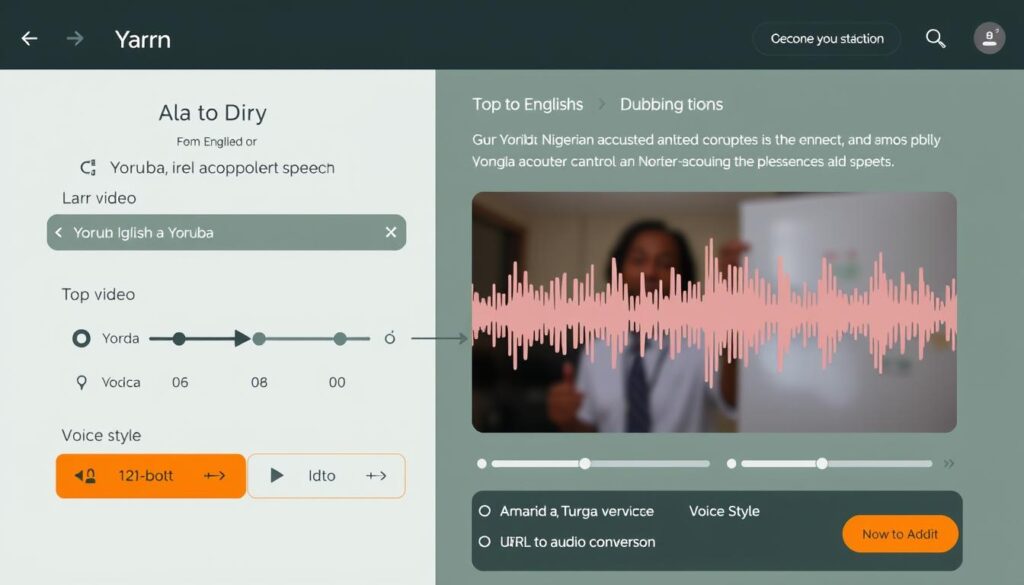
YarnGPT’s interface allows users to translate and dub videos into Nigerian languages with authentic accents and speech patterns.
Built by Nigerian AI engineer Saheed Ayanniyi in February 2025, YarnGPT is revolutionising how content is localised across Africa. This innovative AI tool translates videos, generates voiceovers, and converts written content into audio with authentic Nigerian-sounding voices, addressing a critical gap in language technology for African languages.
Ayanniyi developed the model by extracting audio and transcripts from local movies to create a dataset that understands the rhythm and intonation of Nigerian speech. The result is a text-to-speech and translation engine that “yarns” with the correct local cadence, preserving the cultural nuances that are often lost in generic translation tools.
The standout feature of YarnGPT is its video translation capability, which allows users to upload an English-language video and dub it into Yoruba, Igbo, or Hausa in minutes. This functionality has significant implications for educational content, entertainment, and information dissemination across language barriers in Nigeria and beyond.
Additionally, YarnGPT offers a URL-to-audio conversion tool that transforms written news articles into podcasts, making information more accessible to those who prefer audio content or have literacy challenges. The service also provides an API for developers building voice agents or voice-powered features, enabling broader integration of Nigerian languages into various applications.
4. YesCheff (Nigeria/UK): Interactive AI Cooking Assistant
YesCheff transforms cooking videos into structured, interactive recipes with timers and ingredient sourcing.
For anyone who has struggled to follow cooking videos while their hands are covered in ingredients, YesCheff offers an ingenious solution. Launched in October 2025 by product designer Deji Ajetomobi, this AI-powered kitchen assistant transforms the cooking experience by making it truly interactive and hands-free.
YesCheff allows users to search for any delicacy, fetch the best YouTube tutorial, transcribe it, and then reorganise the content into a structured recipe. This reorganisation includes the meal overview, ingredients, steps, tools, calorie count, serving sizes, and even potential allergens, all powered by a sophisticated blend of Google APIs, YouTube transcript tools, and OpenAI.
How YesCheff Transforms Cooking:
- Converts video tutorials into structured, step-by-step recipes
- Provides adjustable timers for each cooking step
- Includes heat indicators to ensure proper cooking temperatures
- Offers serving-size controls that automatically adjust ingredient quantities
- Features ingredient checklists that reveal nearby grocery stores if something is missing
The platform’s ability to make cooking interactive addresses a common pain point for home cooks who struggle to follow video tutorials in real-time. By breaking down recipes into manageable steps with built-in tools like timers and measurement converters, YesCheff makes cooking more accessible and enjoyable for users of all skill levels.
5. JobPilot AI (Ghana): Comprehensive AI Career Companion
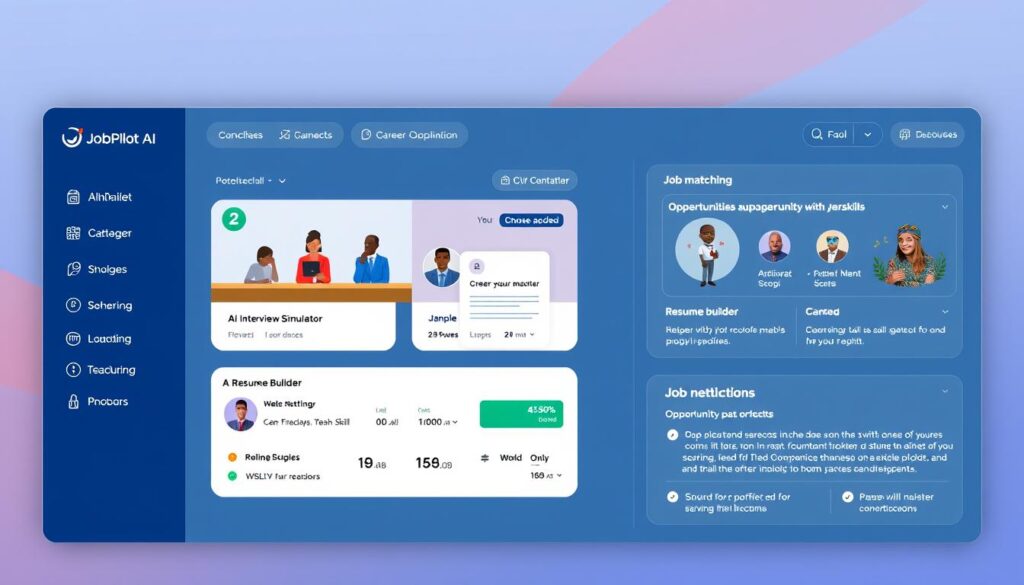
JobPilot AI combines interview simulation, resume optimisation, and job matching in one comprehensive platform.
JobPilot AI was launched in April 2025 by Ghanaian entrepreneurs Kelvin Agyare Yeboah and Anthony Gudu as an all-in-one career development platform. This innovative tool combines job listings, resume building, and interview coaching into a single dashboard, addressing multiple challenges faced by job seekers across Africa.
The platform’s standout feature is its AI Interview Simulator, which creates a real-time simulation where users can speak to a panel of AI judges who grade confidence, technical accuracy, and delivery on the spot. This provides invaluable practice for job seekers, especially those who may not have access to professional interview coaching.
JobPilot AI also generates Applicant Tracking System (ATS)-friendly resumes and cover letters, helping candidates overcome the first hurdle of modern job applications by ensuring their documents pass automated screening. The platform’s AI-assisted matching feature helps users discover job opportunities that align with their skill sets, often revealing positions they might not have considered otherwise.
Stay Updated on African Tech Innovation
Get the latest news, product launches, and insights about Africa’s growing AI ecosystem delivered straight to your inbox.
Beyond its technical features, JobPilot AI includes a community forum where users can exchange advice, share experiences, and strengthen their professional networks. This social component adds significant value by creating a supportive ecosystem for job seekers across Ghana and beyond.
6. SmartSkin Africa (Ghana): AI Skincare Analysis for African Skin Types
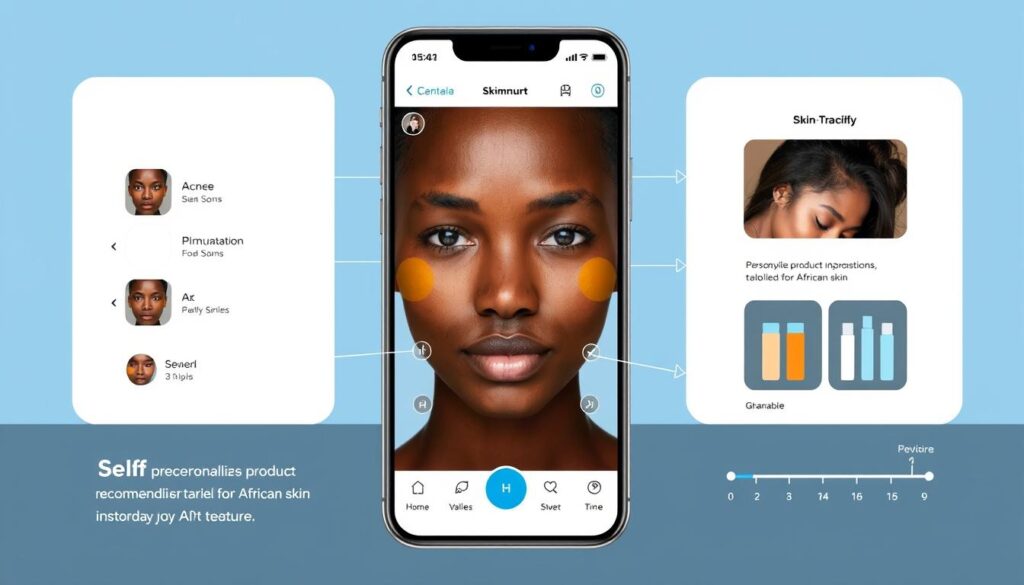
SmartSkin Africa provides a detailed analysis of 15 skin parameters and personalised recommendations for African skin types.
Launched in November 2025 by Accessplus Communications Limited, a Ghanaian telecommunications and ICT service provider led by Kelvin Boateng, SmartSkin Africa is addressing a significant gap in the skincare market by using AI to deliver personalised skin analysis and guidance explicitly tailored to African skin types.
The platform works by having users upload a selfie, which the AI then examines across up to 15 skin parameters, including acne, uneven skin tone, dark spots, pigmentation, hydration levels, wrinkles, dark circles, and overall skin firmness. After this comprehensive assessment, SmartSkin Africa generates a tailored skin report along with product recommendations that match the user’s unique condition and environment.
What makes this platform particularly valuable is its ability to track skin changes over time, helping users understand how their skin responds to different products and to shifts in lifestyle and climate. This longitudinal tracking provides insights that a one-time analysis cannot, enabling more effective skincare routines.
“Our goal is simple: to build an AI system that understands the full diversity of African skin and provides guidance that truly reflects it. For too long, skincare technology has been developed with limited skin type diversity in mind.”
SmartSkin Africa represents an essential step toward more inclusive beauty technology that recognises and addresses the specific needs of African skin types, which mainstream skincare analysis tools have historically underserved.
7. Thunders (Tunisia): AI-Powered Software Testing Platform
Thunder converts plain language test descriptions into automated, maintainable test scripts.
After a successful run with Expensya, a Tunisian fintech startup, co-founders Karim Jouini and Jihed Othmani launched Thunders in June 2025. This AI-powered software testing platform aims to eliminate one of the most frustrating aspects of software development: writing and maintaining test scripts.
Instead of spending hours crafting brittle test scripts, development teams can describe test cases in plain English, and Thunder’s AI agents automatically generate, run, and maintain the tests for them. This approach dramatically reduces the time and expertise required for comprehensive software testing, allowing teams to focus on building better products rather than debugging test infrastructure.
Benefits of Thunder for Development Teams:
- Reduces testing time by up to 80% compared to manual test writing
- Automatically maintains tests when application code changes
- Identifies edge cases that human testers might miss
- Generates comprehensive test reports with actionable insights
- Integrates seamlessly with existing development workflows
The platform helps teams move faster by taking over repetitive and fragile testing work, freeing developers and QA engineers to focus on what actually matters: building better products and refining the user experience. This is particularly valuable in regions where specialised QA talent may be scarce or expensive.
According to Jouini, their goal is to let AI handle the tedious parts of software testing so that teams can ship with more confidence and fewer errors. This vision resonates with developers across Africa who are looking to adopt global best practices in software quality while working within resource constraints.
8. Xara (Nigeria): AI Banking Assistant for WhatsApp
Xara enables banking transactions through natural language commands in WhatsApp, supporting multiple Nigerian languages.
Launched in June 2025 by Sulaiman Adewale, Xara is revolutionising mobile banking in Nigeria by bringing financial services directly into WhatsApp, the messaging platform most Nigerians already use daily. This WhatsApp-based AI banking assistant is built on a large language model fine-tuned specifically for Nigerian speech patterns, Pidgin, and English, with plans to add Hausa and Yoruba in the near future.
What makes Xara particularly innovative is its ability to process natural language commands for financial transactions. Users can simply type or send a voice note saying “Send ₦5,000 to Yemi for her breakfast,” and the AI will understand the intent, confirm the recipient, and complete the transaction securely. This conversational approach removes the friction typically associated with banking apps and USSD codes.
Beyond text, Xara can process transactions through images and voice notes, so users can upload a screenshot of bank details or send an audio message and have the transaction completed automatically. This multi-modal approach makes banking accessible to users with varying levels of literacy and technical comfort.
Xara’s Key Capabilities:
- Send money using natural language commands
- Pay bills and purchase airtime
- Track spending patterns with AI-powered insights
- Schedule recurring payments
- Process transactions via text, voice notes, or images
By leveraging WhatsApp’s ubiquity in Nigeria and combining it with AI that understands local languages and contexts, Xara is making banking more accessible and intuitive for millions of Nigerians, particularly those who find traditional banking interfaces challenging.
9. Chidi (Rwanda): AI Learning Companion for Education
Chidi uses Socratic methods to guide students through critical thinking rather than simply providing answers.
Chidi was launched in November 2025 by ALX, an African career accelerator and technology training provider, in partnership with Anthropic and the Rwandan government. Named after a figure in ethical philosophy, this AI learning companion was created to transform how students and educators in Rwanda engage with learning, turning passive study into active thinking.
Built on Anthropic’s Claude model, Chidi acts as a “Socratic tutor,” guiding users to think critically, ask questions, and explore problems rather than simply providing answers. This approach fosters more profound understanding and helps students develop problem-solving skills that transfer across subjects and real-world scenarios.
Educators can also use Chidi to design lessons with AI-enhanced support, creating more interactive and compelling learning experiences. The platform can generate thought-provoking questions, provide scaffolded learning paths, and offer personalised feedback based on a student’s responses.
“Chidi represents a new paradigm in educational technology for Africa. Rather than replacing teachers or promoting rote learning, it encourages critical thinking and helps students discover knowledge through guided inquiry.”
In its initial rollout, Chidi facilitated over 1,100 conversations and more than 4,000 chats within just 48 hours, demonstrating strong engagement from students and educators alike. Phase 2 plans include training up to 2,000 educators and civil servants, integrating Chidi into classrooms across Rwanda, and providing access to Claude-based tools for a full year.
10. MamaMate (Tanzania): AI-Powered Maternal Health Companion
MamaMate provides offline maternal health support in local languages, designed for rural and underserved communities.
Launched in 2025 by Ele‑vate AI Africa, a pan-African innovation hub building AI and robotics solutions founded by Yvonne Baldwin, MamaMate addresses a critical healthcare gap by supporting first-time mothers in rural and underserved areas. This AI-powered maternal health companion provides accessible, culturally relevant postnatal guidance and care in regions where healthcare resources are limited.
The device tracks baby-care routines, offers nutrition and maternal health advice, monitors maternal mental wellbeing via voice prompts, and provides anonymous peer-to-peer support for new mothers. What makes MamaMate particularly innovative is its design for low-connectivity environments – it works offline, runs on solar or USB power, and speaks local languages, making it usable even in the most remote communities.
MamaMate’s Impact on Maternal Health:
- Provides critical postnatal guidance to mothers without access to regular healthcare
- Monitors for signs of postpartum depression through voice analysis
- Connects isolated mothers to peer support networks
- Delivers culturally appropriate nutrition and baby care advice
- Functions without requiring constant internet connectivity
At the 2025 AI for Good Innovation Factory and Global Summit, MamaMate AI was recognised for its community-centred approach to maternal health. The technology exemplifies how AI can be designed specifically for underserved populations, addressing healthcare disparities in a practical and culturally sensitive manner.
Emerging Trends in African AI Products
- Funding providers for Nigerian AI startups
- Essential AI skills Nigrians need to launch a career in AI
- Artificial Intelligence in Nigerian Agriculture
- How is AI transforming Nigeria’s creator economy
- Google Veo 3 AI Video Creation for Nigerian Content Creators
- Artificial Intelligence in Africa
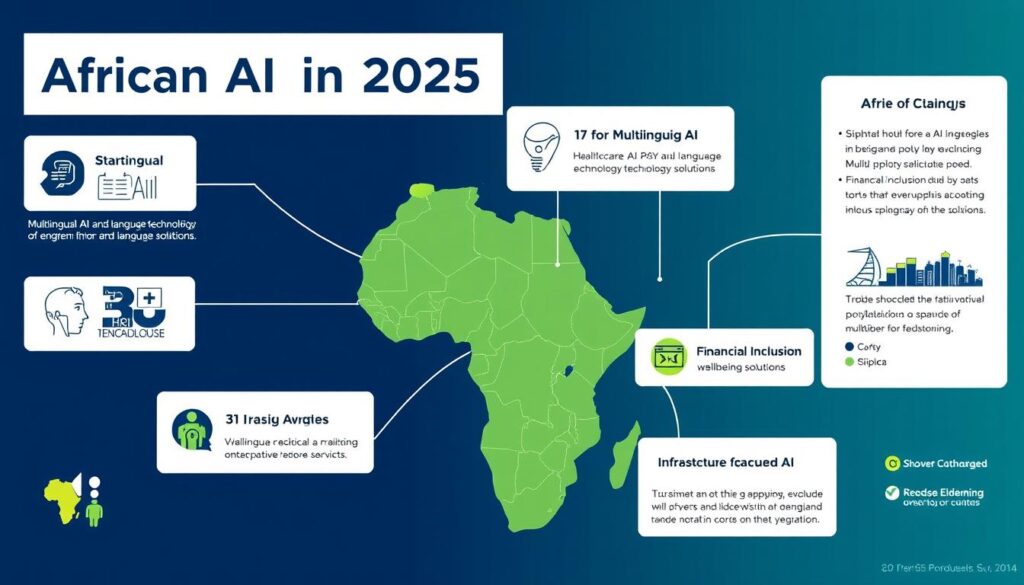
Key trends emerging in African AI products in 2025: language technology, healthcare solutions, financial inclusion, and infrastructure development
The ten AI products highlighted above reveal several vital trends in Africa’s AI ecosystem in 2025. These patterns not only showcase the current state of innovation but also hint at the future direction of AI development across the continent.
1. Focus on Language and Cultural Localisation
Products like YarnGPT, Gebeya Dala, and Xara demonstrate a strong emphasis on making AI work in African languages and cultural contexts. This trend addresses a critical gap in global AI development, which has historically prioritised major Western languages. By building AI that understands local languages, dialects, and cultural nuances, African innovators are creating more accessible and relevant technology for the continent’s diverse populations.
2. Solutions for Infrastructure Challenges
Many of the highlighted products are designed to work within Africa’s unique infrastructure constraints. MamaMate functions offline for rural areas with limited connectivity, while Gebeya Dala optimises apps for low-data environments. This pragmatic approach ensures that AI benefits can reach populations beyond urban centres and tech hubs.
3. Healthcare and Wellbeing Innovation
Healthcare emerges as a key focus area, with products like MamaMate and SmartSkin Africa addressing specific health and well-being needs. These solutions leverage AI to extend specialised knowledge to underserved populations, potentially helping to address healthcare access disparities across the continent.
4. Financial Inclusion and Accessibility
Products like Xara demonstrate how AI can make financial services more accessible through conversational interfaces and integration with widely used platforms like WhatsApp. This trend aligns with Africa’s broader fintech revolution, using technology to bring financial services to previously underbanked populations.
The Future of African AI Innovation
2025 has proven that African innovators are no longer just adapting global tools; they are building from the ground up to address the continent’s unique realities. We have witnessed a wave of AI products born from the specific textures of the African experience – navigating infrastructure gaps, speaking diverse languages, and serving the informal economies that sustain millions.
From agriculture to healthcare, these are not just ‘tech solutions’; they are answers to the challenges that Africans live with daily. As we look toward the future, this shift signals something profound: a vision where technology is defined by those who understand the nuance of life on the continent, creating ambitious tools that don’t just serve Africa but inherently understand it.
The products highlighted in this article represent just the beginning of Africa’s AI journey. With continued investment in digital infrastructure, supportive policy frameworks, and talent development, the continent is poised to become a significant contributor to the global AI landscape, bringing fresh perspectives and innovative approaches to technology development.
Stay updated on AI Analysis and trends in Nigeria.
Join our newsletter to receive the latest updates, news and analysis like this.

Director
Bio: An (HND, BA, MBA, MSc) is a tech-savvy digital marketing professional, writing on artificial intelligence, digital tools, and emerging technologies. He holds an HND in Marketing, is a Chartered Marketer, earned an MBA in Marketing Management from LAUTECH, a BA in Marketing Management and Web Technologies from York St John University, and an MSc in Social Business and Marketing Management from the University of Salford, Manchester.
He has professional experience across sales, hospitality, healthcare, digital marketing, and business development, and has worked with Sheraton Hotels, A24 Group, and Kendal Nutricare. A skilled editor and web designer, He focuses on simplifying complex technologies and highlighting AI-driven opportunities for businesses and professionals.