

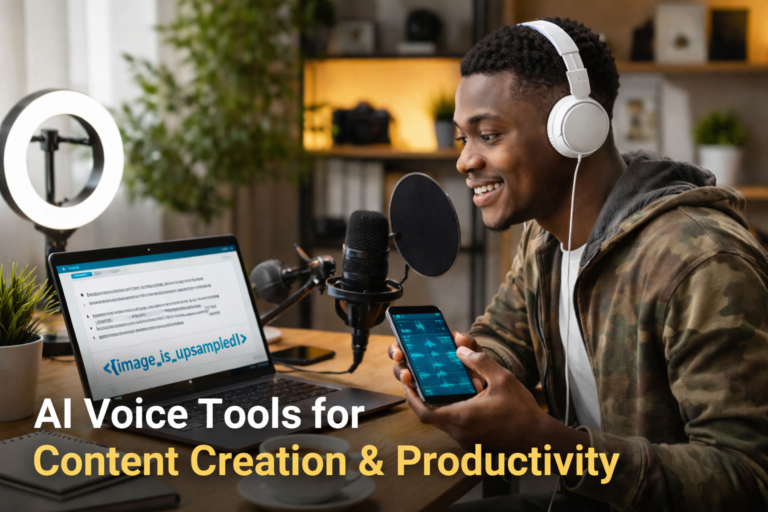
In Nigeria, everyone is hustling-students, content creators, entrepreneurs, and even farmers. But time is short, fingers get tired, and typing is slow. What if you could speak your ideas and have them instantly turned into text, audio, or even professional content? Thanks to AI voice tools, that’s no longer a dream-it’s the fastest way to create, communicate, and boost productivity across Nigeria.
One of the challenges of content creators in Nigeria is time which is often in short supply, yet the demand for content keeps rising. From social media creators to students, radio broadcasters to entrepreneurs, everyone needs to produce and consume information faster than ever. But challenges like power outages, slow typing, and juggling multiple tasks make this difficult. AI voice tools are now stepping in to solve these problems, allowing Nigerians to create content, communicate, and stay productive with ease.
The pieces of information in this article will get a starter or ardent users poised to leverage and consolidate on these tools and shape a productive lifestyle.
What Are AI Voice Tools?
AI voice tools are software powered by artificial intelligence that can understand, generate, and manipulate human voice. Some common functions include:
- Speech-to-text: Convert spoken words into written text
- Text-to-speech: Turn written content into natural-sounding audio
- Voice cloning: Recreate a person’s voice for narration or branding
- AI narration and dubbing: Add professional voiceovers to videos or podcasts
These tools are particularly useful in Nigeria, where mobile devices dominate and audio communication is a cultural norm.
Why AI Voice Tools Matter in Nigeria
AI voice tools are not just a tech trend-they are a practical solution for many Nigerians:
- Low data & mobile accessibility: Most AI voice tools are optimized for mobile use, ideal for Nigeria’s mobile-first internet users.
- Multilingual advantage: Tools now support English, Pidgin, Yoruba, Hausa, and Igbo, making content creation easier for diverse audiences.
- Power and time efficiency: Speak instead of type, produce content faster, and avoid burnout.
- Accessibility: Assistive for people with disabilities or literacy challenges.
- Economic growth: Enable side hustles, online businesses, and creative ventures.
Step-by-Step: How to Use AI Voice Tools for Content Creation in Nigeria
Step 1: Identify Your Content or Productivity Need
Ask yourself: What do I need the tool for? Examples:
- Writing articles faster
- Recording podcasts or YouTube narrations
- Preparing school assignments
- Creating radio scripts or business presentations
Step 2: Choose the Right AI Voice Tool
Some categories to consider:
- Speech-to-Text Tools: Google Voice Typing, Otter.ai
- Text-to-Speech Tools: Microsoft Azure TTS, Natural Reader
- Voice Enhancement & Editing Tools: Descript, Adobe Podcast
- Voice Cloning Tools: ElevenLabs, Resemble AI
Step 3: Create Content Using AI Voice Tools
A simple workflow:
- Record your voice on a phone or laptop.
- Upload or speak directly into the AI tool.
- Convert voice to text, or text to voice.
- Edit for tone, clarity, and speed.
- Export your content for WhatsApp, YouTube, blogs, or radio.
Step 4: Boost Daily Productivity
Examples for Nigerians:
- Students dictating lecture notes instead of writing them
- Journalists transcribing interviews quickly
- Entrepreneurs sending customer responses efficiently
- Teachers creating lessons without typing
- Farmers listening to step-by-step instructions
Real-Life Use Cases in Nigeria
- Content Creators & Influencers: Produce YouTube voiceovers or podcasts without hiring narrators.
- Radio Broadcasters & Podcasters: Turn scripts into professional audio in minutes.
- Students & Educators: Record notes, create audio lessons, or convert lectures to text.
- Small Business Owners: Generate voice messages, customer announcements or online jingles.
- Corporate & Banking Sector: Use AI voice for internal communication or client updates.
Cost, Data, and Device Considerations
- Free versions are great for starting out; premium plans offer better voice quality and extra features.
- Some tools are data-intensive; using Wi-Fi or offline modes can save mobile data.
- Most tools work on smartphones, making them accessible to most Nigerians.
Ethical, Legal, and Cultural Considerations
- Never use someone’s voice without consent.
- Avoid spreading misinformation or creating deepfake content.
- Ensure local language support is accurate and culturally sensitive.
- Use AI responsibly to complement, not replace, human effort.
Challenges of Using AI Voice Tools in Nigeria
- Accent recognition may struggle with Nigerian Pidgin or local dialects.
- Some tools do not yet support all local languages.
- Internet reliability can affect tool performance.
- Users need some learning curve to maximize benefits.
Practical Tips for Nigerians
- Speak clearly and naturally when recording.
- Use short recordings for better accuracy.
- Combine AI voice with text editing tools.
- Backup your content offline to prevent data loss.
- Start free, then upgrade as needed.
The Future of AI Voice Tools in Nigeria
AI voice tools will continue to grow in importance:
- Supporting the booming audio content economy.
- Integrating with fintech, edtech, and agritech platforms.
- Introducing voice-first interfaces for mobile apps.
- Encouraging local language innovation and preservation.
Solving Nigeria’s Productivity Problem with AI Voice
Nigeria’s fast-paced lifestyle and growing content economy demand smarter solutions. AI voice tools are no longer optional-they are a way to create, communicate, and stay productive efficiently. By adopting these tools responsibly, Nigerians can save time, reach wider audiences, and unlock new opportunities for personal, professional and national growth.

Senior Reporter/Editor
Bio: Ugochukwu is a freelance journalist and Editor at AIbase.ng, with a strong professional focus on investigative reporting. He holds a degree in Mass Communication and brings extensive experience in news gathering, reporting, and editorial writing. With over a decade of active engagement across diverse news sources, he contributes in-depth analytical, practical, and expository articles that explore artificial intelligence and its real-world impact. His seasoned newsroom experience and well-established information networks provide AIbase.ng with credible, timely, and high-quality coverage of emerging AI developments.