

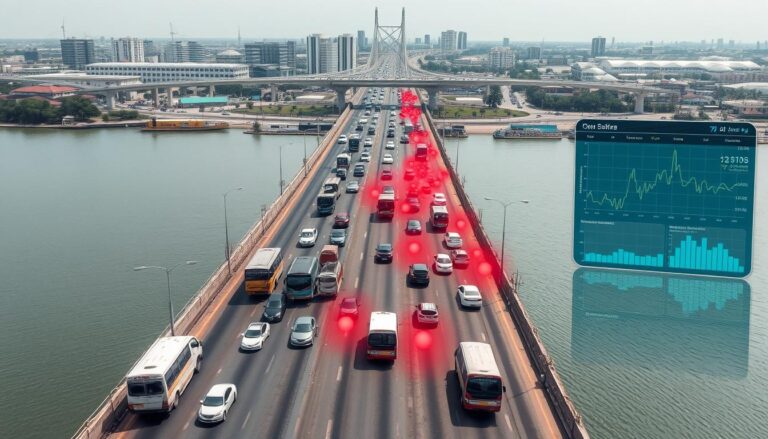
Nigeria’s Urban Traffic Challenges
AI systems can analyse traffic patterns to address Nigeria’s urban congestion challenges.
Nigerian cities face unique traffic management challenges that demand innovative solutions. Lagos, Africa’s largest city with over 21 million residents, experiences some of the world’s worst traffic congestion, with commuters spending an average of 30 hours per week in it. Abuja, Port Harcourt, Kano, and Ibadan similarly struggle with inadequate infrastructure and inefficient traffic flow systems.
Key challenges include:
- Outdated fixed-time traffic signals that cannot adapt to changing traffic patterns
- Limited real-time monitoring capabilities across vast road networks
- High accident rates due to poor incident detection and response
- Emergency vehicle delays in congested areas
- Inefficient public transportation coordination
- Lack of data-driven urban planning for transportation infrastructure
These challenges are particularly evident in high-traffic corridors like Ikorodu Road and Lekki-Epe Expressway in Lagos, Airport Road in Abuja, and major arterial routes in other cities. Traditional solutions have proven inadequate, creating an urgent need for intelligent systems that can optimise traffic flow in real-time.
AI-Powered Solutions for Nigerian Traffic Management
Artificial intelligence offers transformative potential for Nigerian cities through six key applications that address specific urban mobility challenges. These solutions leverage advanced algorithms, computer vision, and data analytics to create more efficient, safer transportation networks.
Adaptive/Intelligent Traffic Signals
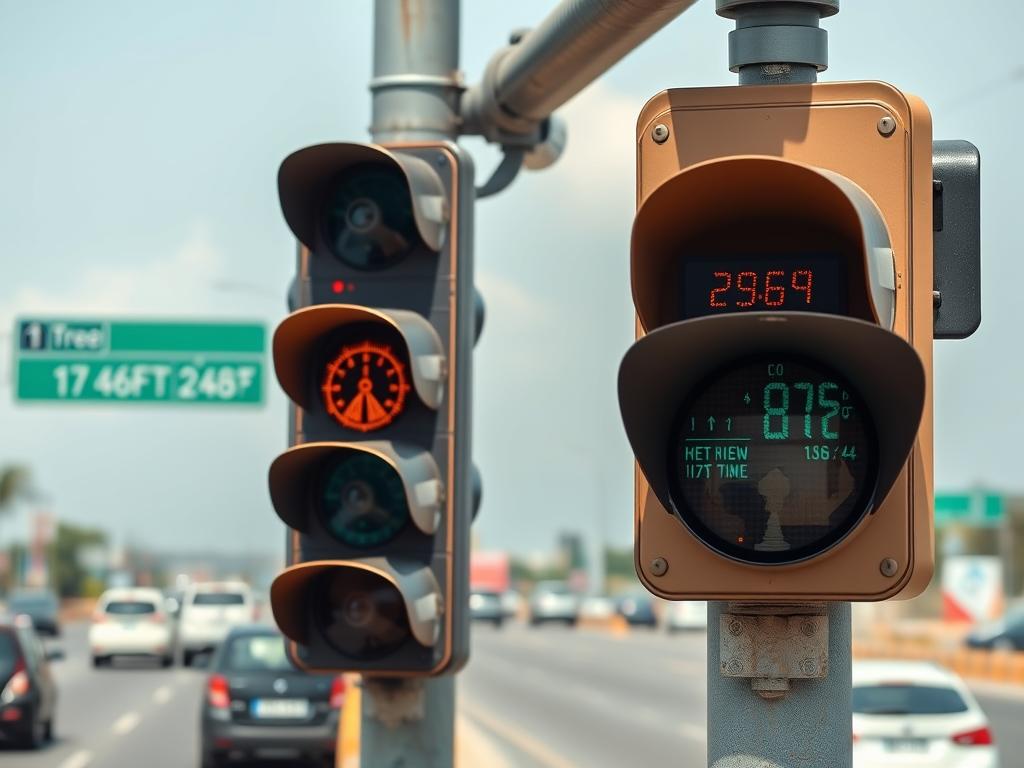
Most Nigerian intersections still operate on fixed-time traffic signals that cannot respond to actual traffic conditions. AI-enabled adaptive signals use real-time data from cameras and sensors to dynamically adjust signal timing based on current traffic volumes and patterns.
How It Works:
The system continuously analyses traffic flow using computer vision algorithms to detect vehicle counts, queue lengths, and congestion levels. It then automatically adjusts green light duration and signal phasing to optimise throughput and minimise delays.
Key Benefits:
- Reduces average waiting time at intersections by 20-30%
- Decreases congestion during peak hours
- Lowers fuel consumption and emissions
- Adapts to unexpected traffic surges during events or emergencies
Ideal Implementation Locations:
- Ikorodu Road intersections in Lagos
- Lekki-Epe Expressway junctions
- Airport Road corridor in Abuja
- Major roundabouts in Kano and Port Harcourt
Real-time Traffic Monitoring and Congestion Prediction
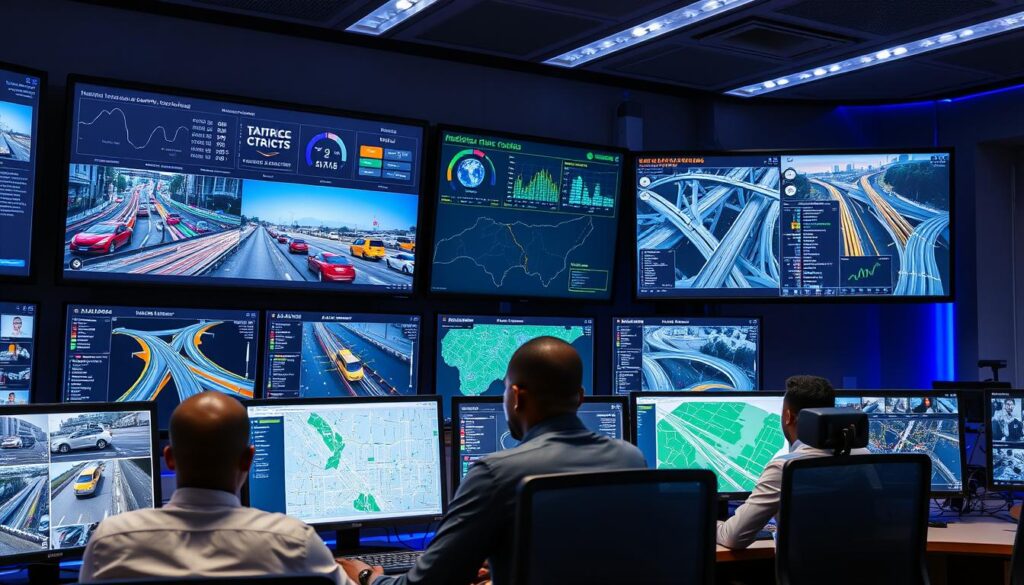
AI systems can analyse data from multiple sources—including CCTV cameras, road sensors, GPS data from ride-hailing services, and historical patterns—to create a comprehensive real-time view of traffic conditions across the city. More importantly, these systems can predict congestion before it occurs.
How It Works:
Machine learning algorithms process multi-source data streams to identify emerging traffic patterns and predict how congestion will develop over the next 15-60 minutes. This allows traffic authorities to implement preventive measures before gridlock occurs.
Key Benefits:
- Proactive rather than reactive traffic management
- Early warning system for developing congestion
- Improved decision-making for traffic authorities
- Enhanced traveller information via mobile apps
Ideal Implementation Locations:
- Third Mainland Bridge corridor in Lagos
- Central Business District in Abuja
- Port Harcourt city centre
- Major commercial districts in Ibadan and Kano
Automated Incident Detection
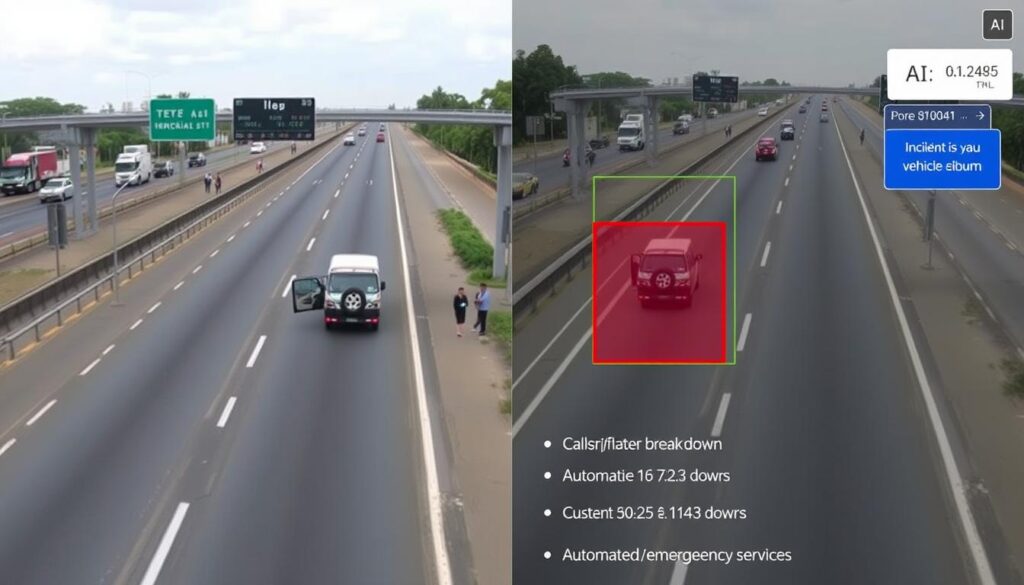
Nigerian roads frequently experience accidents, vehicle breakdowns, and obstructions that quickly lead to severe congestion. AI-powered computer vision can automatically detect these incidents within seconds, dramatically reducing response times.
How It Works:
Advanced computer vision algorithms continuously monitor camera feeds from across the road network, instantly identifying anomalies such as stopped vehicles, accidents, or road obstructions. The system automatically alerts traffic management centres and emergency services with precise location data.
Key Benefits:
- Reduces incident detection time from minutes to seconds
- Accelerates emergency response deployment
- Enables immediate traffic diversion strategies
- Prevents secondary accidents caused by unexpected congestion
Ideal Implementation Locations:
- Major highways and expressways in Lagos
- High-accident zones identified by FRSC data
- Bridges and tunnels with limited alternative routes
- Areas with frequent informal trading that cause obstructions
“Every minute saved in incident detection and response can prevent up to 20 minutes of resulting traffic congestion.”
Stay updated on AI Analysis and trends in Nigeria.
Join our newsletter to receive the latest updates, news and analysis like this.
Subscribe Now
Emergency Vehicle Priority Systems

In Nigerian cities, emergency vehicles often struggle to navigate through congested traffic, significantly delaying response times for critical situations. AI-enabled priority systems can create “green corridors” for ambulances, fire trucks, and police vehicles.
How It Works:
Emergency vehicles equipped with transponders communicate their location and route to the traffic management system. AI algorithms then coordinate traffic signals along the route to create a wave of green lights, while also sending alerts to connected vehicles and mobile apps to clear the path.
Key Benefits:
- Reduces emergency response times by up to 40%
- Increases survival rates for medical emergencies
- Improves outcomes for fire incidents
- Enhances public safety response capabilities
Ideal Implementation Locations:
- Lekki and Victoria Island in Lagos
- Gwarinpa and Wuse districts in Abuja
- Trans Amadi in Port Harcourt
- Hospital routes in major urban centres
Intelligent Public Transport Coordination
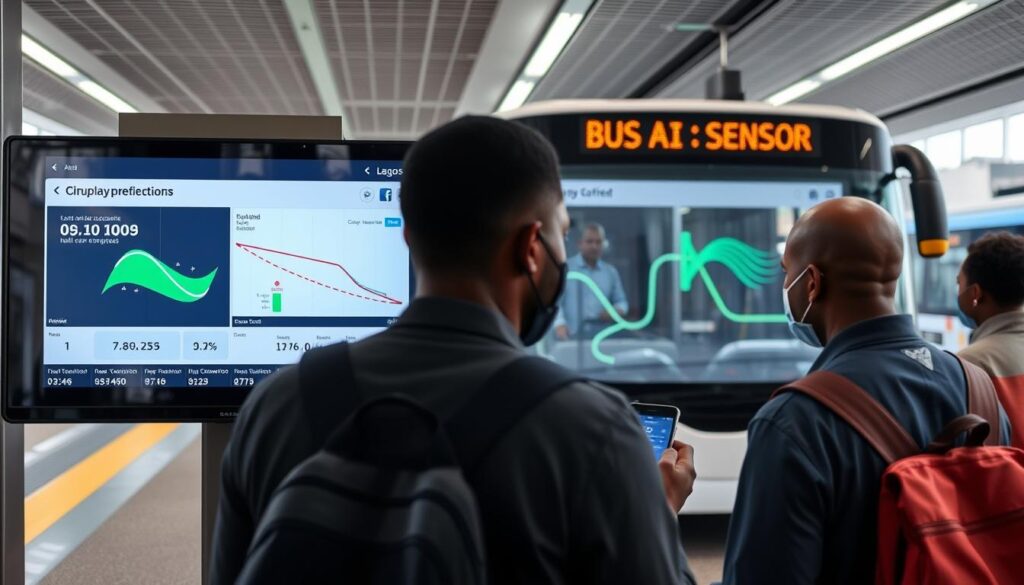
Public transportation in Nigerian cities often suffers from unpredictable schedules and inefficient routing. AI systems can synchronise bus movements with traffic signals, predict arrival times, and optimise routes based on real-time passenger demand and traffic conditions.
How It Works:
AI algorithms analyse historical and real-time data on passenger flows, traffic conditions, and vehicle locations to adjust schedules and routes dynamically. The system can prioritise high-occupancy vehicles at intersections and provide accurate arrival predictions to passengers.
Key Benefits:
- Improves public transport reliability and punctuality
- Reduces passenger waiting times
- Optimises vehicle utilisation and reduces operational costs
- Encourages public transport use, reducing private vehicle congestion
Ideal Implementation Locations:
- Lagos BRT corridors
- Planned Abuja BRT routes
- Major bus routes in Port Harcourt
- High-demand commuter corridors in Ibadan
Data-Driven Urban Planning
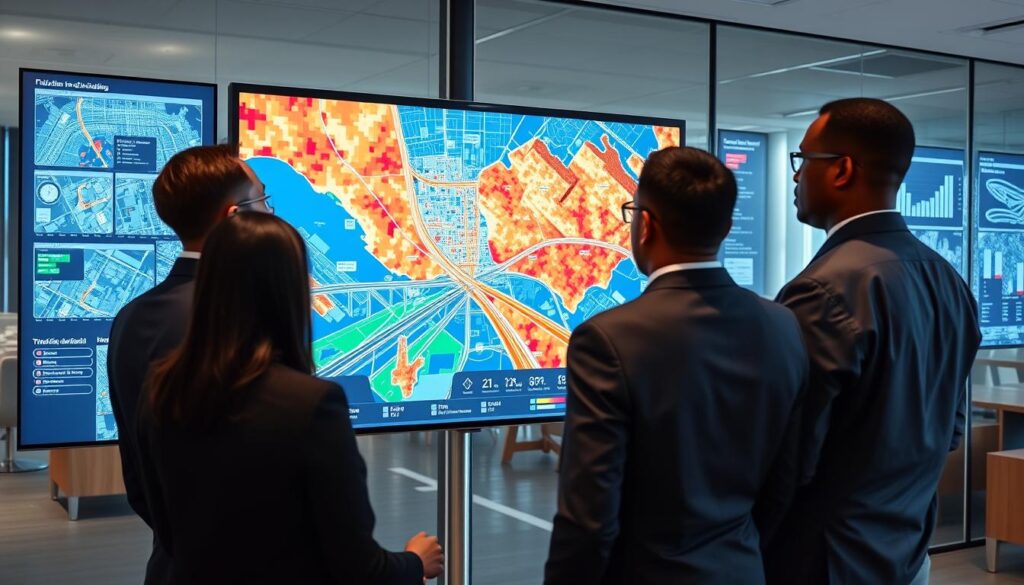
Nigeria’s rapid urbanisation requires evidence-based planning for new infrastructure. AI analytics can transform vast amounts of traffic data into actionable insights for urban planners and policymakers.
How It Works:
AI systems analyse historical traffic patterns, demographic trends, land use changes, and economic indicators to model future transportation needs. These insights help planners optimise the location and design of new roads, intersections, and public transport routes.
Key Benefits:
- Evidence-based infrastructure investment decisions
- Identification of high-impact improvement opportunities
- Simulation of proposed changes before implementation
- Long-term congestion reduction through better planning
Ideal Implementation Locations:
- Rapidly expanding areas of Abuja
- Growing districts in Ibadan
- New development zones in Uyo
- Urban expansion areas in Benin City
Stay updated on AI Analysis and trends in Nigeria.
Join our newsletter to receive the latest updates, news and analysis like this.
Subscribe Now
International Success Stories: AI Traffic Management in Action
Cities worldwide have already demonstrated the transformative impact of AI-powered traffic management systems. These success stories provide valuable blueprints for implementation in Nigeria.
| Location | System/Initiative | Key Technologies | Measured Impact | Relevance to Nigeria |
| Surtrac – Pittsburgh, USA | Adaptive AI-controlled traffic signals | Real-time optimisation algorithms, computer vision | 25% reduction in travel times, 40% decrease in idling time | Applicable to congested corridors like Ikorodu Road in Lagos |
| City Brain – Hangzhou, China | Comprehensive smart city AI platform | Cloud computing, big data analytics, IoT integration | 15% increase in traffic speed, 50% reduction in emergency response times | Scalable approach for major cities like Lagos and Abuja |
| Singapore | Integrated transport management system | Predictive analytics, congestion pricing, and public transport priority | 20% reduction in peak hour congestion, improved public transport reliability | Model for integrating multiple transport modes |
| Los Angeles, USA | ATSAC intelligent signal control | Coordinated signal timing, traffic-responsive algorithms | 16% reduction in travel time, 20% decrease in emissions | Proven technology for large, sprawling urban areas |
These international examples demonstrate that AI traffic management systems can deliver significant, measurable improvements in urban mobility. While each city’s context differs, the underlying technologies and approaches can be adapted to address Nigeria’s specific challenges.
Implementation Challenges in the Nigerian Context
While AI traffic management offers tremendous potential for Nigerian cities, several challenges must be addressed for successful implementation. Understanding these challenges is essential for developing realistic, phased deployment strategies.
Implementation Opportunities
- Growing CCTV infrastructure in major cities
- Increasing smartphone penetration for crowdsourced data
- Strong technical talent pool in computer science
- Government recognition of innovative city potential
- Successful pilot projects in Lagos and Abuja
Implementation Challenges
- Limited sensor and camera networks
- Inconsistent power supply for 24/7 operations
- Data privacy and security concerns
- High initial implementation costs
- Need for specialised technical expertise
Addressing Key Implementation Barriers
Infrastructure Gaps
The limited coverage of cameras, sensors, and reliable connectivity presents a significant challenge. A phased approach can address this by:
- Starting with high-impact corridors
- Leveraging existing infrastructure
- Implementing solar-powered sensors
- Using mobile network fallbacks
Data Governance
As Nigeria’s data protection regulations evolve, AI systems must be designed with privacy and security as priorities:
- Anonymising all collected data
- Implementing strong cybersecurity
- Creating clear data retention policies
- Ensuring transparent AI decision-making
Cost and Sustainability
Financial constraints require creative approaches to implementation and maintenance:
- Public-private partnerships
- Phased implementation plans
- Focus on high-ROI applications
- Knowledge transfer to local teams
Recommended phased implementation approach for Nigerian cities
Case Study: AI Traffic Management Pilot in Lagos
A recent pilot project implemented at five key intersections along Ikorodu Road in Lagos provides valuable insights into the potential of AI traffic management in the Nigerian context. This limited deployment has already demonstrated significant benefits and offers lessons for broader implementation.
Key Outcomes from the Lagos Pilot
Quantitative Results:
- 30% reduction in average waiting time at pilot intersections
- 25% increase in traffic throughput during peak hours
- 15% decrease in reported traffic incidents in the corridor
- Estimated ₦120 million annual fuel savings for commuters
Implementation Lessons:
- Importance of stakeholder engagement and public education
- Need for backup power systems to ensure 24/7 operation
- Value of local technical capacity building before deployment
- Benefits of starting with high-visibility, high-impact locations
“The pilot project has demonstrated that even limited AI implementation can deliver significant improvements in traffic flow. What’s most encouraging is how quickly the system adapted to our unique traffic patterns and driver behaviours.”
Stay updated on AI Analysis and trends in Nigeria.
Join our newsletter to receive the latest updates, news and analysis like this.
Getting Started with AI Traffic Management in Your City
Implementing AI traffic management doesn’t require an immediate city-wide deployment. A strategic, phased approach allows cities to build capacity, demonstrate value, and scale solutions based on proven results.
Recommended Implementation Pathway
Phase 1: Assessment & Planning
- Conduct traffic pattern analysis to identify high-impact locations
- Assess existing infrastructure and integration requirements
- Develop a stakeholder engagement and communication strategy
- Create a phased implementation roadmap with clear metrics
Phase 2: Pilot Implementation
- Deploy solutions at 3-5 high-visibility intersections or corridors
- Establish baseline measurements for before/after comparison
- Train local technical teams on system operation and maintenance
- Collect data and refine algorithms for local traffic patterns
Phase 3: Expansion & Integration
- Scale successful solutions to additional locations based on ROI
- Integrate with existing transportation management systems
- Develop public interfaces (apps, information displays)
- Implement continuous improvement processes
Key Success Factors
Technical Considerations:
- Select solutions adaptable to local infrastructure constraints
- Prioritise systems with offline capabilities for power disruptions
- Ensure solutions can integrate with existing traffic management
- Build redundancy into critical system components
Organisational Readiness:
- Secure executive sponsorship from transportation authorities
- Develop local technical capacity through training programs
- Establish clear performance metrics and evaluation processes
- Create sustainable funding models for ongoing operations
The Future of Urban Mobility in Nigeria
AI-powered traffic management is among the most promising technologies for transforming urban mobility in Nigerian cities. By leveraging artificial intelligence to optimise traffic flow, predict congestion, detect incidents, prioritise emergency vehicles, coordinate public transport, and inform urban planning, cities can achieve significant improvements in mobility with relatively modest infrastructure investments.
While implementation challenges exist, particularly around infrastructure gaps, data governance, and technical capacity, the success of early pilot projects demonstrates that these solutions can be effectively adapted to the Nigerian context. A phased, strategic approach allows cities to build capacity, establish value, and scale solutions based on proven results.
The transformation of Nigeria’s urban transportation systems will not happen overnight, but the path forward is clear. By embracing AI-powered traffic management, Nigerian cities can create more efficient, safer, and more sustainable urban environments for their rapidly growing populations.

Director
Bio: An (HND, BA, MBA, MSc) is a tech-savvy digital marketing professional, writing on artificial intelligence, digital tools, and emerging technologies. He holds an HND in Marketing, is a Chartered Marketer, earned an MBA in Marketing Management from LAUTECH, a BA in Marketing Management and Web Technologies from York St John University, and an MSc in Social Business and Marketing Management from the University of Salford, Manchester.
He has professional experience across sales, hospitality, healthcare, digital marketing, and business development, and has worked with Sheraton Hotels, A24 Group, and Kendal Nutricare. A skilled editor and web designer, He focuses on simplifying complex technologies and highlighting AI-driven opportunities for businesses and professionals.