


Understanding Artificial Intelligence in the 21st Century
What Is Artificial Intelligence?
Artificial intelligence refers to computer systems designed to perform tasks that typically require human intelligence. These include visual perception, speech recognition, decision-making, and language translation. Unlike traditional programming, where humans explicitly code every instruction, AI systems can learn from data and improve their performance over time.
AI encompasses several distinct but related fields. Machine learning, a subset of AI, focuses on algorithms that learn from data and improve over time. Data science overlaps with AI but centres on extracting insights from large datasets. Robotics combines AI with physical systems to interact with the real world.
Generative AI, the latest frontier, creates new content—from text and images to music and code—based on patterns learned from existing data. This technology powers innovations like ChatGPT and DALL-E, revolutionising creative processes and knowledge work.
The Global Expansion of AI Education
Universities worldwide have recognised AI’s transformative potential and are rapidly expanding their educational offerings. In the United States, institutions like Stanford and MIT offer comprehensive AI degree programmes and research opportunities. The UK has established AI centres of excellence at Oxford, Cambridge, and Imperial College London.
China has made AI education a national priority, integrating it across disciplines and educational levels. India’s IITs have launched specialised AI programmes to meet growing industry demand. Even within Africa, South Africa leads in AI-focused degree programs at the University of Cape Town and the University of Pretoria.
These institutions treat AI not merely as a specialisation but as a foundational discipline comparable to computer science or engineering—essential knowledge for the 21st century workforce.
The Current State of AI Education in Nigerian Universities
AI as a Module Versus AI as a Degree
In Nigeria, artificial intelligence education is typically offered as isolated modules within computer science programmes rather than as comprehensive degree programmes. Most universities cover basic AI concepts in one or two courses, often as electives rather than core requirements. This approach fails to provide the depth needed for true expertise.
While universities such as Covenant University and the Federal University of Technology, Akure have strengthened their AI programs, none currently offer a standalone AI degree. This contrasts sharply with leading African institutions such as Stellenbosch University, which offer dedicated AI qualifications.
Gaps in Curriculum and Infrastructure
Nigerian universities face significant infrastructure challenges in delivering quality AI education. Dedicated AI laboratories with necessary computing resources are rare. High-performance computing infrastructure and GPU clusters, essential for training complex AI models, are largely absent from most institutions.
Course content often lags behind rapid industry developments. Many programmes teach theoretical AI concepts without practical applications or exposure to current tools and frameworks. This disconnect between education and industry requirements leaves graduates unprepared for real-world AI challenges.
Research Output and Global Rankings
Nigeria’s research visibility in artificial intelligence remains limited globally. According to scientometric analyses, Nigerian AI research publications and citations lag significantly behind countries with comparable economic standing.
This research gap contributes to brain drain, as talented AI researchers seek opportunities abroad. Funding constraints further limit research capabilities, with few dedicated grants for AI investigations. Without substantial investment in research infrastructure, Nigeria will struggle to build indigenous AI expertise.
Why Nigerian Universities Must Act Now
Workforce Readiness for the AI Economy
AI is rapidly transforming key sectors of the Nigerian economy. Banking institutions are implementing AI for fraud detection and customer service. Agricultural businesses are adopting AI for crop monitoring and yield prediction. Healthcare providers are exploring the use of AI for diagnostics and treatment planning. Media companies are using AI for content creation and audience targeting. Government agencies are considering the use of AI for service delivery and policy analysis.
This transformation creates urgent demand for AI-skilled professionals. A 2023 industry survey revealed that 68% of Nigerian employers struggle to find candidates with adequate AI competencies. Without local talent development, organisations will increasingly import expertise at premium costs, further widening the digital divide.
Economic Competitiveness and GDP Growth
AI technologies are projected to contribute $15.7 trillion to the global economy by 2030. Africa’s share could reach $1.2 trillion, with Nigeria, the continent’s largest economy, positioned to capture a significant share of this value. However, this potential remains contingent on the development of local AI capabilities.
Countries that establish early leadership in AI education create self-reinforcing innovation ecosystems. Universities produce skilled graduates who build startups, attract investment, and create jobs, generating a virtuous cycle of economic growth.
Preventing Digital Colonialism
Without indigenous AI expertise, Nigeria risks becoming dependent on foreign AI models and infrastructure. These imported solutions often fail to account for local contexts, languages, and priorities. Nigerian data processed through foreign systems creates value that flows outward rather than benefiting local economies.
Academic research underpins technological sovereignty. Universities that develop locally-relevant AI applications and datasets build capacity for Nigerian solutions to Nigerian challenges.
National Security and Governance
AI increasingly influences national security through applications in cybersecurity, intelligence analysis, and border management. Countries without domestic AI expertise become vulnerable to external manipulation and surveillance.
Effective AI governance requires technical understanding. Policymakers and regulators need advisors who comprehend both the capabilities and limitations of AI systems. Universities play a crucial role in developing this expertise and providing ethical oversight for the responsible deployment of AI.
Implications for Nigerian Students and Graduates
Expanding Career Pathways
Comprehensive AI education opens diverse career opportunities for Nigerian graduates. Data science roles involve extracting insights from complex datasets. Machine learning engineering positions focus on the design and deployment of AI systems. AI ethics specialists ensure the responsible development of technology. Robotics engineers integrate AI with physical systems to automate processes.
AI expertise also enables entrepreneurship in high-growth sectors. Nigerian startups like Kudi AI and Ubenwa have secured significant funding by applying AI to local challenges. Additionally, AI skills are highly portable, allowing professionals to access global remote work opportunities while remaining in Nigeria.
Addressing the Skills Gap
Nigeria currently faces a severe AI skills shortage. A 2023 industry report identified over 50,000 unfilled positions requiring AI competencies across Nigerian businesses. This gap creates a prime opportunity for universities to improve graduate employability through targeted AI education.
Given the concerning levels of youth unemployment, AI education represents a strategic pathway to meaningful employment. The average salary for AI specialists in Nigeria exceeds typical graduate compensation by 150-200%, reflecting the premium value of these skills.
Challenges to Introducing AI Courses in Nigerian Universities
Funding Constraints
Public universities in Nigeria operate under significant budget limitations. The allocation for higher education has remained below UNESCO‘s recommended 15-20% of national budgets. Implementing AI programmes requires substantial investment in computing infrastructure; a basic AI lab costs approximately ₦15-20 million ($35,000-$45,000).
Private universities may have greater financial flexibility, but still face investment hurdles. The return on investment for AI infrastructure must be justified through student enrollment and outcomes.
Faculty Capacity and Training
Nigeria faces a shortage of qualified AI instructors. Most computer science faculty were trained before the current AI revolution and require significant upskilling. Industry professionals with AI expertise often prefer private sector compensation to academic salaries.
Addressing this gap requires industry-academic partnerships that bring practitioners into classrooms. Existing faculty need structured professional development programmes to build AI competencies. International collaborations can facilitate knowledge transfer through visiting professorships and exchange programmes.
Power Supply and Digital Infrastructure
An unreliable electricity supply poses a fundamental challenge for AI education. Training complex AI models requires uninterrupted power for extended periods. Many universities rely on generators, significantly increasing operational costs.
Internet bandwidth limitations constrain access to cloud computing resources and online learning materials. Few institutions have adequate data centre facilities for on-premises AI computing. These infrastructure challenges require creative solutions, including distributed computing approaches and energy-efficient AI implementations.
Curriculum Bureaucracy and Regulatory Bottlenecks
Introducing new degree programmes in Nigerian universities requires approval from the National Universities Commission (NUC). This process can take 12-24 months, resulting in significant delays in responding to rapidly evolving technological trends.
Curriculum reform cycles often span 3-5 years, too slow for the pace of AI advancement. Universities need more agile approaches to curriculum development, potentially through special certificates or industry-endorsed qualifications that complement traditional degrees.
What a Robust AI Curriculum Should Look Like
Foundational Courses
A comprehensive AI curriculum begins with strong mathematical foundations. Linear algebra provides the basis for understanding vector operations in machine learning. Calculus enables optimisation of AI models. Probability and statistics form the framework for understanding uncertainty and data patterns.
Programming proficiency, particularly in Python and R, is essential for implementing AI solutions. Algorithms and data structures provide the computational thinking necessary for efficient AI development. These foundational skills create the platform for advanced AI study.
Core AI Courses
Machine learning is central to AI education, covering supervised, unsupervised, and reinforcement learning. Deep learning extends these concepts by leveraging neural network architectures to enable complex pattern recognition.
Natural language processing equips students to work with text data, enabling applications from sentiment analysis to machine translation. Computer vision focuses on image and video analysis, critical for applications ranging from medical diagnostics to autonomous vehicles.
Ethics, Policy and Governance
Responsible AI education must address ethical considerations, including algorithmic bias and fairness. Students should understand how AI systems can perpetuate or amplify societal inequalities when trained on biased data.
Data protection principles and privacy considerations are essential knowledge for the ethical deployment of AI. Courses should cover the Nigerian Data Protection Regulation and international standards. Students must also understand the regulatory landscape governing AI applications across sectors.
Industry Integration and Practical Labs
Effective AI education bridges theory and practice through capstone projects addressing real-world challenges. These projects should ideally involve industry partners who provide mentorship and real data.
Structured internship programmes allow students to apply classroom knowledge in professional settings. Research collaborations with industry and government agencies create opportunities for students to work on consequential problems while building professional networks.
Global Case Studies Nigeria Can Learn From
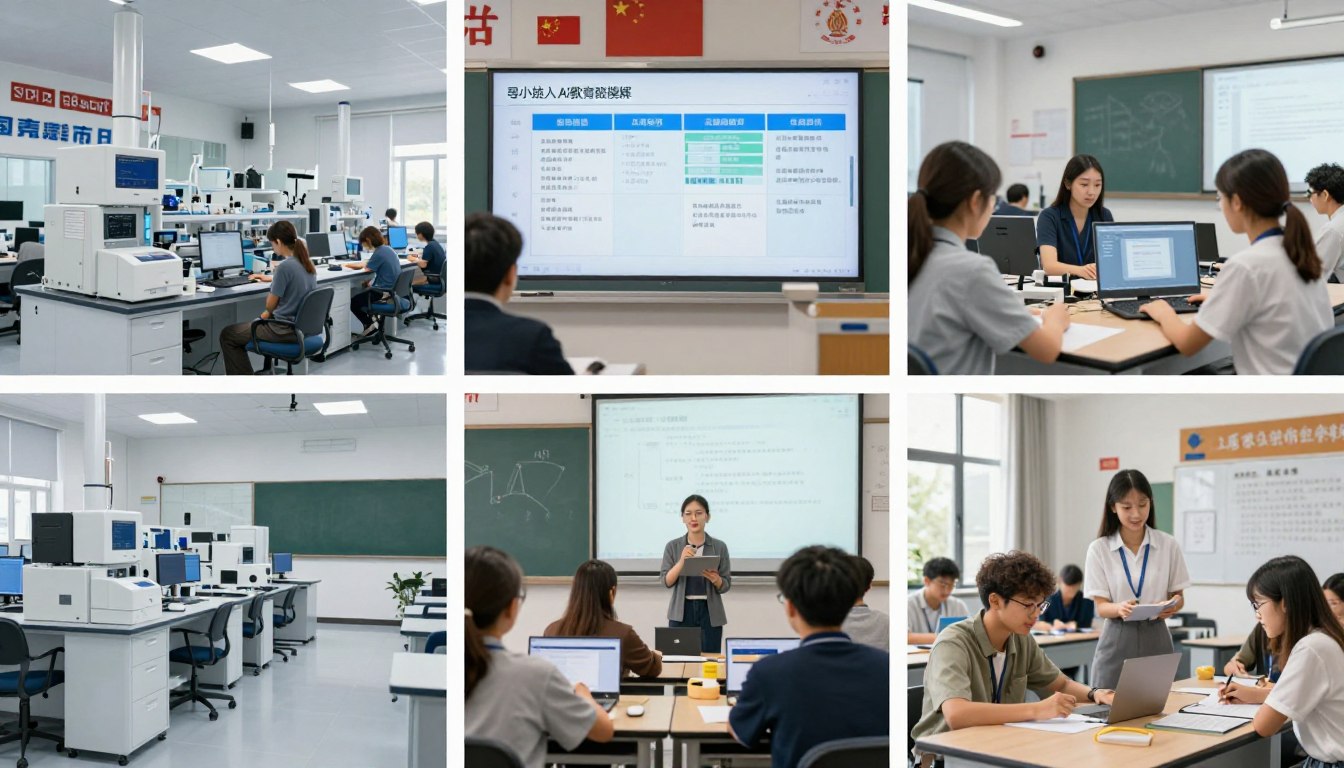
The United States Model
American universities have pioneered research-driven AI education. Stanford’s Human-Centred AI Institute integrates technical training with ethical considerations. Carnegie Mellon’s interdisciplinary approach brings together computer science, psychology, and philosophy.
Industry partnerships form a cornerstone of US AI education. MIT’s collaboration with IBM on the MIT-IBM Watson AI Lab provides students with access to cutting-edge resources and real-world problems. These partnerships often include funding for research assistantships and scholarships.
China’s State-Led AI Education Strategy
China has implemented a coordinated national approach to AI education. The government’s Next Generation Artificial Intelligence Development Plan explicitly prioritises AI talent development across educational levels.
Chinese universities embed AI across disciplines, ensuring that students in fields from medicine to business gain relevant AI competencies. This approach recognises AI as a general-purpose technology with applications beyond computer science.
South Africa and Emerging African Leaders
South Africa has established itself as a continental leader in AI education. The University of Pretoria’s Centre for Artificial Intelligence Research (CAIR) coordinates a national network of AI researchers and students.
Regional collaboration strengthens African AI education through initiatives such as the Deep Learning Indaba, which brings together researchers and students from across the continent. These collaborative approaches help overcome resource constraints by leveraging shared expertise and infrastructure.
The Role of Government, Industry and Private Sector
Federal Government and Policy Direction
Nigeria requires a comprehensive national AI strategy that explicitly addresses education and workforce development. Such a strategy should include funding mechanisms for AI research and education infrastructure.
Education policy reform must accelerate approval processes for AI-related programmes. The National Universities Commission could establish fast-track procedures for technology curricula that require frequent updates to remain relevant.
Private Sector and Tech Companies
Nigerian businesses benefit directly from the development of local AI talent and should invest accordingly. Corporate sponsorships can fund AI laboratories, providing companies with recruitment pipelines and brand visibility.
Joint research labs connecting universities with industry create mutual value. Companies gain research capacity and early access to innovations, while universities receive funding and real-world problems for student projects. Scholarship programmes targeting AI students help develop talent while addressing affordability concerns.
Diaspora Engagement
Nigeria’s global diaspora includes AI professionals at leading technology companies and research institutions. Structured visiting professorship programmes can bring this expertise back to Nigerian classrooms, even for short intensive courses.
Knowledge transfer initiatives like virtual guest lectures and remote mentorship enable diaspora contributions without requiring permanent relocation. These connections also create pathways for student internships and research collaborations with global institutions.
Beyond Computer Science: AI as an Interdisciplinary Discipline
AI in Medicine and Public Health
Medical schools should integrate AI modules covering diagnostic imaging, predictive analytics for disease outbreaks, and personalised treatment planning. These applications are particularly relevant in Nigeria’s context of limited healthcare resources and widespread infectious diseases.
AI in Law and Governance
Legal education can incorporate AI through courses on automated legal analysis, predictive justice, and regulatory frameworks for emerging technologies. Public administration programmes should address AI applications in service delivery and policy analysis.
AI in Agriculture
Agricultural programmes should cover AI applications in crop monitoring, precision farming, and supply chain optimisation. These technologies have transformative potential for Nigeria’s agricultural sector, which employs a significant portion of the workforce.
AI in Creative Industries
Media, art, and design programmes should address generative AI tools that are revolutionising creative processes. Students need both technical understanding and critical perspectives on how these technologies transform creative work.
Cross-faculty integration ensures that AI literacy extends beyond technical specialists. All university graduates should understand AI’s basic principles and implications for their fields, preparing them for a workforce where AI increasingly augments human capabilities.
The Risk of Inaction
Falling Behind in Global Competitiveness
Without robust AI education, Nigeria risks becoming a consumer rather than a producer of AI technologies. This position weakens economic sovereignty and limits participation in high-value segments of the global economy.
Increased Youth Unemployment
As AI automates routine tasks across industries, workers without AI skills face displacement. Universities that fail to equip graduates with relevant capabilities contribute to unemployment and underemployment among young Nigerians.
Technological Dependency
Reliance on imported AI solutions creates vulnerability to foreign policy decisions and business priorities. Critical infrastructure increasingly depends on AI systems, making technological self-determination a matter of national security.
Brain Drain Acceleration
Talented students already seek AI education abroad, often remaining in host countries after graduation. Without competitive local options, this brain drain will accelerate, depriving Nigeria of its most innovative minds.
Universities as the Engines of Nigeria’s AI Future
Nigerian universities stand at a pivotal moment in the country’s technological development. As primary centres of knowledge creation and dissemination, they bear particular responsibility for preparing the nation for an AI-transformed economy. The introduction of comprehensive AI courses represents not merely an academic exercise but a fundamental national development strategy.
The path forward requires collaboration across sectors, government providing enabling policies, industry contributing practical expertise and resources, and academia developing rigorous educational frameworks. Success will not be measured merely by the number of AI graduates produced, but by their ability to apply these technologies to Nigeria’s unique challenges and opportunities.
The question is not whether Nigeria will participate in the global AI revolution, but whether it will do so as a leader or a follower. By investing in AI education today, Nigerian universities can help ensure the nation claims its rightful place in shaping Africa’s technological future and beyond.

Director/CEO
As the co-founder of AIBase, Joy established this platform to make artificial intelligence knowledge more accessible and relevant within the Nigerian ecosystem. She is an accounting graduate with a diverse professional background in multimedia and catering, experiences that have strengthened her adaptability and creative problem-solving skills.
Now transitioning into artificial intelligence and technology writing, Joy blends analytical thinking with engaging storytelling to explore and communicate emerging technology trends. Her drive to establish aibase.ng is rooted in a passion for bridging the gap between complex AI innovations and practical, real-world understanding for individuals and businesses.