

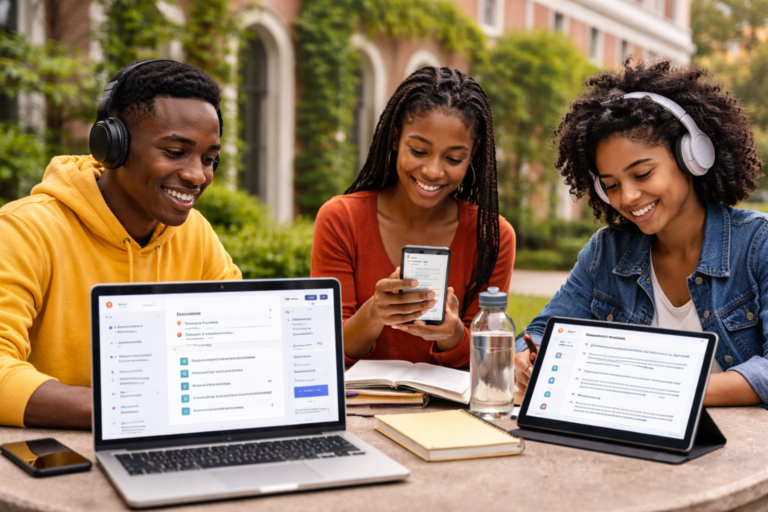
Balancing academic responsibilities with personal life remains one of the greatest challenges for students in this digital age, as many social media distractions are driven by advanced technology. From tight deadlines and demanding coursework to social obligations and self-care, finding equilibrium can feel overwhelming. Lately, artificial intelligence (AI) has been a promising assistance, offering tools and insights that help students manage their schedules, optimise study time, and safeguard their well-being. Rather than replacing discipline or personal decision-making, AI can serve as a supportive partner in achieving a harmonious balance between study and life.
Understanding Study-Life Balance
Study-life balance refers to the ability to allocate time effectively between academic pursuits and personal activities without compromising either. Maintaining this balance is essential for mental health, academic performance, and overall personal development. Many students struggle with procrastination, excessive stress, and irregular routines, often sacrificing sleep, social interactions, or hobbies to meet academic demands. Research indicates that students who fail to achieve balance are more susceptible to burnout, reduced motivation, and declining grades, highlighting the importance of effective time and energy management.
AI and Time Management
One of the most tangible ways AI benefits students is through enhanced time management. AI-driven calendars and scheduling applications can automatically organise study sessions, assignments, and deadlines, adapting dynamically as priorities shift. Intelligent reminders help students stay on track without overwhelming them with notifications. Tools such as Notion AI, Google Calendar’s AI suggestions, or Microsoft Copilot provide context-aware scheduling, making it easier to allocate study blocks around personal commitments. By taking the guesswork out of planning, AI enables students to use their time more efficiently and avoid last-minute stress.
AI-Enhanced Study
Beyond organising schedules, AI transforms the way students engage with their coursework. Personalised learning platforms analyse performance and identify areas that require extra attention, enabling targeted study. AI-powered summarisation tools condense lecture notes, generate flashcards, and create practice questions, allowing learners to review material quickly and effectively. By focusing on high-impact study tasks rather than rote repetition, students can improve retention and productivity, freeing up time for relaxation, hobbies, or social activities.
Mental Health and Wellbeing Support
Study-life balance extends beyond time management and efficiency; mental health is equally critical. AI applications are increasingly designed to monitor stress, track mood, and provide guided meditation or mindfulness exercises. Chatbots can offer immediate emotional support, help students process challenges, and alert them to signs of burnout before it escalates. By integrating AI-driven insights into daily routines, learners can maintain healthier boundaries between academic commitments and personal well-being, fostering resilience and long-term success.
Monitoring and Analytics for Self-Improvement
Another advantage of AI lies in its ability to analyse behaviour and provide actionable feedback. Many platforms track study habits, focus periods, sleep patterns, and even exercise routines. Students can use these insights to adjust schedules, identify unproductive practices, and implement better routines. Dashboards displaying progress trends and personalised recommendations allow learners to make informed decisions about workload distribution, ensuring that academic and personal needs are balanced effectively.
Important Considerations
While AI offers significant benefits, it is not a substitute for personal responsibility. Excessive reliance on technology may diminish self-discipline and critical thinking. Privacy is another concern, as personal data collected by AI applications must be safeguarded and used responsibly. Students should view AI as a complement to their own judgment rather than a prescriptive authority, applying insights with discretion and adapting them to their individual needs.
Practical Tips for Students
- Integrate AI tools thoughtfully into daily routines rather than relying on them exclusively.
- Schedule regular breaks, social activities, and hobbies alongside academic tasks to prevent overwork.
- Use clear, structured prompts and well-defined goals to help AI generate more relevant and useful suggestions.
- Experiment with different AI platforms and features to identify which tools enhance focus, motivation, and productivity.
- Monitor the impact of AI tools to ensure they support personal satisfaction and do not become a distraction.
Sustainaibility
Emerging AI technologies promise even more sophisticated support for student life. Future tools may integrate academic planning with mental health monitoring, personalised learning analytics, and real-time productivity coaching. As these systems evolve, students will have unprecedented opportunities to optimise their schedules, maintain wellbeing, and achieve academic success in a balanced, sustainable way.
Closing Analysis
AI can be a transformative partner for students seeking a study-life balance, offering organisation, efficiency, and support for well-being. Supporting human decision-making rather than replacing it unleashes the potential of every AI software. By combining technological insights with personal discipline and self-awareness, learners can achieve both academic excellence and personal fulfilment, establishing habits that serve them well beyond their time at university.

Senior Reporter/Editor
Bio: Ugochukwu is a freelance journalist and Editor at AIbase.ng, with a strong professional focus on investigative reporting. He holds a degree in Mass Communication and brings extensive experience in news gathering, reporting, and editorial writing. With over a decade of active engagement across diverse news outlets, he contributes in-depth analytical, practical, and expository articles exploring artificial intelligence and its real-world impact. His seasoned newsroom experience and well-established information networks provide AIbase.ng with credible, timely, and high-quality coverage of emerging AI developments.