

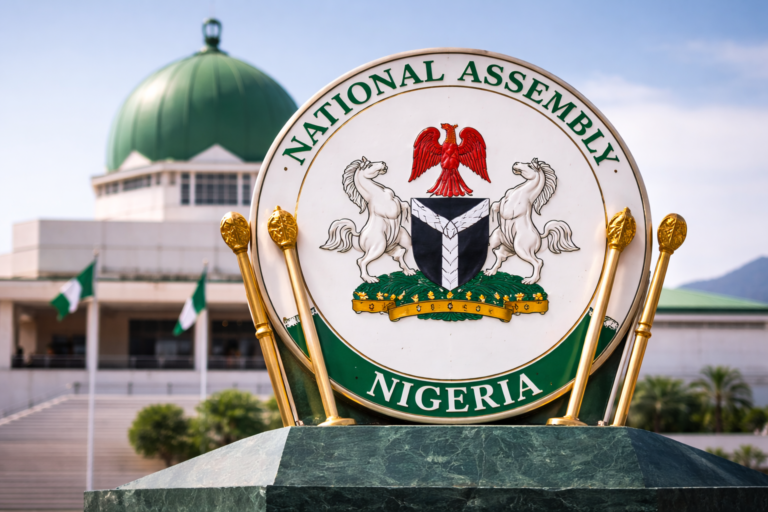
Nigeria looks ready to shake things up with a new law on artificial intelligence. This move could put the country ahead of most other African countries.
Lawmakers in Abuja have been discussing the bill for months. They want to set clear rules for how people and businesses use AI.
If the law passes, Nigeria could become a model for other African nations. Some folks see this as a chance to lead the way, while others worry about what the rules might mean for startups.
The bill covers data privacy, safety, and ethical use of AI. It doesn’t just focus on big tech companies—everyone using AI will need to pay attention.
No one knows exactly when the law will go into effect. But, with so much buzz, it seems like it’s only a matter of time.
Will this new law attract investors, or scare them off? That’s the big question. Either way, Nigeria’s about to make some waves in the tech world.
Overview
Nigeria’s pushing ahead with a formal system for AI governance—and it’s not just another policy. The National Digital Economy and E‑Governance Bill aims to close stubborn gaps in digital operations across finance, government, and the private sector.
Lawmakers say they’ll approve the bill by the end of March. If they do, Nigeria could become one of the first African countries to anchor AI rules in law, not just in policy papers.
The bill expands the role of the National Information Technology Development Agency (NITDA) as the top regulator. NITDA gets new authority over data practices, algorithms, and digital platforms.
Kashifu Abdullahi, the agency’s director-general, believes early regulation can help guide adoption before problems spiral out of control. He’s pointed to lessons from other regions that waited too long to act.
A key part of the proposal is a risk-based structure. Not every AI system would get the same level of scrutiny.
Higher-risk AI systems would face closer review, especially in areas touching on rights, access, or public trust.
Examples of higher-risk areas include:
- Financial services and credit decisions
- Public administration and service delivery
- Surveillance and security tools
- Automated decision-making that affects individuals
Developers building these systems must file annual impact assessments. These reports cover the system’s purpose, risks, mitigation steps, and performance.
If regulators spot concerns, they can ask for more information. That’s not a small ask, but it’s probably necessary.
The bill also spells out rules around personal data and analytics. AI providers must demonstrate how they collect, process, and store data.
Transparency and fairness are baked into the law’s ethical standards. Lawmakers hope this will curb misuse while still allowing data-driven tools to support growth.
Enforcement powers form another major piece of the framework. Regulators can issue directives, suspend unsafe systems, or restrict tools that don’t comply.
Financial penalties could get steep—up to 10 million naira or a slice of annual local revenue.
| Enforcement Tool | Purpose |
|---|---|
| Fines | Deter repeated or serious breaches |
| Directives | Correct harmful practices |
| System suspension | Prevent ongoing risk |
The bill also supports innovation through regulatory sandboxes. These supervised environments allow startups, researchers, and institutions to test AI tools under defined conditions.
The idea is to balance control with room to experiment—especially for local firms that might not have big compliance teams.
Nigeria’s move comes after years of strategy documents across Africa that didn’t have teeth. Countries like Mauritius, Egypt, and Benin have published AI plans, but few have passed sweeping laws.
Multinational tech firms in Nigeria will probably need to adjust to these new rules. The framework expects the same behaviour across the digital economy, regardless of a provider’s location.
This shift signals a more structured phase in how Nigeria manages AI, data, and analytics. It’s a big step, and maybe, just maybe, it’s overdue.
Senior AI Writer
Bio: Okikiola is a writer and AI enthusiast with a background in Office Technology and Management from the Federal Polytechnic Offa. She went further to study an MSc in International Business at De Montfort University (DMU). With extensive work experience across administrative and business roles, she now focuses on exploring how artificial intelligence can transform work, innovation, and everyday life.